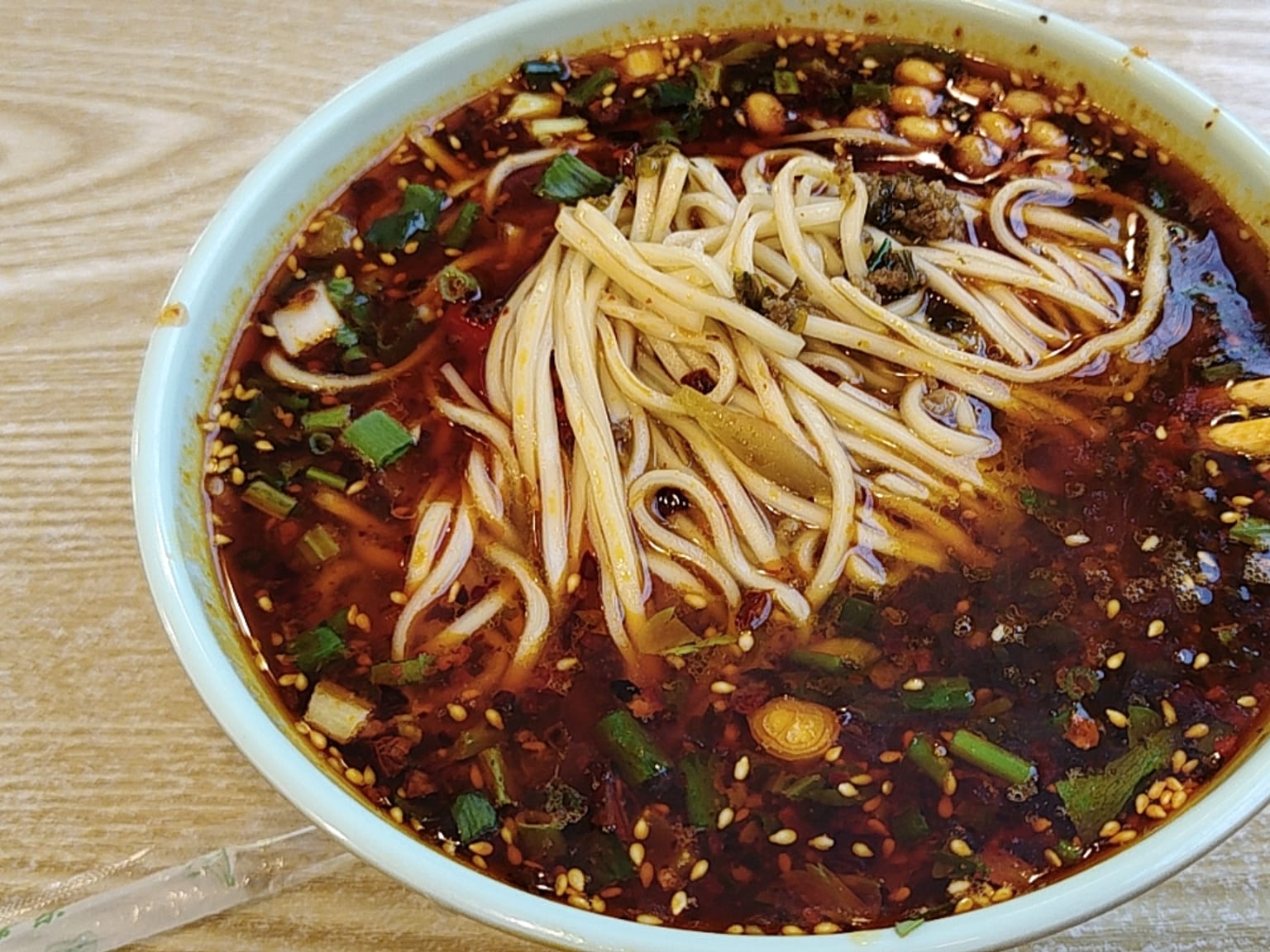

Dan dan noodles
Sichuan 担担面, dan dan mian. Noodles under a spoonful of chili oil, soy, and black vinegar, topped with pork fried dark with doubanjiang and preserved mustard green. Numbing from fresh ground Sichuan peppercorn, salty from the ya cai, and eaten in small bowls so it stays hot.
Prep20 min
Cook20 min
Servings4
Adapted from The Woks of Life, Omnivore's Cookbook, China Sichuan Food, and Red House Spice, with the history checked against Goldthread and Wikipedia and the ya cai guidance from Omnivore's Cookbook
Ingredients
Written for a 28 cm pan
Units
Temperature
Servings
Pork and ya cai topping
- 30 ml neutral oil rounded
- 400 g ground pork, not too lean rounded
- 12 g fresh ginger, finely minced rounded
- 20 g doubanjiang, Sichuan chili bean paste, chopped if coarse rounded
- 15 ml Shaoxing wine, dry sherry also works rounded
- 10 ml dark soy sauce rounded
- 60 g sui mi ya cai, preserved mustard green, rinsed and squeezed dry rounded
- 5 g sugar rounded
Sauce, divided among the bowls
- 60 ml Sichuan chili oil, sediment as well as oil, not just the clear top rounded
- 45 ml light soy sauce rounded
- 20 ml Chinkiang black vinegar rounded
- 3 garlic cloves, grated to a paste rounded
- 3 g Sichuan pepper, whole peppercorns, toasted then ground just before use rounded
- 6 g sugar rounded
- 20 g Chinese sesame paste, the modern addition, see the notes (optional) rounded
- 180 ml hot noodle water or unsalted chicken stock rounded
Noodles and to finish
- 400 g thin fresh wheat noodles, or 320 g dried rounded
- to taste fine salt, for the noodle water rounded
- 250 g leafy greens, baby pak choi, choy sum, or spinach rounded
- 50 g scallions, thinly sliced rounded
- 40 g roasted peanuts, coarsely crushed rounded
Method
- Toast the Sichuan peppercorns in a dry pan over medium heat for about 90 seconds, until they smell citrusy and floral. Tip them out, cool, and grind. Sieve out the black seeds if you like, they are gritty and carry no flavour.
- Rinse the ya cai under cold water and squeeze it dry in your hands. It comes out of the packet very salty. A 30 second rinse takes the edge off without losing the fermented smell that makes the dish.
- Heat the oil in a wide skillet over medium-high heat. Add the pork, press it into a flat layer, and leave it 3 minutes so one side browns before you break it up. Keep cooking until the meat is dry and starting to crisp, about 6 minutes more. Dry is the target, not just cooked.
- Push the pork aside, add the doubanjiang and ginger to the bare part of the pan, and fry them in the pork fat for a minute until the oil turns red. Stir everything together.
- Add the Shaoxing wine, dark soy sauce, and sugar and cook until the pan is dry again. Stir in the ya cai and fry a further 2 minutes. Take it off the heat.
- Divide the chili oil, soy sauce, vinegar, garlic, ground Sichuan peppercorn, sugar, and the sesame paste if you are using it among four bowls. Whisk each with a fork.
- Boil the noodles in well salted water. Blanch the greens in the same water for 45 seconds at the end and lift them out.
- Pour about 45 ml of the hot noodle water or stock into each bowl and whisk it into the sauce. It should be loose enough to pool, not a paste.
- Drop in the noodles, lay the greens alongside, and spoon the pork over the top. Finish with peanuts and scallions.
- Serve immediately and tell people to mix it themselves, from the bottom up. The sauce is all at the bottom on purpose.
Notes
- What this dish actually is, and what the peanut version is. Chengdu dan dan mian was a street food sold from a shoulder pole, dan, with noodles in one basket and sauce in the other. The classic bowl is dry and small: chili oil, soy, Sichuan peppercorn, minced pork, and ya cai, with a couple of spoonfuls of stock at most. There is no peanut butter in it and traditionally no sesame paste either. The creamy, sweeter, souped version most people outside China have eaten comes from Hong Kong, where the chef Yeung Din-wu adapted it for local palates at Wing Lai Yuen in the 1940s, toning down the chili and adding sesame paste and peanut butter. That Hong Kong branch is what spread to Western Chinese restaurants, and it is the direct ancestor of the American peanut noodle. Both are worth cooking. They are just not the same dish, and calling the peanut one Sichuan is wrong. The peanut chili noodles in this archive are that other branch, written honestly as a hybrid.
- The sesame paste question. Modern Sichuan cooks and most of the good English-language recipes do add a spoonful of sesame paste, and it makes the sauce cling better. It is listed here as optional for that reason. If you use it, buy Chinese sesame paste made from toasted seeds, not tahini. Tahini is made from raw hulled sesame and tastes thin and grassy here. German Asia-Märkte stock it in squat jars labelled sesame paste or 芝麻酱. If you only have tahini, use two thirds tahini and one third smooth peanut butter.
- Sichuan peppercorn in Germany. Sold as Sichuanpfeffer or Szechuanpfeffer. Ostmann and the supermarket spice racks carry it, but buy whole red husks rather than ground, from an Asia-Markt or a proper Gewürzhändler such as Ankerkraut or Altes Gewürzamt. Ground Sichuan pepper loses its tingle within weeks of opening, and a bag that has sat on a shelf for two years gives you dusty citrus and no numbing at all. If your peppercorns do not make your lips buzz when you chew one, they are dead and no amount will fix the bowl. Green Sichuan peppercorn is more intense and more citrus forward, and is excellent here if you find it.
- Doubanjiang in Germany. Look for jars labelled Toban Djan or Chili Bean Sauce. Lee Kum Kee is the version most German Asia-Märkte and online shops such as asiastreetfood and RamenHeaven stock, and it is fine. Pixian doubanjiang, aged and darker, is much better and worth ordering if you cook Sichuan food often. If you cannot get any, use 15 g sambal oelek plus 10 g of red miso, which gives you the heat and some of the fermented depth, though not the same colour.
- Ya cai in Germany. Sui mi ya cai comes from Yibin in Sichuan, in small foil packets of 80 to 100 g, brown and finely chopped. Careful when searching, ya cai can also mean bean sprout. If your Asia-Markt does not carry it, zha cai, the preserved mustard stem sold in the same size packet and far more widely stocked in Germany, is the best substitute: rinse it, squeeze it, and chop it fine. Tianjin preserved vegetable in the little brown crock also works. Without any of them the bowl tastes good but it does not taste Sichuan.
- Chinkiang vinegar. Labelled Chinkiang or Zhenjiang black rice vinegar, in a tall bottle with a red label. If you are out, mix two parts balsamic with one part rice vinegar. It is not the same, but it is closer than either alone.
- Chili oil. Use the chili crisp recipe in this archive, or the Sichuan chili oil sold in Asia-Märkte. The sediment carries the toasted spice, so scoop from the bottom of the jar.
- Vegetarian. Replace the pork with 300 g of finely chopped shiitake and 100 g of hand-crumbled firm tofu (a quick simmer in salted water first firms and seasons it, see the tofu prep formula). Keep the pieces irregular and fry hard until both are dry and browned; those rough faces catch the chile-sesame sauce. Use vegetable stock for a fully vegetarian bowl. The ya cai and doubanjiang do most of the work anyway.
- Make ahead. The pork topping keeps four days in the fridge and freezes well. Mix the sauce fresh, it takes two minutes and tastes better than a jar that has sat.
Sources used
- The Woks of Life: Dan Dan Noodles
- Omnivore’s Cookbook: Dan Dan Noodles
- China Sichuan Food: Dan Dan Noodles
- Red House Spice: Dan Dan Noodles
- Omnivore’s Cookbook: Sui Mi Ya Cai
- Goldthread: Dan dan noodle origins
- Wikipedia: Dandan noodles
Good with
- Chili crisp
- Garlicky napa cabbage
- Peanut chili noodles
- Quick sesame cucumber salad
- Tofu, prepped for flavour
Sources consulted
From Christoph Mayer