
Side Chinese Asian Vegetarian Vegan
Chili crisp
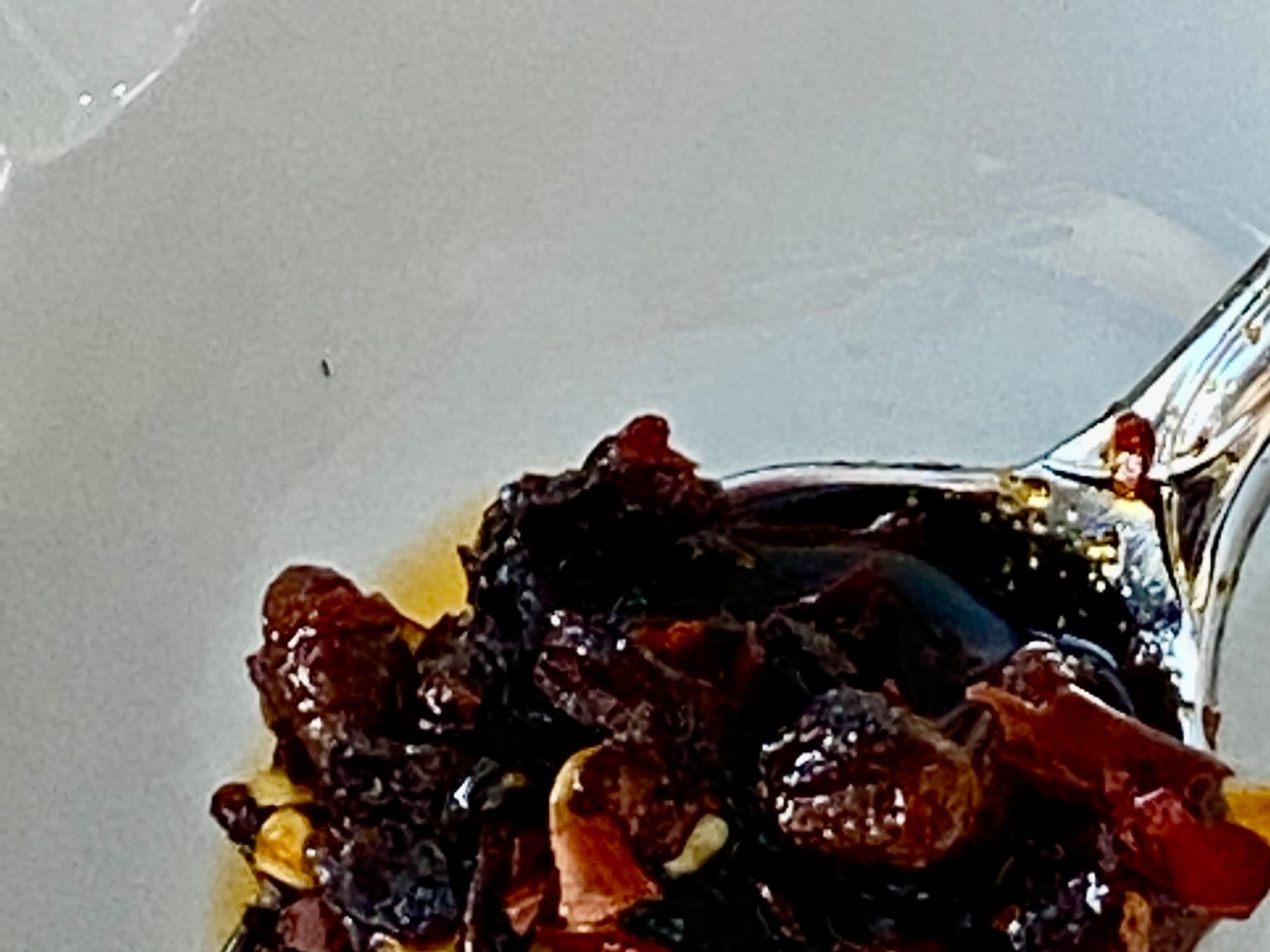
Homemade crunchy chili oil, 辣椒酱 in the loose sense: dried chiles and Sichuan peppercorn bloomed in oil that has already been infused with slow-fried shallot, garlic, star anise, and cassia. Peanuts and fermented black beans go in for the crunch. Keeps for months and improves for the first week.
Prep25 min
Cook45 min
Rest720 min
Servings24
Adapted from The Woks of Life's chili oil method, Omnivore's Cookbook, CJ Eats, and Chili Pepper Madness, reconciled into one two-stage version
Ingredients
Written for a 18 cm pot
Units
Temperature
Servings
Infused oil
- 500 ml neutral oil, rapeseed, sunflower, or peanut oil; not olive and not sesame rounded
- 100 g shallots, peeled and sliced 2 mm thick, all slices the same thickness rounded
- 8 garlic cloves, about 35 g, sliced 2 mm thick rounded
- 25 g fresh ginger, sliced into coins rounded
- 3 star anise rounded
- 1 cassia or cinnamon stick, broken in half rounded
- 2 bay leaves rounded
- 1 black cardamom pod, cracked, adds a smoky note (optional) rounded
Chile and crunch
- 60 g coarse Chinese chile flakes, Sichuan or Korean gochugaru, coarse and mild, not Italian peperoncino rounded
- 12 g Sichuan peppercorns, toasted dry, then coarsely ground, husks only rounded
- 25 g white sesame seeds rounded
- 60 g roasted peanuts, unsalted, roughly chopped rounded
- 30 g fermented black soybeans, douchi, rinsed and roughly chopped (optional) rounded
- 30 ml light soy sauce rounded
- 10 g sugar rounded
- 10 g fine salt rounded
- 10 ml toasted sesame oil, stirred in at the end (optional) rounded
Dietary labels are a guide, not a guarantee. If you have an allergy, read the ingredients yourself.
Method
- Put the chile flakes, ground Sichuan peppercorn, and sesame seeds in a heatproof bowl at least three times their volume. Metal or thick ceramic, not glass. Set it next to the stove with a long spoon.
- Put the oil, shallots, garlic, ginger, star anise, cassia, bay, and cardamom into a small heavy pot. Everything starts cold together. Set the heat to low.
- Bring the oil to 110 to 120°C and hold it there for 30 to 40 minutes. You want a lazy, steady stream of small bubbles, never a fizz. This stage is dehydration, not frying: the shallot and garlic are giving up their water slowly, which is the only way they end up crisp rather than chewy. Stir every few minutes.
- When the shallots and garlic are pale gold and the bubbling has almost stopped, they are done. They darken a shade further off the heat, so pull them early. Lift all the solids out with a spider or slotted spoon onto kitchen paper and salt them lightly. Fish out and discard the spices, ginger, and bay.
- Raise the heat and bring the strained oil to 175°C. Take it off the heat and let it settle for 20 seconds.
- Pour a third of the oil over the chile mixture and stir. It will foam hard. Wait for it to subside, then add the second third, stir, then the last. It should smell toasted and sweet, a little like popcorn. If it smells acrid, the oil was too hot.
- Stir in the soy sauce while the mixture is still hot enough to drive off the water; it will spit for a few seconds. Add the sugar and salt and stir until dissolved.
- Let the mixture cool to just warm, then fold in the drained shallots, garlic, peanuts, black beans, and sesame oil. Adding the crisp parts to hot oil undoes the work of step 3.
- Cool completely, then jar it. It is edible at once and noticeably better after 12 hours, best after three days.
Notes
- The two temperatures are the whole recipe. 110 to 120°C for the slow fry: too hot here and the shallot browns on the outside before the inside dries, so it goes limp in the jar within a day. 175°C for the pour: much above 200°C and the chile flakes scorch and turn bitter within seconds, and you cannot fix it. Much below 150°C and the flakes just steep, giving you a dull brown oil with no bloom of colour and no toasted smell. Use a thermometer the first time. After that you will recognise both stages by sound.
- Storage. Sterilised jar, refrigerated, up to three months. It keeps about two weeks at room temperature, but only because the fried aromatics are properly dried out; if you rushed step 3 they hold moisture and it will not last. Always a clean dry spoon, and keep the solids under the oil layer. Never add raw garlic to the jar.
- German sourcing. Szechuanpfeffer is easy: any Asia-Markt has it, and so do the better spice shops and online sellers. Buy the red kind for this. Sniff it before you buy or before you use an old jar, since it loses its numbing tingle within a year and old peppercorn is just dusty.
- The chiles are the harder part. What you want is coarse, mild, deep red Chinese chile flakes, made from erjingtiao or facing-heaven chiles, sold at an Asia-Markt as Chiliflocken or labelled 辣椒面. If you cannot find them, Korean gochugaru from the same shop is the best substitute, coarse-ground and mild with the same colour. Do not use German or Italian supermarket Chiliflocken: they are hotter, full of seeds, ground too fine, and they burn at the pour temperature. If you can only get whole dried Sichuan chiles, snip off the stems, shake out most of the seeds, toast them dry in a pan for two minutes, and pulse them in a spice mill until coarse.
- Douchi, the fermented black soybeans, sit in the Chinese section of any Asia-Markt in a small bag or tub, sometimes labelled fermented black beans. Rinse them, they are very salty. Leave them out and reduce nothing else; the recipe still works. Roasted peanuts do most of the crunch either way.
- Yield and scaling. The oil here is the medium, not a fixed extra, so it scales with everything else. Do not scale up past the point where the solids sit deeper than a third of the pot, because the foam in step 6 needs room.
- Use it on the carrot buttons, on plain rice with a fried egg, over silken tofu, folded into cucumber salad, or stirred into a bowl of noodles with a splash of black vinegar.
Sources used
- The Woks of Life: How to Make Chili Oil
- Omnivore’s Cookbook: How to Make Chili Oil
- CJ Eats: The Best Homemade Chili Crisp
- Chili Pepper Madness: Chili Crisp
Good with
- Carrot buttons
- Crispy gochujang tofu with broccoli
- Garlic-ginger bok choy
- Quick sesame cucumber salad
- Ricotta gnudi
From Christoph Mayer