
Hauptgericht Chinesisch Asiatisch
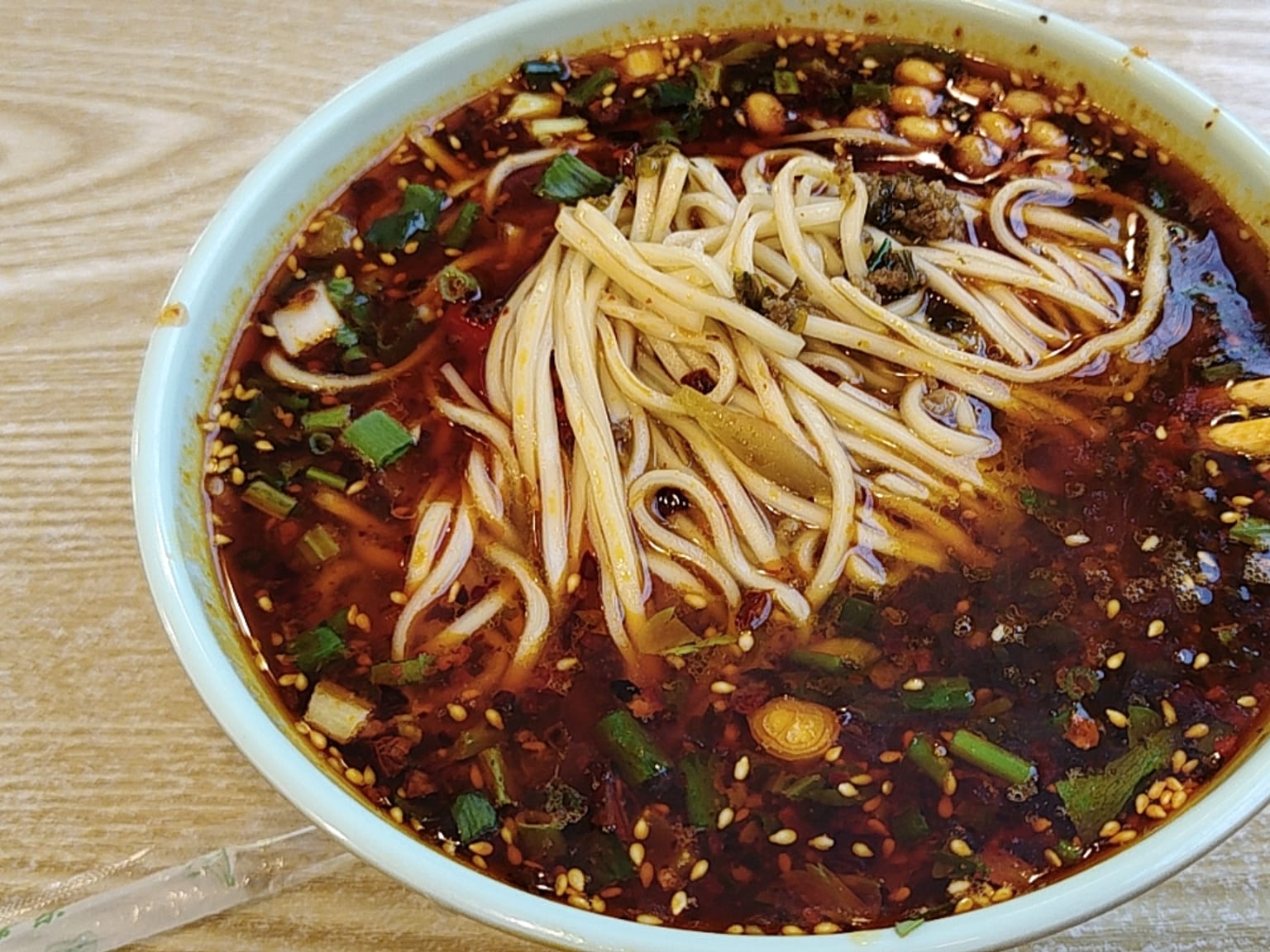
Dan-Dan-Nudeln
Sichuan 担担面, dan dan mian. Nudeln unter einem Löffel Chiliöl, Soja und schwarzem Essig, gekrönt mit Schweinefleisch, dunkel gebraten mit Doubanjiang und konserviertem Senfgrün. Betäubt aus frisch gemahlenem Sichuan-Pfefferkorn, salzig vom Ya Cai und in kleinen Schalen gegessen, damit es heiß bleibt.
Vorbereitung20 Min.
Garzeit20 Min.
Portionen4
Adaptiert von The Woks of Life, Omnivore's Cookbook, China Sichuan Food und Red House Spice, wobei die Geschichte gegen Goldthread und Wikipedia und die Ya Cai-Anleitung von Omnivore's Cookbook verglichen wurde
Zutaten
Geschrieben für: 28 cm Pfanne
Einheiten
Temperatur
Portionen
Schweinehack und Ya Cai
- 30 ml neutrales Öl gerundet
- 400 g Hackfleisch vom Schwein, nicht zu mager gerundet
- 12 g frischer Ingwer, fein gehackt gerundet
- 20 g Doubanjiang, Sichuan-Chili-Bohnenpaste, gehackt wenn grob gerundet
- 15 ml Shaoxing-Reiswein, trockener Sherry geht auch gerundet
- 10 ml dunkle Sojasauce gerundet
- 60 g Sui Mi Ya Cai, eingelegtes Senfgemüse, abgespült und ausgedrückt gerundet
- 5 g Zucker gerundet
Sauce, auf die Schalen verteilt
- 60 ml Sichuan-Chiliöl, mit Bodensatz, nicht nur das klare Öl obenauf gerundet
- 45 ml helle Sojasauce gerundet
- 20 ml schwarzer Chinkiang-Reisessig gerundet
- 3 Knoblauchzehen, fein gerieben gerundet
- 3 g Sichuanpfeffer, geröstet und erst kurz vor Gebrauch gemahlen gerundet
- 6 g Zucker gerundet
- 20 g chinesische Sesampaste, die moderne Zutat, siehe Notizen (optional) gerundet
- 180 ml heißes Nudelwasser oder ungesalzene Hühnerbrühe gerundet
Nudeln und zum Anrichten
- 400 g dünne frische Weizennudeln, oder 320 g getrocknete gerundet
- nach Geschmack feines Salz, für das Nudelwasser gerundet
- 250 g Blattgemüse, Baby-Pak-Choi, Choy Sum oder Spinat gerundet
- 50 g Frühlingszwiebeln, in dünne Ringe geschnitten gerundet
- 40 g geröstete Erdnüsse, grob zerstoßen gerundet
Zubereitung
- Die Sichuan-Pfefferkörner in einer trockenen Pfanne bei mittlerer Hitze etwa 90 Sekunden lang rösten, bis sie zitrusartig und blumig riechen. Kippen Sie sie aus, kühlen Sie sie ab und mahlen Sie sie. Sieben Sie die schwarzen Samen heraus, wenn Sie möchten, sie sind körnig und haben keinen Geschmack.
- Spülen Sie den Ya Cai unter kaltem Wasser ab und drücken Sie ihn trocken in Ihren Händen. Es kommt sehr salzig aus der Packung. Ein 30-Sekunden-Spülen nimmt die Kante ab, ohne den fermentierten Geruch zu verlieren, der das Gericht ausmacht.
- Das Öl in einer breiten Pfanne bei mittlerer bis hoher Hitze erhitzen. Fügen Sie das Schweinefleisch hinzu, drücken Sie es zu einer flachen Schicht und lassen Sie es 3 Minuten stehen, damit eine Seite braun wird, bevor Sie es aufbrechen. Weiter kochen, bis das Fleisch trocken ist und knusprig wird, noch etwa 6 Minuten. Trocken ist das Ziel, nicht nur gekocht.
- Schieben Sie das Schweinefleisch beiseite, geben Sie das Doubanjiang und den Ingwer in den nackten Teil der Pfanne und braten Sie sie eine Minute lang im Schweinefett an, bis das Öl rot wird. Alles zusammenrühren.
- Fügen Sie den Shaoxing-Wein, die dunkle Sojasauce und den Zucker hinzu und kochen Sie, bis die Pfanne wieder trocken ist. Den Ya Cai einrühren und weitere 2 Minuten anbraten. Nimm es von der Hitze.
- Teilen Sie Chiliöl, Sojasauce, Essig, Knoblauch, gemahlenes Sichuan-Pfefferkorn, Zucker und die Sesampaste, wenn Sie sie verwenden, auf vier Schüsseln. Jedes mit einer Gabel verquirlen.
- Kochen Sie die Nudeln in gut gesalzenem Wasser. Blanchieren Sie die Grüns am Ende 45 Sekunden lang im gleichen Wasser und heben Sie sie heraus.
- Gießen Sie etwa 45 ml des heißen Nudelwassers oder der Brühe in jede Schüssel und rühren Sie es in die Sauce. Es sollte locker genug zum Poolen sein, keine Paste.
- Die Nudeln hineingeben, das Gemüse daneben legen und das Schweinefleisch darüber löffeln. Mit Erdnüssen und Frühlingszwiebeln abschließen.
- Sofort servieren und den Leuten sagen, dass sie es selbst mischen sollen, von unten nach oben. Die Soße ist absichtlich ganz unten.
Hinweise
- Was dieses Gericht eigentlich ist und was die Erdnussversion ist. Chengdu dan dan mian war ein Straßenessen, das von einer Schulterstange, Dan, verkauft wurde, mit Nudeln in einem Korb und Soße im anderen. Die klassische Schüssel ist trocken und klein: Chiliöl, Soja, Sichuan-Pfefferkorn, gehacktes Schweinefleisch und Ya Cai, mit höchstens ein paar Löffeln Brühe. Es gibt keine Erdnussbutter und traditionell auch keine Sesampaste. Die cremige, süßere, Suppenversion, die die meisten Menschen außerhalb Chinas gegessen haben, kommt aus Hongkong, wo der Küchenchef Yeung Din-wu sie in den 1940er Jahren im Wing Lai Yuen für den lokalen Gaumen adaptierte, das Chili abschwässte und Sesampaste und Erdnussbutter hinzufügte. Diese Niederlassung in Hongkong ist das, was sich auf westchinesische Restaurants ausbreitet, und sie ist der direkte Vorfahr der amerikanischen Erdnussnudeln. Beides ist es wert, gekocht zu werden. Sie sind einfach nicht das gleiche Gericht, und die Erdnuss ein Sichuan zu nennen, ist falsch. Die Erdnuss-Chili-Nudeln in diesem Archiv sind der andere Zweig, der ehrlich als Hybrid geschrieben wurde.
- Die Frage nach Sesampaste. Moderne Köche aus Sichuan und viele gute englischsprachige Rezepte geben einen Löffel Sesampaste dazu, damit die Sauce besser haftet. Deshalb ist sie hier optional. Chinesische Sesampaste aus gerösteten Samen verwenden, nicht Tahini. Tahini besteht aus rohem geschältem Sesam und schmeckt hier dünn und grasig. In deutschen Asia-Märkten steht chinesische Sesampaste meist in gedrungenen Gläsern und trägt die Bezeichnung Sesampaste oder 芝麻酱. Falls nur Tahini vorhanden ist, zwei Drittel Tahini mit einem Drittel glatter Erdnussbutter mischen.
- Sichuan-Pfefferkorn in Deutschland. Verkauft als Sichuanpfeffer oder Szechuanpfeffer. Ostmann und die Supermarkt-Gewürzregale führen es, aber kaufen Sie ganze rote Schalen statt gemahlen, von einem Asia-Markt oder einem richtigen Gewürzhändler wie Ankerkraut oder Alte Gewürzamt. Gemahlener Sichuan-Pfeffer verliert innerhalb weniger Wochen nach dem Öffnen sein Kribbeln, und ein Beutel, der seit zwei Jahren in einem Regal steht, gibt Ihnen staubige Zitrusfrüchte und überhaupt keine Taubheit. Wenn Ihre Pfefferkörner Ihre Lippen nicht zum Summen bringen, wenn Sie eines kauen, sind sie tot und keine Menge wird die Schüssel reparieren. Grünes Sichuan-Pfefferkorn ist intensiver und zitrischer und eignet sich hier hervorragend, wenn Sie es finden.
- Doubanjiang in Deutschland. Suchen Sie nach Gläsern mit der Aufschrift Toban Djan oder Chili Bean Sauce. Lee Kum Kee ist die Version der meisten deutschen Asia-Märkte und Online-Shops wie Asiastreetfood und RamenHeaven-Lager, und es ist in Ordnung. Pixian Doubanjiang, gealtert und dunkler, ist viel besser und es lohnt sich zu bestellen, wenn Sie häufig Sichuan-Essen kochen. Wenn Sie keine bekommen können, verwenden Sie 15 g Sambal Oelek plus 10 g rotes Miso, das Ihnen die Hitze und etwas von der fermentierten Tiefe gibt, wenn auch nicht die gleiche Farbe.
- Ya cai in Deutschland. Sui mi ya cai kommt aus Yibin in Sichuan, in kleinen Folienpackungen von 80 bis 100 g, braun und fein gehackt. Vorsichtig bei der Suche, ya cai kann auch Sojasprossen bedeuten. Wenn Ihr Asia-Markt es nicht führt, ist zha cai, der konservierte Senfstiel, der in der gleichen Größe verkauft wird und in Deutschland weitaus weiter verbreitet ist, der beste Ersatz: Spülen Sie ihn ab, drücken Sie ihn aus und hacken Sie ihn fein. Tianjin konserviertes Gemüse im kleinen braunen Topf funktioniert auch. Ohne sie schmeckt die Schüssel gut, aber sie schmeckt nicht nach Sichuan.
- Chinkiang-Essig. Etikettierter Chinkiang- oder Zhenjiang-Schwarzreisessig, in einer hohen Flasche mit rotem Etikett. Wenn Sie nicht da sind, mischen Sie zwei Teile Balsamico mit einem Teil Reisessig. Es ist nicht dasselbe, aber es ist näher als beides allein.
- Chiliöl. Verwenden Sie das Chili-Crisp-Rezept in diesem Archiv oder das Sichuan-Chiliöl, das in Asien-Märkte verkauft wird. Das Sediment trägt das geröstete Gewürz, also schaufeln Sie es aus dem Boden des Glases.
- Vegetarier. Ersetzen Sie das Schweinefleisch durch 300 g fein gehackten Shiitake und 100 g handzerbröckelten festen Tofu (ein kurzes Köcheln in Salzwasser festigt und würzt ihn vorab, siehe die Tofu-Grundformel). Halten Sie die Stücke unregelmäßig und braten Sie sie hart, bis beide trocken und gebräunt sind; diese rauen Gesichter fangen die Chili-Sesam-Sauce. Verwenden Sie Gemüsebrühe für eine vollständig vegetarische Schüssel. Die Ya Cai und Doubanjiang machen sowieso den größten Teil der Arbeit.
- Mach weiter. Der Schweinefleischbelag ist vier Tage im Kühlschrank haltbar und lässt sich gut einfrieren. Mischen Sie die Sauce frisch, es dauert zwei Minuten und schmeckt besser als ein Glas, das gesessen hat.
Verwendete Quellen
- The Woks of Life: Dan Dan Noodles
- Omnivore’s Cookbook: Dan Dan Noodles
- China Sichuan Food: Dan Dan Noodles
- Red House Spice: Dan Dan Noodles
- Omnivore’s Cookbook: Sui Mi Ya Cai
- Goldthread: Dan dan noodle origins
- Wikipedia: Dandan noodles
Passt gut zu
- Chili Crisp
- Chinakohl mit Knoblauch
- Erdnuss-Chili-Nudeln
- Schneller Sesam-Gurkensalat
- Tofu, für mehr Geschmack vorbereitet
Verwendete Quellen
Von Christoph Mayer