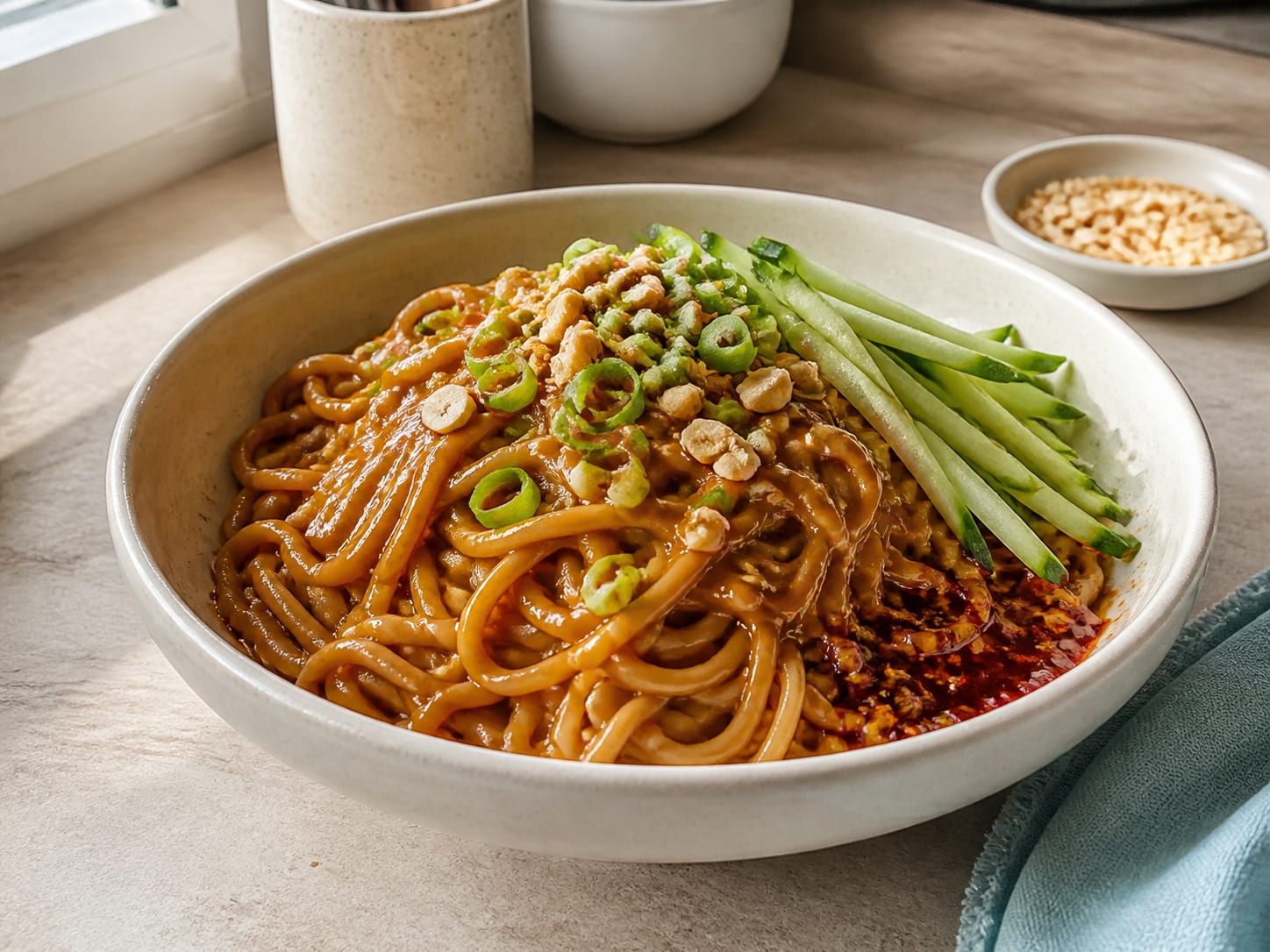
Erdnuss-Chili-Nudeln
Weizennudeln in einer Erdnusssauce mit Sojasauce, Reisessig und Chili Crisp, mit heißem Nudelwasser cremig gerührt. Nach Wunsch Hähnchen, Schweinefleisch oder Tofu ergänzen. Direkt heiß oder am nächsten Tag kalt aus dem Kühlschrank servieren.
Vorbereitung10 Min.
Garzeit10 Min.
Portionen4
Adaptiert von America's Test Kitchen Chili Crisp Noodles, The Woks of Life Peanut Noodles und Hungry Lankan Peanut Butter Chili Oil Noodles, wobei die Abstammung des Gerichts gegen Wikipedia überprüft wurde
Zutaten
Geschrieben für: 5 L Topf
Einheiten
Temperatur
Portionen
Erdnusssauce
- 130 g ungesüßtes Erdnussmus, cremig, nur Erdnüsse und Salz gerundet
- 45 ml helle Sojasauce gerundet
- 30 ml Reisessig gerundet
- 15 ml geröstetes Sesamöl gerundet
- 45 ml Chili Crisp, mit Bodensatz, oder einfaches Chiliöl gerundet
- 12 g Zucker, weniger oder gar keiner bei gesüßtem Erdnussmus gerundet
- 3 Knoblauchzehen, fein gerieben gerundet
- 15 g frischer Ingwer, geschält und gerieben gerundet
- 120 ml heißes Nudelwasser oder Hühnerbrühe, zum Schluss zugegeben, zum Lösen gerundet
Nudeln und zum Anrichten
- 400 g frische chinesische Weizennudeln, oder 320 g getrocknete, oder Spaghetti gerundet
- nach Geschmack feines Salz, für das Nudelwasser gerundet
- 200 g Salatgurke, entkernt und in Streifen geschnitten gerundet
- 60 g Frühlingszwiebeln, schräg in dünne Ringe geschnitten gerundet
- 40 g geröstete Erdnüsse, grob gehackt gerundet
- 10 g Koriandergrün, Blätter und zarte Stiele (optional) gerundet
Optional: Hähnchen
- 400 g Hähnchenschenkelfilets, quer zur Faser 5 mm dick geschnitten (optional) gerundet
- 15 ml helle Sojasauce, für die Marinade (optional) gerundet
- 8 g Speisestärke, für die Marinade (optional) gerundet
- 15 ml neutrales Öl (optional) gerundet
Optional: Schwein
- 350 g Hackfleisch vom Schwein (optional) gerundet
- 15 ml Shaoxing-Reiswein, trockener Sherry geht auch (optional) gerundet
- 10 ml dunkle Sojasauce (optional) gerundet
- 15 ml neutrales Öl (optional) gerundet
Optional: Tofu
- 400 g fester Tofu, 20 Minuten gepresst und in 2 cm große Würfel geschnitten (optional) gerundet
- 20 g Speisestärke, zum Wenden (optional) gerundet
- 30 ml neutrales Öl (optional) gerundet
- 10 ml helle Sojasauce, außerhalb der Hitze zugegeben (optional) gerundet
Zubereitung
- Stellen Sie einen großen Topf mit Wasser zum Kochen und salzen Sie ihn. Während es erhitzt, machen Sie die Sauce und kochen Sie das Protein, wenn Sie eines verwenden.
- Die Erdnussbutter und die Sojasauce zuerst alleine verquirlen, bis die Mischung glatt und steif ist. Erdnussbutter greift, wenn Sie sie mit Flüssigkeit auf einmal schlagen, also bringen Sie sie zusammen mit dem Soja, bevor etwas anderes hineingeht.
- Reisessig, Sesamöl, Chili-Chip, Zucker, Knoblauch und Ingwer unterrühren. Es wird dick und gespalten aussehen. Das ist zu diesem Zeitpunkt richtig. 4.Hähnchen. Das geschnittene Hähnchen mit der Sojasauce und der Maisstärke umgießen und 10 Minuten ruhen lassen. Das Öl in einer breiten Pfanne bei starker Hitze erhitzen, das Huhn in einer Schicht verteilen und vor dem Rühren 2 Minuten ruhen lassen. Insgesamt 4 bis 5 Minuten kochen, bis sie gerade durchgegart sind. Kippen Sie es auf einen Teller. 5.Schweinefleisch. Das Öl bei mittlerer Hitze erhitzen, das Schweinehackfleisch hinzufügen und flach drücken. Lassen Sie es auf einer Seite 3 Minuten lang richtig bräunen, bevor Sie es aufbrechen. Fügen Sie den Shaoxing-Wein und die dunkle Sojasauce hinzu und kochen Sie, bis die Flüssigkeit verschwunden ist und das Fleisch dunkel und leicht knusprig ist, etwa 6 Minuten. 6.Tofu. Den gepressten Tofu trocken tun und ihn dann von Hand in raue mundgerechte Stücke reißen, anstatt ihn in Würfel zu schneiden. Mit der Maisstärke überschütteln und den Überschuss abschütteln. Im Öl bei mittlerer bis hoher Hitze braten, nur wenden, wenn ein Gesicht goldbraun ist, insgesamt etwa 8 Minuten. Vom Herd nehmen, die Sojasauce darüber spritzen und die Pfanne schütteln. Die steilige Oberfläche fasst viel mehr Erdnusssauce.
- Kochen Sie die Nudeln. Bevor Sie sie abtropfen lassen, schöpfen Sie 250 ml des Kochwassers heraus.
- 120 ml des heißen Nudelwassers in die Sauce rühren. Es wird von gespalten und steif zu einer glänzenden, gießbaren Creme übergehen. Fügen Sie mehr hinzu, 20 ml auf einmal, bis es in einem Band vom Schneebesen tropft und nicht mehr in einem Klumpen sitzt.
- Die Nudeln abgießen und direkt in die Sauce geben, während sie heiß sind. Eine halbe Minute lang hart rühren, damit jede Strähne beschichtet ist.
- Falten Sie das Protein durch oder löffeln Sie es darüber. Mit Gurken, Frühlingszwiebeln, Erdnüssen und Koriander abschließen.
Hinweise
- Natürliche oder gesüßte Erdnussbutter und warum sie wichtig ist. Verwenden Sie natürliche Erdnussbutter, die Art, deren Etikett Erdnüsse und Salz und sonst nichts enthält. In Deutschland, das als Erdnussmus verkauft wird und im Lebensmittelgang bei dm, Rossmann, Alnatura und den meisten Bioläden lebt. Die hier verkauften Gläser im gesüßten amerikanischen Stil, Calvé und Skippy und die eigenen Marken des Supermarkts, enthalten etwa 8 bis 10 Prozent Zuckerzusatz plus Palmfett. Wenn Sie das haben, lassen Sie die 12 g Zucker ganz weg und schmecken Sie, bevor Sie etwas hinzufügen. Überspringen Sie diesen Scheck und die Sauce landet klebrig und süßlich süß, was die häufigste Art und Weise ist, wie dieses Gericht schief geht.
- Heiß oder kalt. Servieren Sie es heiß, wenn Sie es essen, sobald es gerührt wird, und besonders mit dem Huhn oder Schweinefleisch, wo eine warme Schüssel das Fett weich hält. Servieren Sie es kalt oder bei Raumtemperatur, wenn Sie es im Voraus gemacht haben, wenn Sie es für das Mittagessen einpacken oder wenn es draußen 30 Grad ist. Kalte Erdnusssauce wird im Kühlschrank fest, also lösen Sie sie mit 2 bis 3 Esslöffeln Wasser und einem Spritzer Limette, bevor Sie sie essen, und würzen Sie sie erneut. Kaltes Essen braucht mehr Salz und mehr Säure als heißes Essen, um gleich zu schmecken.
- Woher dieses Gericht kommt. Es ist kein chinesisches regionales Rezept und es gibt nicht vor, eines zu sein. Erdnussbutternudeln stammen von der in Hongkonger Überarbeitung von Sichuan-Dan-Dan-Nudeln ab, die Sesampaste und Erdnussbutter hinzufügten und das Chili nach unten wählten, und diese Version ist das, was westliche chinesische Restaurants geerbt haben und was zu den amerikanischen Erdnussnudeln wurde. Siehe das Dan-dan-Rezept in diesem Archiv für das Original. Dieser ist ehrlich darüber, ein Hybrid zu sein, und er ist ein guter.
- Chili-Knusper. Machen Sie die Chili-Knusper in diesem Archiv, wenn Sie eine Stunde Zeit haben. Ansonsten ist Lao Gan Ma in jedem deutschen Asia-Markt im Kniebeugenglas mit dem Foto der Frau darauf, und es funktioniert. Verwenden Sie das Sediment, nicht nur das Öl von der Oberseite, oder die Sauce hat Hitze und keine Textur.
- Essig. Reisessig hält die Sauce sauber. Chinkiang schwarzer Essig macht es dunkler und maltiger und bewegt es in Richtung Dan Dan Territorium, was auch gut ist. Verwenden Sie keinen Weißweinessig, er ist zu scharf und liest sich eher sauer als hell.
- Fehlhartmodi. Das Hinzufügen der gesamten Flüssigkeit auf einmal spaltet die Sauce. Die Nudeln zu lange vor dem Rühren abtropfen lassen, damit sie zusammenkleben und die Sauce dann in Flecken sitzt. Und eine Sauce, die in der Schüssel genau richtig aussieht, sieht auf den Nudeln oft dünn aus, also streben Sie etwas dicker an, als Sie denken.
- Überreste. Hält drei Tage. Die Nudeln nehmen die Sauce über Nacht auf, also halten Sie ein paar Löffel der Sauce zurück, bevor Sie sie wegwerfen, wenn Sie wissen, dass Sie morgen die Hälfte davon essen werden.
Verwendete Quellen
- America’s Test Kitchen: Chili Crisp Noodles
- The Woks of Life: Peanut Noodles
- Hungry Lankan: Peanut Butter Chili Oil Noodles
- Wikipedia: Dandan noodles
Passt gut zu
Verwendete Quellen
Von Christoph Mayer