
Hauptgericht Indonesisch Südostasiatisch Vegetarische Variante Milchfrei
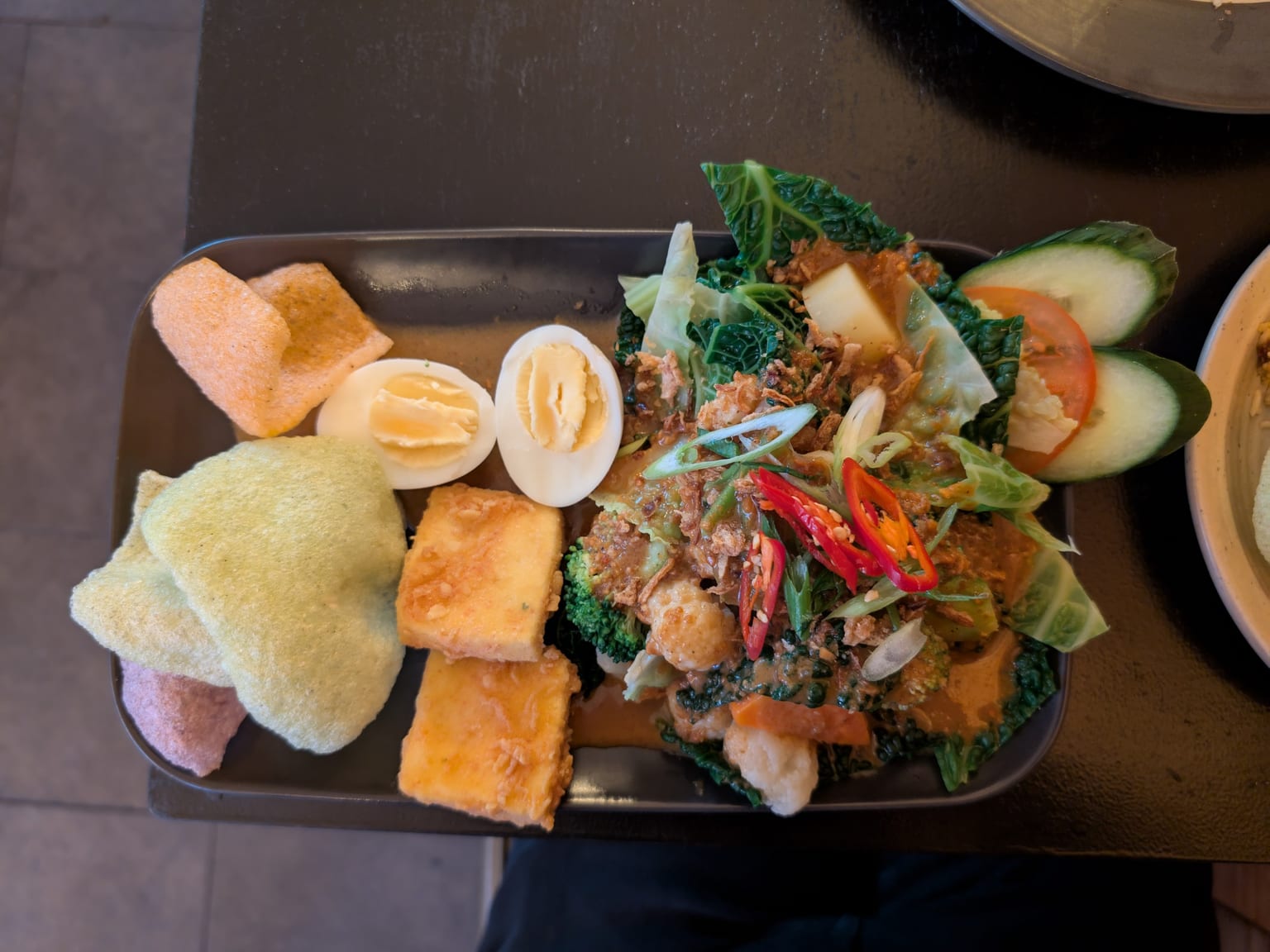
Gado-gado
Ein sättigendes indonesisches Hauptgericht aus blanchiertem Gemüse, Kartoffeln, Ei, gebratenem Tofu und Tempeh, Gurke und einer dicken Erdnusssauce mit Palmzucker, Tamarinde und Kecap Manis. Geröstete Schalotten sorgen für den knusprigen Abschluss.
Vorbereitung30 Min.
Garzeit30 Min.
Portionen4
Adaptiert von Daily Cooking Quest, Maangchi und Caroline's Cooking, mit dem Hintergrund zu Sambal Kacang und regionalen Variationen aus America's Test Kitchen
Zutaten
Geschrieben für: 4 L Topf
Einheiten
Temperatur
Portionen
Erdnusssauce, Sambal Kacang
- 250 g geröstete ungesalzene Erdnüsse, enthäutet gerundet
- 30 ml neutrales Öl, zum Anbraten der Aromaten gerundet
- 4 Knoblauchzehen gerundet
- 3 kleine rote Chilischoten, entkernt für weniger Schärfe, oder mehr nehmen gerundet
- 8 g Terasi, indonesische Garnelenpaste, geröstet gerundet
- 45 g Palmzucker, Gula Jawa, gehackt oder gerieben gerundet
- 20 ml Tamarindenpaste, das flüssige Konzentrat gerundet
- 30 ml Kecap Manis, indonesische süße Sojasauce gerundet
- 15 ml Limettensaft, zum Schluss zugegeben gerundet
- 5 g feines Salz gerundet
- 300 ml heißes Wasser gerundet
Der Salat
- 400 g festkochende Kartoffeln, in der Schale gekocht, geschält, in dicke Scheiben geschnitten gerundet
- 4 Eier, 8 Minuten gekocht, geschält, halbiert gerundet
- 300 g fester Tofu und Tempeh, je zur Hälfte, in 1 cm dicke Scheiben geschnitten, trocken getupft gerundet
- 300 ml Öl zum Ausbacken, etwa 1 cm hoch in einer kleinen Pfanne gerundet
- 200 g grüne Bohnen, in 5 cm lange Stücke geschnitten gerundet
- 200 g Weißkohl, fein geschnitten gerundet
- 150 g Mungbohnensprossen gerundet
- 150 g Spinat, Wasserspinat, Kangkung, wenn erhältlich gerundet
- 200 g Salatgurke, roh, in Scheiben geschnitten gerundet
- 20 g geröstete Schalotten, Bawang Goreng gerundet
- 40 g Krupuk, Garnelenchips oder Emping, zum Servieren (optional) gerundet
Angaben zur Ernährung sind ein Anhaltspunkt, keine Garantie. Bei einer Allergie bitte die Zutaten selbst prüfen.
Zubereitung
- Kochen Sie die Kartoffeln in ihren Schalen, bis ein Messer leicht hineingeht, etwa 20 Minuten. Kochen Sie die Eier 8 Minuten und lassen Sie sie in kaltes Wasser. Beide schälen.
- Bringen Sie einen Topf mit Salzwasser zum Kochen. Jedes Gemüse separat und kurz blanchieren: grüne Bohnen 3 Minuten, Kohl 2 Minuten, Sojasprossen 30 Sekunden, Spinat 20 Sekunden. Heben Sie jeden mit einer Spinne in kaltes Wasser und lassen Sie ihn dann hart abtropfen. Getrennt ist nicht pingelig, sie kochen mit völlig unterschiedlichen Geschwindigkeiten und matschige Sojasprossen ruinieren den Teller.
- Für die beste Textur den Tofu zuerst 3 Minuten im Ganzen in Salzwasser köcheln (siehe die Tofu-Grundformel). Zerreißen Sie ihn von Hand in grobe 3 cm große Stücke, so dass die Erdnusssauce zerklüftete Kanten zum Festhalten hat; schneiden Sie den Tempeh in saubere 1 cm große Stücke, da er bereits strukturiert ist. 1 cm Öl in einer kleinen Pfanne erhitzen und beide in Chargen goldbraun braten, etwa 4 Minuten pro Seite. Auf Papier abgießen und leicht salzen, während es heiß ist.
- Toasten Sie den Terasi: Wickeln Sie ihn in Folie ein und drücken Sie ihn eine Minute lang in eine trockene heiße Pfanne, oder rösten Sie ihn direkt in der Pfanne, bis er scharf und fischig riecht. Rohe Garnelenpaste schmeckt flach und leicht matschig, geröstet schmeckt sie herzhaft.
- Die 30 ml Öl in einer kleinen Pfanne erhitzen und den Knoblauch und die Chilis bei mittlerer Hitze 2 Minuten lang anbraten, bis sie weich und duftend, aber nicht gebräunt sind.
- Mahlen Sie die Erdnüsse, gebratenen Knoblauch und Chilis, geröstete Terasi, Palmzucker und Salz zu einer groben Paste. Eine Küchenmaschine ist in Ordnung. Stoppen Sie, solange es noch leicht körnig ist, Gado-Gado-Sauce ist nicht so glatt wie Satay-Sauce gedacht.
- Kratzen Sie es in eine Schüssel und rühren Sie die Tamarinde und Kecap Manis ein. Fügen Sie das heiße Wasser 100 ml auf einmal unter ständigem Rühren hinzu, bis die Sauce dick genug ist, um auf einem Löffel zu sitzen und langsam abzutropfen. Mit dem Limettensaft abschließen, dann abschmecken. Es sollte zuerst süß lauten, dann salzig, dann sauer, mit der Hitze dahinter. Mit Palmzucker, Salz oder Tamarinde anpassen.
- Alles auf einer großen Platte in Abschnitten anrichten: Kartoffel, blanchiertes Gemüse, Gurke, Tofu und Tempeh, Eier. Wirk es nicht weg.
- Löffeln Sie eine gute Menge Sauce darüber und legen Sie den Rest in eine Schüssel auf den Tisch. Die gebratenen Schalotten streuen. Servieren Sie den Krupuk daneben.
Hinweise
- **Warum es ein Hauptgericht und kein Salat ist. ** Kartoffel, Ei, gebratener Tofu, Tempeh und eine Erdnusssauce, die schwer genug ist, um einen Löffel hineinzustehen. In Indonesien ist dies ein Mittagessen, das von Karren und Warungs als komplette Mahlzeit verkauft wird, oft mit Lontong, komprimiertem Reiskuchen, der hinzugefügt wird. Servieren Sie es als Beilage zu etwas anderem und Sie haben ein sehr seltsames Abendessen.
- **Kecap manis in Deutschland. ** Weit verbreitet. Die Marke ABC aus Indonesien ist der Standard, verkauft als Ketjap Manis oder süße Sojasauce in Asia-Märkte, in niederländischen und indonesischen Toko-Shops und online über Reishunger, Asia-foodstore und toko24. Wenn Sie feststecken, köcheln Sie 3 Teile dunkle Sojasauce mit 2 Teilen dunkelbraunem Zucker oder Melasse, bis sie sirupartig und gießbar ist, und dann abkühlen lassen. Es ist nah genug.
- **Tamarinde in Deutschland. ** Asia-Märkte verkauft Tamarindenpaste oder Tamarindenmark, entweder als eingießbares Konzentrat in einem Glas oder als komprimierter Zellstoffblock mit Samen. Wenn Sie den Block kaufen, weichen Sie 30 g in 60 ml heißem Wasser ein, zerdrücken Sie ihn mit den Fingern und drücken Sie ihn durch ein Sieb. Türkische Geschäfte sind die andere gute Quelle, wo es als Demirhindi verkauft wird, manchmal als saurer Sirup. Limettensaft allein ist kein Ersatz, Tamarinde ist sauer und auch fruchtig und leicht melasseartig, und die Sauce wird flach ohne ihn. Wenn Sie wirklich keine haben, verwenden Sie 15 ml Limettensaft plus 5 g zusätzlichen Palmzucker und akzeptieren Sie, dass es sich um eine andere Sauce handelt.
- **Terasi in Deutschland. ** Verkauft als Terasi oder als Belacan unter malaysischen Marken, in einem harten, trockenen Block, der in Papier eingewickelt ist, manchmal mit Garnelenpaste gekennzeichnet. Es riecht alarmierend und schmeckt gut, wenn es einmal geröstet und verdünnt ist. Thai-Kapi in einer Wanne ist ein arbeitbarer Stand-in mit dem gleichen Gewicht. Für eine vegetarische Version lassen Sie es weg, fügen Sie 10 ml leichte Sojasauce und etwas mehr Salz hinzu und wissen Sie, dass Sie den Funk verlieren, der die Sauce zusammenhält. Pilzpulver oder ein Löffel weißes Miso bedeckt einen Teil der Lücke.
- **Palmzucker. ** Gula jawa oder gula merah, verkauft in harten braunen Scheiben oder Zylindern. Hacken Sie es mit einem Messer oder reiben Sie es. Dunkler Muscovado ist der nächste deutsche Supermarktersatz, gewöhnlicher brauner Zucker ist akzeptabel.
- **Erdnüsse oder Erdnussbutter. ** Ganze geröstete Erdnüsse, grob gemahlen, geben die Textur, die diese Sauce haben soll. Wenn Sie die Abkürzung wünschen, verwenden Sie 200 g natürliche ungesüßte Erdnussbutter plus 50 g grob gehackte geröstete Erdnüsse, die am Ende eingerührt werden, und schneiden Sie den Palmzucker auf 35 g. Verwenden Sie hier keine gesüßte Erdnussbutter im Supermarkt, die Sauce ist bereits süß und kippt um.
- Ein kurzes Köcheln in Salzwasser vor dem Zerreißen des Tofus festigt ihn schneller als Pressen und würzt ihn gleichzeitig, siehe die Tofu-Grundformel.
- **Tempeh. ** Jetzt in den meisten deutschen Bioläden und im veganen Kühler in größeren Rewe- und Edeka-Läden vorrätig. Es lohnt sich, es neben dem Tofu zu verwenden und nicht stattdessen, die beiden haben völlig unterschiedliche Texturen und der Kontrast ist halb so.
- Fehlerquellen. Wenn alles gleichzeitig blanchiert wird, verkochen Sprossen und Spinat. Nicht sorgfältig abgetropftes Gemüse verwässert die Sauce auf dem Teller. Die Sauce darf außerdem nicht zu dünn sein: Sie soll deutlich dicker als eine Satay-Dipsauce bleiben, damit sie am feuchten Gemüse haftet.
- Vorbereiten. Die Sauce hält sich eine Woche im Kühlschrank und dickt dabei nach. Vor dem Servieren mit heißem Wasser lockern und Limette sowie Salz erneut prüfen. Das Gemüse kann morgens blanchiert werden. Tofu und Tempeh erst kurz vor dem Servieren braten, da sie im Kühlschrank zäh werden.
- Reste. Alles samt Sauce grob hacken und am nächsten Tag kalt mit Reis essen. Das ist dann keine angerichtete Platte mehr, aber ein sehr gutes Mittagessen.
Verwendete Quellen
- Daily Cooking Quest: Gado-Gado
- Maangchi: Gado-gado
- Caroline’s Cooking: Gado gado
- America’s Test Kitchen: The Glories of Indonesian Gado Gado
Passt gut zu
Verwendete Quellen
Von Christoph Mayer