
Nachspeise Deutsch Europäisch Vegetarisch Nussfrei
Zwetschgenkuchen
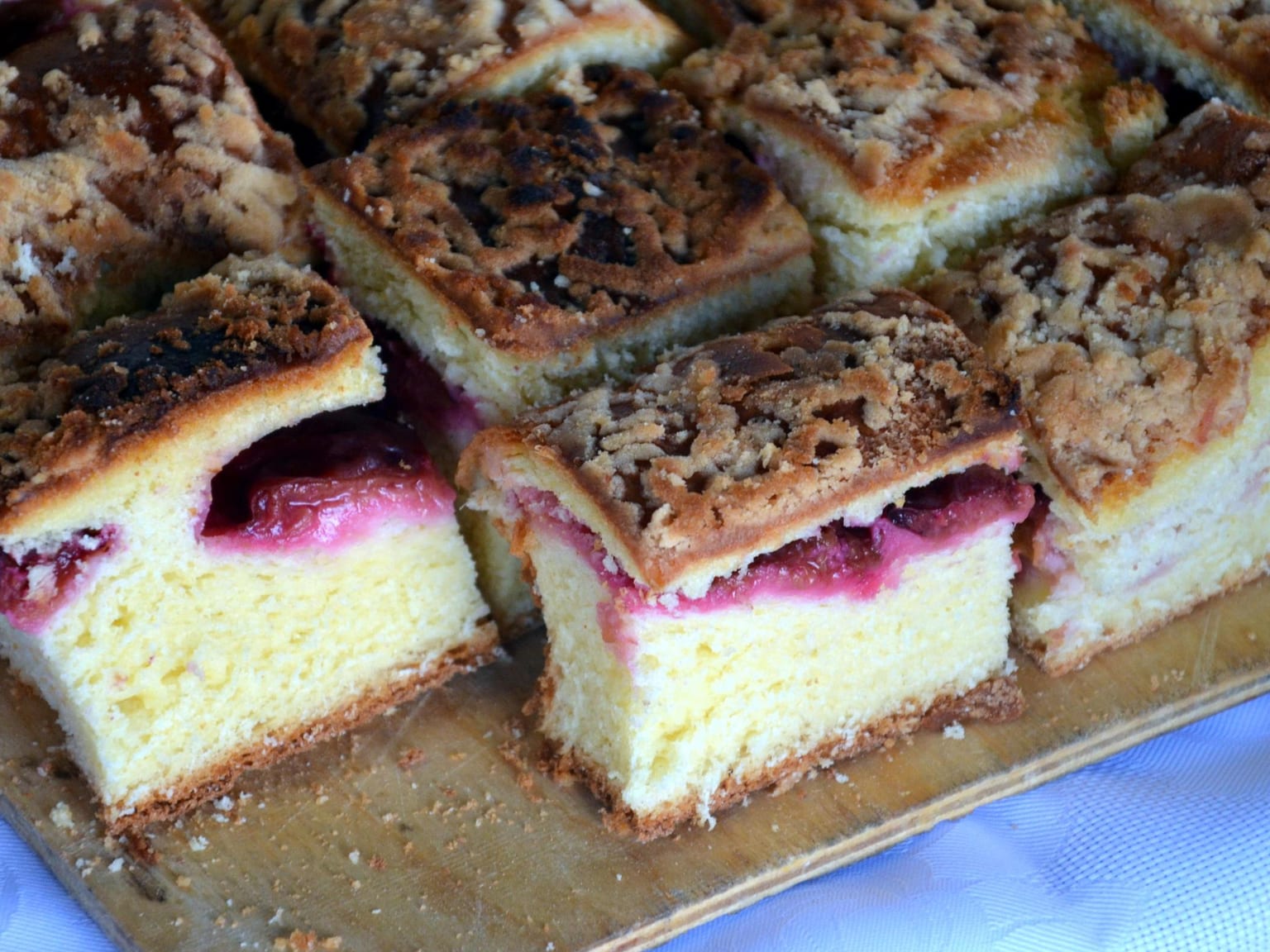
Der deutsche Pflaumenkuchen. Ein dünner Hefeteig, eine Streuung von Grieß, um die Basis trocken zu halten, und eineinhalb Kilo Zwetschgen, die wie Dachziegel auf der Schnittseite nach oben verpackt sind. Zimtzucker oder Streusel obendrauf, warm gegessen mit viel zu viel Schlagsahne.
Vereinigt mit den Versionen Dr. Oetker Blech und schwäbisch mit Bröseln, die Zwetschgendatschi-Rezepte bei Sheepy's Bakery, Maria es schmeckt mir, Brotwein und Kochen Kunst und Ketchup, wobei die Zwetschge- und Pflaume-Unterscheidung mit t-online, Bäckerei Spiegelhauer und Sheepy's Bakery verglichen werden. Teigmengen, die Grießschicht und die Ruhezeiten sind meine eigenen.
Zutaten
Geschrieben für: 30 × 40 cm Backblech
Hefeteig
- 500 g Weizenmehl Type 550 gerundet
- 250 ml Vollmilch, lauwarm, etwa 35°C gerundet
- 21 g frische Hefe, halber Würfel, oder 7 g Trockenhefe gerundet
- 60 g Zucker gerundet
- 80 g Butter, weich gerundet
- 1 Ei, Größe M, zimmerwarm gerundet
- 5 g feines Salz gerundet
- 1 Zitrone, unbehandelt, nur die Schale gerundet
- 10 g Butter, für das Blech gerundet
Zwetschgen und Bodenschicht
- 1 1/2 kg Zwetschgen, etwa 45 Stück, halbiert und entsteint gerundet
- 50 g Hartweizengrieß, auf den Teig gestreut; auch gemahlene Mandeln oder Semmelbrösel gerundet
- 30 g Zucker, für den Zimtzucker gerundet
- 4 g gemahlener Zimt, für den Zimtzucker gerundet
Streusel, nach Wunsch
- 200 g Weizenmehl Type 405 (optional) gerundet
- 120 g Zucker (optional) gerundet
- 130 g Butter, kalt, gewürfelt (optional) gerundet
- 8 g Vanillezucker, ein Päckchen (optional) gerundet
- 1 g feines Salz (optional) gerundet
Zum Servieren
- 400 ml Schlagsahne, mindestens 30% Fett, geschlagen, ungesüßt gerundet
Angaben zur Ernährung sind ein Anhaltspunkt, keine Garantie. Bei einer Allergie bitte die Zutaten selbst prüfen.
Zubereitung
- Erwärmen Sie die Milch auf etwa 35°C, nicht heißer, als Sie einen Finger hineinhalten können. Die frische Hefe mit einem Teelöffel Zucker darin zerbröckeln und 10 Minuten ruhen lassen, bis sie schäumt. Wenn Sie Instant-Trockenhefe verwenden, mischen Sie sie direkt in das Mehl und überspringen Sie diesen Schritt.
- Mehl, restlichen Zucker, Salz und Zitronenschale in eine Schüssel geben. Fügen Sie die Milch, das Ei und die weiche Butter hinzu und kneten Sie 8 Minuten mit der Maschine oder 12 Minuten von Hand. Der Teig ist fertig, wenn er sich in einem Stück von der Schüssel löst und langsam zurückspringt, wenn Sie ihn drücken. Es sollte weich und leicht klebrig sein, nicht steif.
- Abdecken und bei Raumtemperatur 60 bis 75 Minuten gehen lassen, bis sich das Volumen deutlich vergrößert hat. In einer kalten Küche kann es bis zu 2 Stunden dauern. Nicht auf der Heizung beschleunigen; zu warme Gare führt zu starkem Hefearoma und grober Krume.
- Während der Teig geht, die Zwetschgen waschen, entlang der Naht aufschneiden, die Hälften gegeneinanderdrehen und entsteinen. Erst unmittelbar vor der Verarbeitung waschen, denn der natürliche weiße Reif schützt die Früchte. Die Hälften mit der Schnittfläche nach oben auf ein mit Papier belegtes Blech legen, damit sie etwas abtrocknen.
- Das Backblech buttern. Den Teig kurz entgasen, direkt auf dem Blech bis in die Ecken ausrollen und mit den Fingerspitzen bis an die Ränder drücken. Er soll nur 5 bis 7 mm dick sein. Dies ist ein Obstkuchen mit dünnem Boden, kein Brot mit Obstbelag.
- Streuen Sie den Grieß gleichmäßig über die gesamte Oberfläche des Teigs. Es sieht aus wie zu wenig. Das ist es nicht.
- Die Zwetschgenhälften mit der Schnittfläche nach oben und der Haut nach unten dachziegelartig in überlappenden Reihen auflegen, so dicht, dass kein Teig sichtbar bleibt. Nur leicht in den Teig drücken. Zu starker Druck verletzt die Oberfläche und lässt Saft in den Boden laufen.
- Das belegte Blech offen 25 Minuten ruhen lassen. Währenddessen den Backofen auf 190°C Ober- und Unterhitze oder 170°C Umluft vorheizen und eine Schiene im unteren Drittel wählen.
- 35 bis 40 Minuten backen. Fertig ist der Kuchen, wenn der freie Teigrand tief goldbraun und der Zwetschgensaft glänzend und leicht sirupartig ist; einzelne Fruchtspitzen dürfen dunkel werden. Ab Minute 33 aufmerksam beobachten, denn überreduzierter Saft wird am Blechrand bitter.
- Zucker und Zimt mischen. Bestäuben Sie den Kuchen damit, sobald er herauskommt, solange die Oberfläche noch nass genug ist, um ihn zu halten.
- Den Kuchen auf sein Papier legen und unbedeckt abkühlen. Decken Sie niemals einen warmen Pflaumenkuchen ab. Der Dampf kondensiert auf der Frischhaltefolie, läuft wieder herunter und erweicht die Oberseite, die Sie gerade knusprig gemacht haben.
- Servieren Sie es warm oder kaum lauwarm, in Quadrate geschnitten, mit ungesüßter Schlagsahne. Der Kuchen enthält genug Zucker für beide.
Hinweise
- Zwetschgen sind keine gewöhnlichen Pflaumen. Die länglichen, blauvioletten Früchte haben festes gelbgrünes Fleisch, lösen sich sauber vom Stein und behalten im Ofen ihre Form. Runde Pflaumen sind weicher, süßer und saftiger; auf einem Blechkuchen können sie zerfallen und den Teig durchnässen. In Kanada nach Italian prune plums suchen, die derselben Frucht entsprechen. Auch Damsons eignen sich und schmecken säuerlicher. Sind nur große runde Pflaumen erhältlich, diese vierteln, leicht salzen, 30 Minuten im Sieb abtropfen lassen, trocken tupfen und die Grießmenge auf 100 g erhöhen.
- So bleibt der Boden trocken. Erstens eine saugfähige Schicht zwischen Teig und Obst streuen: feinen Grieß, gemahlene Mandeln oder trockene Semmelbrösel. Grieß bindet am meisten Saft und bleibt körnig. Für aromatischere gemahlene Mandeln 60 g verwenden; Semmelbrösel binden schwächer und können pastig werden. Zweitens die Früchte mit der Schnittfläche nach oben auflegen. Die Haut wirkt nach unten als Barriere und der Saft kann als Dampf nach oben entweichen. Drittens im unteren Ofendrittel bei echten 190°C backen, damit der Boden fest wird, bevor die Früchte viel Wasser abgeben. Den Teig mit Eiweiß zu bestreichen bringt unter 1,5 kg Obst dagegen keinen messbaren Vorteil.
- Drei mögliche Teige. Hefeteig ist die traditionelle Basis in Schwaben und Bayern. Auf einem vollen Blech bleibt er unter der schweren Fruchtauflage leicht und nimmt etwas Saft auf, ohne breiig zu werden. Für dasselbe 30 x 40 cm große Blech gibt es zwei Alternativen:
- Mürbeteig, Shortcrust, knuspriger und mehr wie eine Torte: 400 g Mehl Typ 405, 200 g kalte Butterwürfel, 130 g Zucker, 1 Ei, 1 Prise Salz. Zu Krümel reiben, das Ei einarbeiten, zu einer Scheibe zusammendrücken, 30 Minuten kühlen, dann 4 mm dick in das Blatt drücken. Alles einstechen, Grieß, Obst und bei 180°C 35 bis 40 Minuten backen. Es ist die bessere Wahl, wenn Sie am nächsten Tag ordentliche Stücke kalt schneiden möchten.
- Rührteig, ein cremiger Teig, weicher und schneller: 250 g weiche Butter, 200 g Zucker, 4 Eier, 300 g Mehl Typ 405, 15 g Backpulver, 100 ml Milch. Butter und Zucker cremig schlagen, die Eier nach und nach einschlagen, das Mehl und das Backpulver mit der Milch unterheben, auf dem Blech verteilen. Die Früchte auf 1,2 kg senken, da der Teig um sie herum aufsteigt, und bei 180°C 40 bis 45 Minuten backen. Dieser braucht keinen Grieß; der Teig nimmt den Saft selbst auf.
- Streusel sind optional und verändern den Charakter. Mit Streuseln wird der Kuchen üppiger und hält etwa 1 Tag länger; ohne sie steht das Fruchtaroma im Mittelpunkt. Für Streusel Mehl, Zucker, Vanillezucker, Salz und kalte Butter mit den Fingerspitzen zu erbsen- bis haselnussgroßen Klumpen verreiben. Vor dem Backen über die Früchte streuen und etwa 5 Minuten länger backen. Nicht zu einer Paste verkneten. Wird die Mischung durch warme Hände fettig, 15 Minuten kühlen und erneut locker zerreiben.
- Essen Sie es warm, mit viel ungesüßter Schlagsahne. Dies ist keine Garniturentscheidung. Warme Pflaume und kalte Sahne sind der Punkt des Gerichts. Und es ist nicht nur ein Dessert: In Schwaben zählt ein Stück warmer Zwetschgenkuchen mit Kaffee als Vesper und kann für eine Mahlzeit einspringen, und in der Pfalz wird derselbe Kuchen zum Mittagessen mit Kartoffelsuppe gegessen.
- Der Kuchen hält sich zwei Tage lang bei Raumtemperatur unter einem Geschirrtuch, niemals unter Plastik. Es wird im Kühlschrank nicht besser. Es gefriert gut in geschnittenen Stücken: Wickeln Sie sie einzeln ein und erwärmen Sie sie 15 Minuten lang bei 160°C, wodurch die Oberseite zurückgebracht wird.
- Zwetschgen lassen sich sehr gut einfrieren. In der Saison halbieren und entsteinen, zunächst flach auf einem Blech einfrieren und anschließend verpacken. Gefroren auf den Teig legen, die Backzeit um etwa 5 Minuten verlängern und bis zu 80 g Grieß verwenden, da tiefgekühlte Früchte mehr Wasser abgeben.
Verwendete Quellen
- Dr. Oetker: Zwetschgenkuchen vom Blech
- Dr. Oetker: Schwäbischer Zwetschgenkuchen mit Bröseln
- Sheepy’s Bakery: Zwetschgendatschi mit Hefeteig
- Sheepy’s Bakery: Zwetschgen vs. Pflaumen
- Maria es schmeckt mir: Saftiger Zwetschgendatschi, das Originalrezept aus Hefeteig
- Brotwein: Zwetschgenkuchen mit Streusel und Hefeteig vom Blech
- Kochen Kunst und Ketchup: Schwäbischer Zwetschgenkuchen
- t-online: Pflaumen und Zwetschgen zum Backen, ist eine Frucht besser geeignet?
- Bäckerei Spiegelhauer: Zwetschge, Pflaume, Mirabelle, womit Pflaumenkuchen backen?
- Wikipedia: Zwetschgenkuchen
Passt gut zu
Von Christoph Mayer