
Nachspeise Deutsch Europäisch Vegetarisch Nussfrei
Apfelküchle
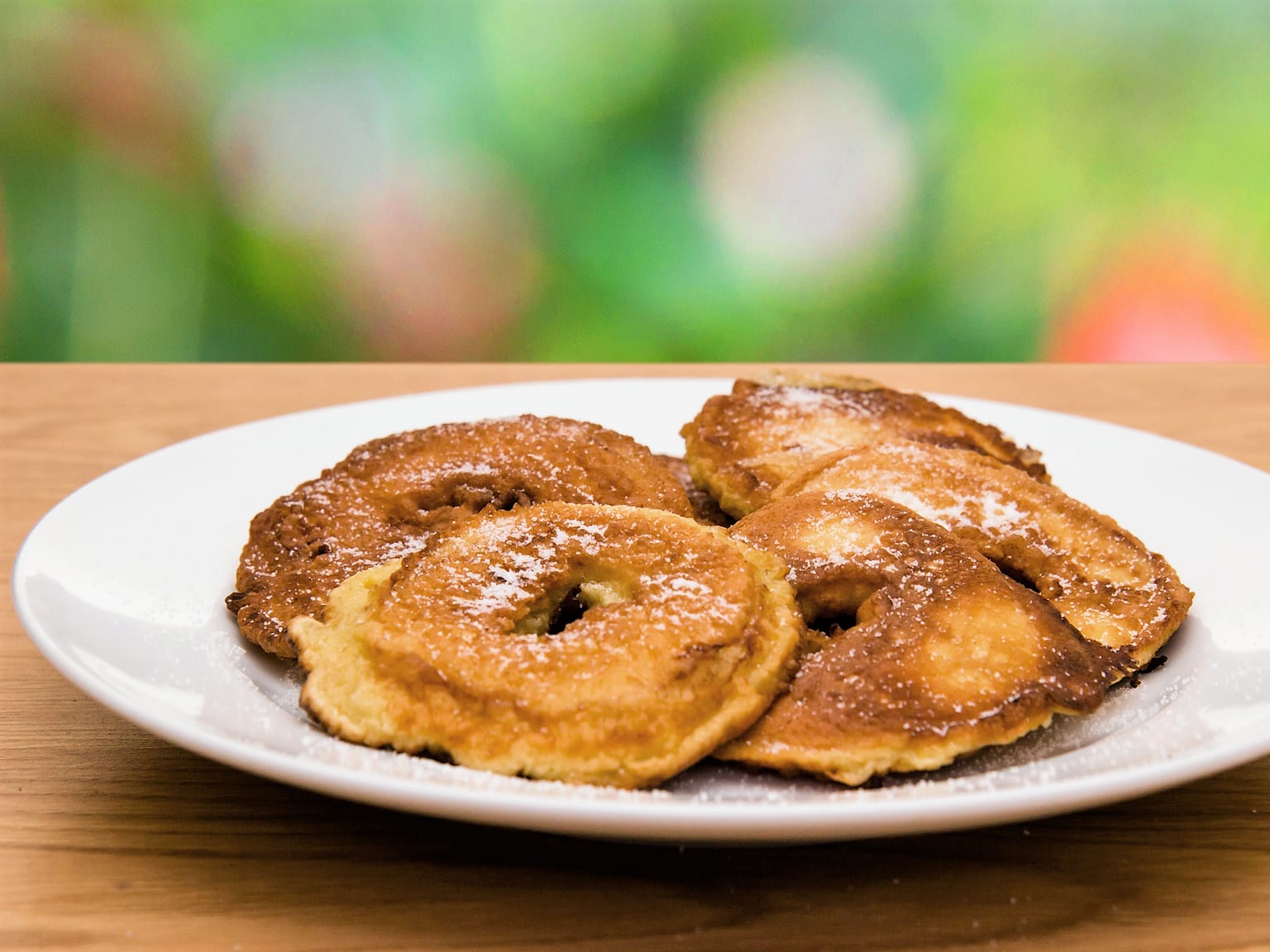
Schwäbische Apfelküchle aus säuerlichen Boskop-Ringen in dickem, mit Eischnee gelockertem Ausbackteig. Goldbraun ausgebacken, noch heiß in Zimtzucker gewendet und mit Vanillesoße serviert.
Vereint mit den schwäbischen Versionen bei Brotwein, Simply Yummy und Gutekueche, dem Simon Tress-Rezept von Echt Schwäbisch, wie von Tress Brüder veröffentlicht, der gefalteten Weiß-Methode bei Bake to the Roots und der Kerrygold-Bierteig-Version, wobei die Vanillesoße von meinem Ofenschlupfer übernommen wurde.
Zutaten
Geschrieben für: 26 cm Pfanne
Einheiten
Temperatur
Portionen
Ausbackteig
- 200 g Weizenmehl Type 405 gerundet
- 250 ml Vollmilch gerundet
- 2 Eier, Größe M, getrennt gerundet
- 30 g Zucker gerundet
- 8 g Vanillezucker, ein Päckchen gerundet
- 2 g feines Salz gerundet
- 15 ml brauner Rum, oder Calvados, oder weglassen (optional) gerundet
Äpfel und Ausbacken
- 4 säuerliche Backäpfel, etwa 700 g, am besten Boskop gerundet
- 15 ml Zitronensaft gerundet
- 700 ml neutrales Frittieröl, so viel, dass es 2 cm hoch steht, in einer 26-cm-Pfanne etwa 700 ml; traditionell Butterschmalz gerundet
- 60 g Zucker, für den Zimtzucker gerundet
- 6 g gemahlener Zimt, für den Zimtzucker gerundet
Vanillesoße
- 350 ml Vollmilch gerundet
- 150 ml Sahne gerundet
- 1 Vanilleschote, längs aufgeschnitten gerundet
- 40 g Zucker gerundet
- 3 Eigelb gerundet
- 8 g Speisestärke gerundet
- nach Geschmack feines Salz gerundet
Angaben zur Ernährung sind ein Anhaltspunkt, keine Garantie. Bei einer Allergie bitte die Zutaten selbst prüfen.
Zubereitung
- Mehl, Zucker, Vanillezucker und Salz verquirlen. Die Milch und das Eigelb einrühren, bis sie vollständig glatt sind, dann den Rum. Abdecken und 20 Minuten ruhen lassen. Dies ist nicht optional: Der ungeruhte Teig ist körnig und rutscht vom Apfel ab.
- Machen Sie die Vanillesoße, während der Teig ruht. Die Milch, die Sahne und die gespaltene Vanilleschote zum Köcheln bringen, die Pfanne vom Herd nehmen und 10 Minuten ziehen lassen. Das Eigelb mit dem Zucker, der Maisstärke und einer Prise Salz verquirlen. Gießen Sie eine Schöpfkelle der heißen Milch unter Rühren in das Eigelb, geben Sie alles wieder in die Pfanne und rühren Sie bei schwacher Hitze um, bis es einen Löffel bedeckt. Unter 80°C aufbewahren. Darüber rühren das Eigelb und keine Menge an Schneebesen bringt es zurück. Fischen Sie die Schote heraus und halten Sie sie warm.
- Zucker und Zimt auf einem breiten Teller vermischen.
- Schälen Sie die Äpfel, drücken Sie den Kern von jedem mit einem Apfelkern heraus und schneiden Sie sie in 8 mm dicke Ringe. Dünner und sie verschwinden im Teig; dicker und die Mitte ist noch roh, wenn die Schale fertig ist. Die Ringe mit dem Zitronensaft vermischen und auf einem Geschirrtuch trocken tupfen. Nasser Apfel verschüttet seinen Teig im Fett.
- Gießen Sie das Öl bis zu einer Tiefe von 2 cm in die Pfanne und erhitzen Sie es auf 170°C. Ohne Thermometer: Ein Weißbrotwürfel sollte in etwa 50 Sekunden braun werden. Unter 160°C trinken die Krapfen Öl und werden schwer; über 180°C wird die Schale braun, bevor der Apfel weich wird.
- Schlagen Sie das Eiweiß zu einer weichen Spitze und falten Sie es in zwei Zugaben in den Teig. Verwenden Sie es innerhalb weniger Minuten. Der Teig sollte einen Ring dick beschichten und in einem langsamen Band vom Löffel fallen. Wenn es abläuft, weitere 20 g Mehl einrühren.
- Die Ringe in den Teig tauchen, mit einer Gabel herausheben und den Überschuss zwei Sekunden ablaufen lassen. Dann vom Körper weg in das Fett gleiten lassen. Nur drei oder vier Stück gleichzeitig ausbacken. Eine überfüllte Pfanne senkt die Öltemperatur und macht die Küchle fettig.
- 2 bis 3 Minuten pro Seite braten. Drehen Sie sie, wenn die Unterseite die Farbe eines dunklen Honigs hat und die Ränder fest und blasenig sind. Sie sind fertig, wenn beide Seiten gleichmäßig tief vergoldet sind und ein Spieß im Apfel keinen Widerstand trifft.
- Heben Sie sie 15 Sekunden lang auf Küchenpapier, dann direkt in den Zimtzucker und drehen Sie sie hinein. Machen Sie es, während sie heiß sind; der Zucker muss leicht auf der Kruste schmelzen, um zu kleben. Kalte Krapfen haben es einfach verschüttet.
- Sofort mit der warmen Vanillesoße servieren. Sie sind in Bestform, etwa eine Minute aus der Pfanne und nach zehn sind sie merklich schlechter.
Hinweise
- Der Teig: welcher und warum. Deutsche Hausrezepte verwenden überwiegend einen einfachen Milch-, Ei- und Mehlpfannkuchenteig, dick, ausgeruht, und das ist es. Bierteig ist die Gasthaus-Version: Ersetzen Sie 60 ml Milch durch 60 ml Weizen oder Pils und Sie erhalten eine knusprigere, trockenere, leicht herzhafte Schale, die länger auf dem Teller hält, was genau das ist, was ein Restaurant braucht und genau das, was ein Hausmann nicht braucht. Ein Hefeteig gibt es auch in älteren deutschen Backbüchern, 200 g Mehl mit 10 g frischer Hefe und 200 ml warmer Milch bleiben 45 Minuten, um zu gären, und es pufft zu etwas, das einem Donut um den Apfel herum kommt. Stattdessen falte ich geschlagenes Eiweiß in den Milchteig. Es bekommt den größten Teil des Auftriebs der Hefeversion ohne Wartezeit, und es ist der Kompromiss, zu dem mehrere deutsche Quellen unabhängig voneinander gekommen sind.
- Boskop, und warum ein weicher Apfel versagt. Boskop ist die Standardantwort in Deutschland und es ist die richtige. Es ist scharf sauer, das Fruchtfleisch ist dicht und wasserarm, und es hält eine Ringform bei 170°C lange genug, damit sich die Schale festigen kann. Ein weicher süßer Apfel, Gala, Golden Delicious, Red Delicious, macht zwei Dinge falsch: Er kollabiert in der Sauce im Teig, so dass der Ring hohl wird, und er setzt Dampf und Saft frei, die den Teig von innen von der Frucht drücken, wodurch ein Krapfen spalten und spucken. Boskop kann außerhalb Deutschlands schwer zu finden sein. Verwenden Sie in Kanada Northern Spy, Ida Red, Cortland oder eine feste Granny Smith. Elstar, Jonagold, Braeburn und Cox Orange arbeiten alle in Deutschland.
- Braten von Öl ist eine feste Menge, keine skalierte. Sie benötigen 2 cm Tiefe in der Pfanne, die Sie verwenden, was etwa 700 ml in einer 26 cm großen Pfanne entspricht, und diese Zahl ändert sich nicht, egal ob Sie vier Ringe oder zwanzig braten. Sonnenblumen- oder Rapsöl ist das, was die meisten deutschen Küchen verwenden. Butterschmalz ist das traditionelle Fett und schmeckt besser, aber es ist bei diesem Volumen teuer; eine 50:50-Mischung aus Öl und Butterschmalz ist eine vernünftige Mitte. Verwenden Sie kein Olivenöl oder einfache Butter, die beide deutlich unter 170°C brennen.
- Die Pfanne ist die Einschränkung. Das Verdoppeln des Teigs bedeutet nicht eine größere Pfanne, sondern mehr Chargen. Halten Sie die fertigen Krapfen auf einem Rost in einem 90°C-Ofen, niemals auf einem Teller und niemals abgedeckt. Zehn Minuten ist das Limit, bevor die Kruste nachgibt.
- Das gebrauchte Öl durch einen Kaffeefilter abseihen, während es warm ist, in einem Glas im Dunkeln aufbewahren, und es ist gut für eine weitere Runde Braten. Alles, was vorbei ist, riecht nach altem Apfel.
- Die Vanillesoße hält zwei Tage. Drücken Sie Frischhaltefolie auf die Oberfläche, damit sie nicht häutet, und erwärmen Sie sie unter Rühren vorsichtig auf, ohne sie kochen zu lassen.
- Ofenschlupfer ist bereits auf der Website und diese beiden sind die gleiche Apfel-Zimt-Familie, einer gebacken und langsam, einer gebraten und schnell. Beide wollen die gleiche Torte, den gleichen festen Apfel, und beide wollen Vanillesoße. Wenn Sie im Oktober einen Überfluss an Boskop haben, machen Sie die Küchle an dem Tag, an dem Sie sie kaufen, und die Ofenschlupfer an dem Tag, an dem die Weckle abgestaben werden.
Verwendete Quellen
- Brotwein: Apfelküchle Rezept, einfach wie von Oma
- Simply Yummy: Omas Apfelküchle
- Gutekueche.de: Apfelküchle
- Tress Brüder: Apfelküchle mit Vanillesoße, aus Simon Tress, Echt Schwäbisch
- Bake to the Roots: Apple Fritters, schwäbische Apfelküchle mit Vanillesoße
- Kerrygold: Apfelküchle im Bierteig mit Vanillesoße
Passt gut zu
Verwendete Quellen
Von Christoph Mayer