
Nachspeise Österreichisch Europäisch Vegetarisch Nussfrei
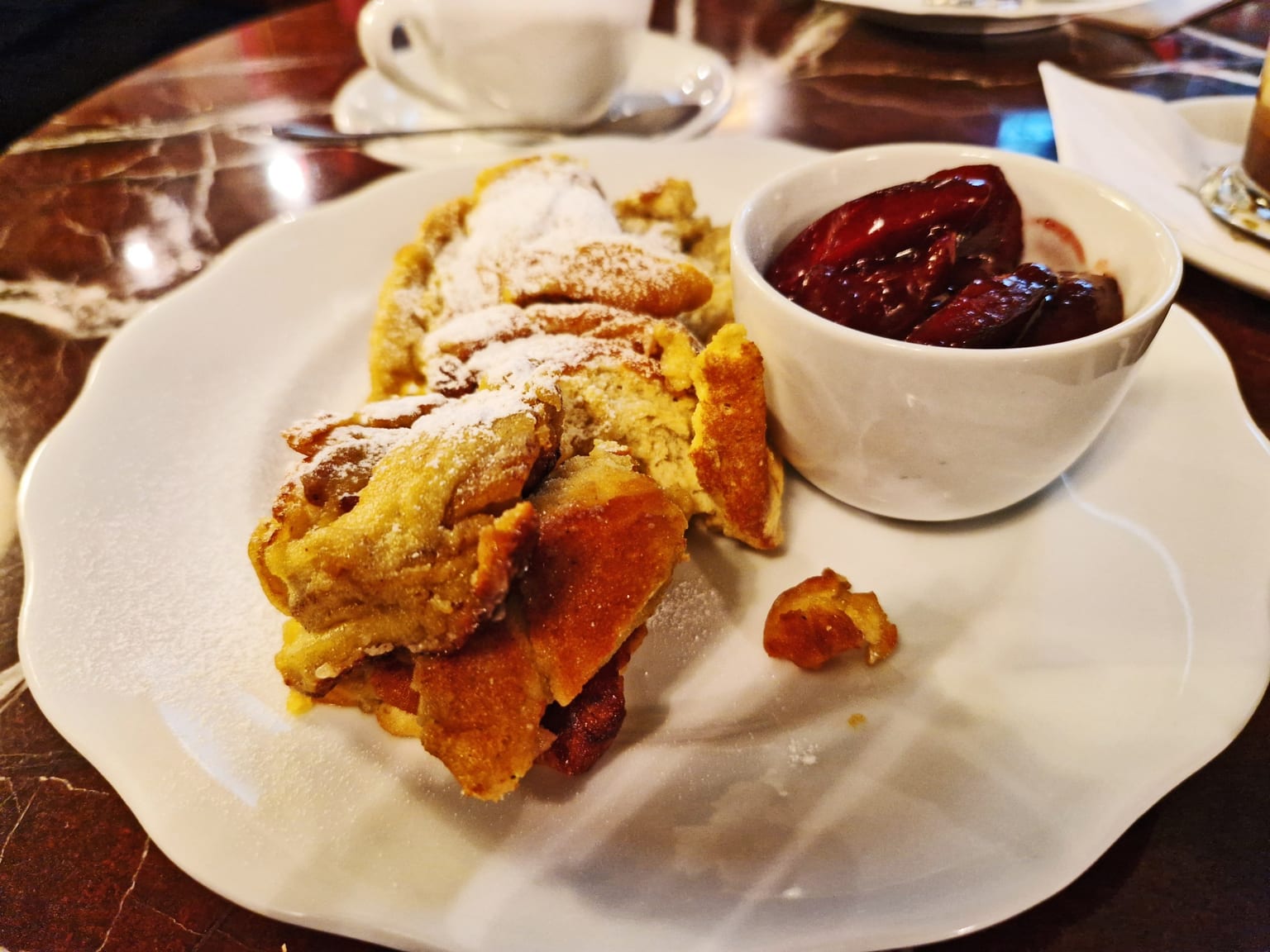
Kaiserschmarrn
Der zerrissene österreichische Pfannkuchen. Geschlagenes Eiweiß zu einem dünnen Teig gefaltet, in Butter gebacken, im Ofen fertig, in Stücke gerissen, dann in der Pfanne mit Butter und Zucker karamellisiert, bis die Ränder knistern. Rum-Rosinen, Puderzucker und Zwetschgenröster daneben.
Erbaut aus dem traditionellen Lebensmitteleintrag des österreichischen Landwirtschaftsministeriums für Kaiserschmarren, den Essen und Trinken und Grubhof-Versionen, der Karamellisierungsmethode von Brotwein und Schlaffenwelt und dem Zwetschkenröster von Gutekueche.at und Dr. Oetker Österreich. Die Verhältnisse, die Ofenveredelung und die Reihenfolge des Karamellisierungsschritts sind meine.
Zutaten
Geschrieben für: 28 cm Pfanne
Rumrosinen
- 60 g Rosinen gerundet
- 50 ml brauner Rum, oder warmer Apfelsaft für die Kinderversion gerundet
Teig
- 4 Eier, Größe M, getrennt, zimmerwarm gerundet
- 250 ml Vollmilch gerundet
- 140 g Weizenmehl Type 405, gesiebt gerundet
- 40 g Zucker, für den Eischnee gerundet
- 8 g Vanillezucker, ein Päckchen gerundet
- 2 g feines Salz gerundet
- 1 Zitrone, unbehandelt, nur die Schale (optional) gerundet
- 30 g Butterschmalz, für die Pfanne, ersatzweise Butter gerundet
Karamellisieren und Anrichten
- 25 g Butter gerundet
- 30 g Zucker gerundet
- nach Geschmack Puderzucker, zum Bestäuben gerundet
Zwetschgenröster
- 500 g Zwetschgen, reif, halbiert und entsteint, große geviertelt gerundet
- 70 g Zucker gerundet
- 60 ml Wasser gerundet
- 1 Zimtstange gerundet
- 2 Gewürznelken gerundet
- 15 ml Zitronensaft gerundet
- 20 ml brauner Rum, nach dem Kochen eingerührt (optional) gerundet
Angaben zur Ernährung sind ein Anhaltspunkt, keine Garantie. Bei einer Allergie bitte die Zutaten selbst prüfen.
Zubereitung
- Geben Sie die Rosinen und den Rum in eine kleine Schüssel und lassen Sie sie mindestens 30 Minuten oder über Nacht stehen. Lassen Sie sie ab, bevor sie in die Nähe der Pfanne gehen, und bewahren Sie den Rum für den Röster auf.
- Machen Sie zuerst den Zwetschgenröster, weil er etwas abkühlen will. Zucker, Wasser, Zitronensaft, Zimtstange und Nelken in einem kleinen Topf zum Kochen bringen. Fügen Sie die Pflaumen hinzu, decken Sie sie ab und kochen Sie sie 20 bis 25 Minuten lang. Es ist fertig, wenn sich die Haut gelockert hat und die Frucht weich ist, aber immer noch in erkennbaren Stücken. Zu einem Püree gekocht, ist es Apfelmus mit einem Pflaumenakzent, der den Punkt verfehlt. Fischen Sie die Zimtstange und die Nelken heraus und rühren Sie den Rum von der Hitze ab. Servieren Sie es warm oder bei Raumtemperatur.
- Trennen Sie die Eier. Das Eigelb mit der Milch, dem Vanillezucker, dem Salz und der Zitronenschale verquirlen, dann das gesiebte Mehl glatt rühren. Lassen Sie es 15 Minuten stehen, damit das Mehl Feuchtigkeit spendet. Der Teig sollte die Dicke der Gießcreme haben.
- Schlagen Sie die Weißen und fügen Sie die 40 g Zucker in einem langsamen Strom hinzu, sobald sie schaumig sind, bis zu einer weichen, glänzenden, kompakten Spitze. Stoppen Sie, während der Gipfel immer noch an der Spitze nickt. Trocken geschlagen brechen die Weißen in Klumpen, die sich nicht zusammenfalten lassen, und Sie erhalten weiße Streifen durch den fertigen Schmarrn.
- Ein Drittel der Weißen in den Teig falten, um ihn zu lockern, dann den Rest mit einem Spatel in zwei Tritte falten, nach unten schneiden und entlang des Bodens streichen. Stoppen Sie den Moment, in dem der letzte weiße Streifen verschwindet. Kochen Sie es sofort.
- Den Ofen auf 200°C erhitzen. Stellen Sie eine 28 cm ofenfeste Pfanne auf mittlere Hitze und schmelzen Sie die geklärte Butter, bis sie schäumt, aber nicht braun wird. Gießen Sie den Teig auf einmal hinein und nivellieren Sie ihn. Es sollte leise zischen, nicht spucken. Zu heiß und die Unterseite ist dunkel, bevor die Mitte ausgegangen ist; zu kühl und das Ganze wird grau und gummiartig. Mittel und etwa 2 cm tief, ist richtig.
- 3 bis 4 Minuten kochen, bis die Unterseite gleichbraun ist und die Oberseite gerade ihren feuchten Glanz verloren hat. Streuen Sie nun die abgetropften Rosinen über die Oberfläche. Geben Sie sie in den Teig und sie sinken in die Pfanne und versengen.
- Schieben Sie die Pfanne für 7 bis 9 Minuten in den Ofen. Das Oberteil pufft und fühlt sich trocken an. Ein 4-Eier-Teig ist zu dick, um es sauber umzudrehen, und der Ofen setzt die Mitte ein, ohne den Boden über das Gold hinaus zu drücken.
- Nehmen Sie die Pfanne heraus, stellen Sie sie wieder auf mittlere Hitze und zerreißen Sie den Pfannkuchen mit zwei Gabeln oder der Kante eines Holzspatels in grobe Stücke von der Größe einer Walnuss. Zerreißen, nicht schneiden. Zerrissene Kanten sind das, was das Karamell hält. Sogar Stücke, die mit einem Messer geschnitten werden, rutschen heraus.
- Drücken Sie die Stücke zur Seite, lassen Sie die Butter in das nackte Metall fallen und streuen Sie die 30 g Zucker darüber. Lassen Sie den Zucker etwa 45 Sekunden lang schmelzen und blass bernsteinfarben werden, dann die Stücke durchrühren und 2 Minuten lang wenden, bis die Ränder knusprig und glasiert sind. Dieser Schritt ist der ganze Unterschied zwischen Kaiserschmarrn und Rührei, also überspringe ihn nicht und sei nicht schüchtern mit der Butter.
- Auf warme Teller geben, kräftig mit Puderzucker bestäuben und mit dem Zwetschgenröster servieren. Es wartet auf niemanden: Innerhalb von fünf Minuten wird das Karamell weicher und die knusprigen Ränder gehen weg.
Hinweise
- **Beim Schlagen des Eiweißes. ** Das ist das Argument in jeder österreichischen Küche und die Quellen sagen nicht alle dasselbe. Die deutsche Wikipedia beschreibt die einfache Version als Mehl, Milch, Eier, Zucker und Salz, die zusammengeschlagen wird, wobei die getrennte und gefaltete Version die aufwändigere ist. Der eigene Eintrag des österreichischen Landwirtschaftsministeriums auf Kaiserschmarren, Teil seines Registers traditioneller Lebensmittel, gibt ein Rezept, das die Weißen mit Zucker zu einem kompakten, aber geschmeidigen Schnee schlägt und sie zusammenfaltet. Trennen ist also kein moderner Blitztrick: Es steht in der offiziellen österreichischen Beschreibung des traditionellen Gerichts. Was es ist, ist die verfeinerte Version. Der rustikale Schmarrn, von dem der Name abstammt, ein Bauernhaus und ein alpines Milchgericht, das seit dem sechzehnten Jahrhundert aufgezeichnet wurde, wurde in einer Schüssel zusammengeschlagen. Trennen Sie die Eier. Die ungetrennte Version ist flach und näher an einem zerrissenen Crêpe, und wenn Sie den gefalteten gegessen haben, können Sie nicht mehr zurückgehen.
- **Pfanntemperatur, in einfachen Worten. ** Mittel. Die Butter sollte schäumen und blass bleiben. Wenn der Teig spuckt, wenn er auf die Pfanne trifft, ist er zu heiß. Wenn zehn Sekunden lang nichts passiert, ist es zu cool. Gusseisen ist ideal, weil es die Hitze hält, wenn der kalte Teig landet; eine dünne Pfanne senkt die Temperatur und dämpft den Boden.
- **Wann zu zerreißen. ** Nach dem Ofen, nicht vorher. Zerrissen, während die Mitte noch nass ist, schweißen die Stücke wieder zu einem teigigen Klumpen zusammen. Zerrissen, sobald es fest ist, bleiben sie getrennt und nehmen das Karamell auf.
- **Breden Sie den Ofen? ** Für eine Charge von 2 Eiern in einer kleinen Pfanne, nein: Kochen Sie eine Seite, drehen Sie sie mit zwei Spateln in Viertel und beenden Sie sie auf dem Herd. Für diese 4-Eier-Charge in einer 28-cm-Pfanne sitzt der Teig etwa 2 cm tief, und das Umdrehen ist ein Chaos. Der Ofen ist der zuverlässige Weg.
- **Dies ist ein Hauptgericht in Österreich, nicht nur ein Dessert. ** Das Ministerium erklärt es eindeutig: Kaiserschmarren wird sowohl als süßes Hauptgericht als auch als Dessert serviert. Österreichische Mehlspeisen besetzen einen Ort, der kein englisches Äquivalent hat, ein süßes Gericht, das zum Mittagessen gegessen wird, bevor nichts Herzhaftes. Portionieren Sie es als vier Desserts oder als zwei bis drei Hauptgerichte und passen Sie den Röster entsprechend an.
- **Die Pfanne ist die Einschränkung, nicht die Portionen. ** Eine 28-cm-Pfanne braucht 4 Eier und nicht mehr. Um sechs zu füttern, kochen Sie zwei Chargen hintereinander statt einer tiefen, oder die mittlere wird nie fest. Halten Sie die erste Charge in einem niedrigen Ofen warm, unbedeckt, und karamellisieren Sie beide am Ende zusammen.
- Zwetschgenröster ist der klassische Partner, und es lohnt sich, es im September zu machen, wenn die Zwetschgen billig sind. Verwenden Sie die gleichen festen italienischen Pflaumen wie der Zwetschgenkuchen; Pflaumen kollabiert in zwanzig Minuten zu pürieren. Verdoppelt und heiß in sterilisierten Gläsern verpackt, hält es monatelang in einem kühlen Schrank. Außerhalb der Saison ist Apfelmus die Standardalternative und niemand in Österreich wird Einwände erheben.
- Der Name hat nichts Zuverlässiges mit Kaiser Franz Joseph zu tun. Das Ministerium verfolgt Schmarren plausibler zu Kaser, einem Milchbauern, oder zu casa. Es gibt mehrere kaiserliche Legenden und keine davon ist dokumentiert. Es ist so oder so ein gutes Gericht.
Verwendete Quellen
- BMLUK Austria: Kaiserschmarren, traditionelle Lebensmittel
- Essen und Trinken: Kaiserschmarrn, das Originalrezept
- Grubhof: Der beste Kaiserschmarrn aus Österreich, Originalrezept
- Brotwein: Karamellisierter Kaiserschmarrn in der Pfanne gebacken
- Schlaraffenwelt: Der perfekte Kaiserschmarrn und sein Geheimnis
- Wikipedia: Kaiserschmarrn
- Gutekueche.at: Zwetschkenröster
- Dr. Oetker Österreich: Zwetschkenröster
Passt gut zu
Von Christoph Mayer