
Beilage Deutsch Europäisch Vegetarisch
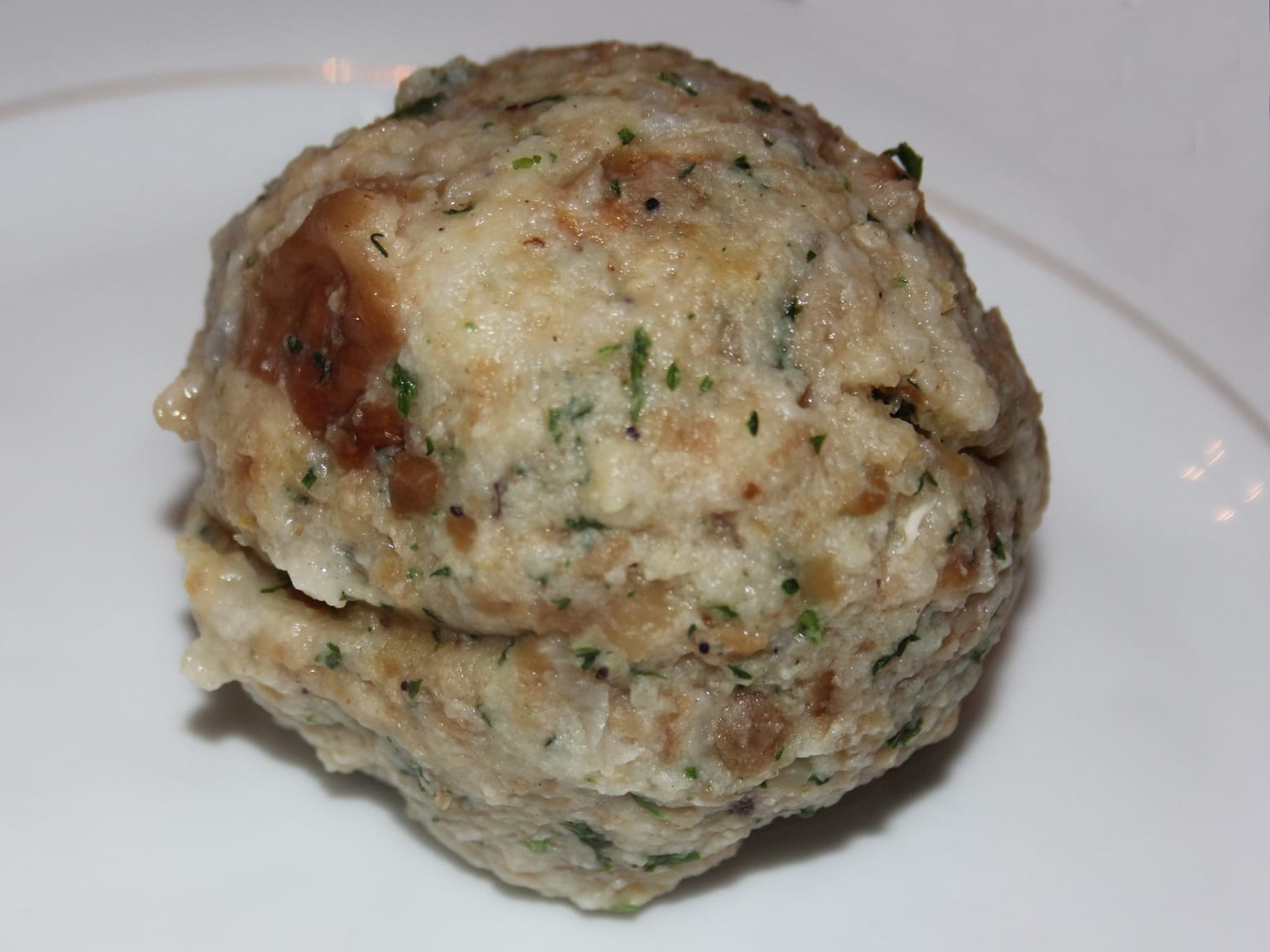
Semmelknödel
Bayerische Brotknödel aus alten Brötchen, die in warmer Milch mit Ei, Zwiebeln und Petersilie eingeweicht und dann leicht gekocht werden. Der Standardpartner für alles mit Soße.
Geschrieben nach Gegenprüfung der bayerischen Heimversionen von Küchengötter, Emmi kocht einfach, Bayerische Spezialitäten und Tastybits.
Zutaten
Geschrieben für: 6 L Topf
Einheiten
Temperatur
Portionen
- 6 altbackene Semmeln, vom Vortag, etwa 300 g, dünn geschnitten oder in 1 cm Würfel gerundet
- 250 ml Vollmilch, erwärmt, nicht gekocht, plus 30 ml extra falls die Masse zu fest wird gerundet
- 3 Eier, Größe M gerundet
- 100 g Zwiebel, fein gewürfelt gerundet
- 25 g Butter gerundet
- 20 g glatte Petersilie, fein gehackt gerundet
- 30 g Semmelbrösel, nur falls die Masse zu weich ist (optional) gerundet
- 6 g feines Salz gerundet
- nach Geschmack schwarzer Pfeffer gerundet
- nach Geschmack frisch geriebene Muskatnuss gerundet
Angaben zur Ernährung sind ein Anhaltspunkt, keine Garantie. Bei einer Allergie bitte die Zutaten selbst prüfen.
Zubereitung
- Schneiden Sie die Brötchen in dünne Scheiben oder schneiden Sie sie in 1 cm große Würfel. Geben Sie sie in eine große Schüssel mit dem Salz und werfen Sie sie um.
- Erwärmen Sie die Milch, bis sie dampft, aber lassen Sie sie nicht kochen. Gießen Sie es über das Brot, drehen Sie alles mit den Händen um und lassen Sie es 20 Minuten. Das Brot sollte bis zur Mitte weich werden, ohne zu Brei zu kollabieren.
- Die Butter in einer kleinen Pfanne schmelzen. Kochen Sie die Zwiebel bei mittlerer Hitze, bis sie durchscheinend ist, etwa 5 Minuten, dann fügen Sie die Petersilie für die letzten 30 Sekunden hinzu. Lassen Sie es etwas abkühlen, damit die Eier nicht zu kochen beginnen.
- Fügen Sie die Zwiebel und Petersilie zusammen mit den Eiern, schwarzem Pfeffer und einer großzügigen Reibe Muskatnuss zum Brot. Mit den Händen kneten, bis die Mischung zusammenhält und von der Seite der Schüssel weggezogen wird. Es sollte sich wie ein weicher, klebriger Teig anfühlen, nicht wie ein Teig.
- Bringen Sie einen breiten Topf mit gut gesalzenem Wasser zum Kochen und reduzieren Sie dann die Hitze, bis die Oberfläche nur noch zittert. Die Knödel dürfen niemals kochen.
- Befeuchten Sie Ihre Hände und formen Sie einen Testknödel, etwa so groß wie ein Tennisball. 15 Minuten unbedeckt köcheln lassen und sehen, was passiert. Wenn es ausfranst oder auseinander fällt, kneten Sie 30 g Semmelbrösel in die restliche Mischung. Wenn es hält, sich aber beim Schneiden eng und trocken anfühlt, weitere 30 ml warme Milch einarbeiten.
- Den Rest mit nassen Händen zu 8 Knödeln formen und fest andrücken, damit es keine Lufteinschlüsse gibt. Schieben Sie sie ins Wasser und lassen Sie sie 20 Minuten lang unbedeckt köcheln. Sie schweben an die Oberfläche, wenn sie fertig sind.
- Heben Sie sie mit einem Schaumlöffel heraus und lassen Sie sie einen Moment lang abtropfen. Servieren Sie sofort mit viel Soße.
Hinweise
- Es gibt nur zwei Möglichkeiten, wie dies schief geht. Zu nass und die Knödel fallen im Wasser auseinander. Zu trocken und sie kommen schwer und eng heraus. Kochen Sie jedes Mal zuerst einen Testknödel und korrigieren Sie die gesamte Charge von diesem einen Ergebnis. Es kostet 15 Minuten und spart das Abendessen.
- Frische Brötchen funktionieren nicht. Sie tragen zu viel von ihrer eigenen Feuchtigkeit und die Knödel zerfallen. Verwenden Sie Brötchen, die mindestens einen Tag alt sind, oder trocknen Sie gewürfelte Brötchen in einem niedrigen Ofen für 15 Minuten und kühlen Sie sie vollständig ab.
- Kaufen Sie in Deutschland Semmeln aus der Bäckerei und lassen Sie sie über Nacht weg, oder kaufen Sie fertig geschnittenes Knödelbrot. Verwenden Sie in Kanada eintägige knusprige weiße Brötchen oder ein einfaches Baguette. Vermeiden Sie Sauerteig, Roggen und alles, was gesämt wird; der Geschmack bekämpft die Soße und die Kruste bleibt zäh.
- Die Mischung kann vor der Formgebung für einige Stunden hergestellt und gekühlt werden. Formen Sie sie nicht und lassen Sie sie lange roh sitzen, da sie weinen und zusammenbrechen.
- Reste sind für viele Menschen der Punkt. Kalte Knödel 1 cm dick in Scheiben schneiden und in Butter anbraten, bis sie auf beiden Seiten braun sind, wobei am Ende ein geschlagenes Ei darüber gegossen wird.
- Eine bayerische Variante rührt 50 g gewürfelten Speck mit der Zwiebel um. Überspringen Sie es, wenn das Hauptgericht bereits reichhaltig ist, und überspringen Sie es ganz, wenn Sie für einen Vegetarier kochen, da die Knödel, wie geschrieben, die vegetarische Version sind.
Verwendete Quellen
- Küchengötter: Bayerische Semmelknödel
- Emmi kocht einfach: Klassische Semmelknödel
- Bayerische Spezialitäten: Bayerische Semmelknödel
- Tastybits: Semmelknödel selber machen
Passt gut zu
Von Christoph Mayer