
Hauptgericht Deutsch Europäisch Nussfrei
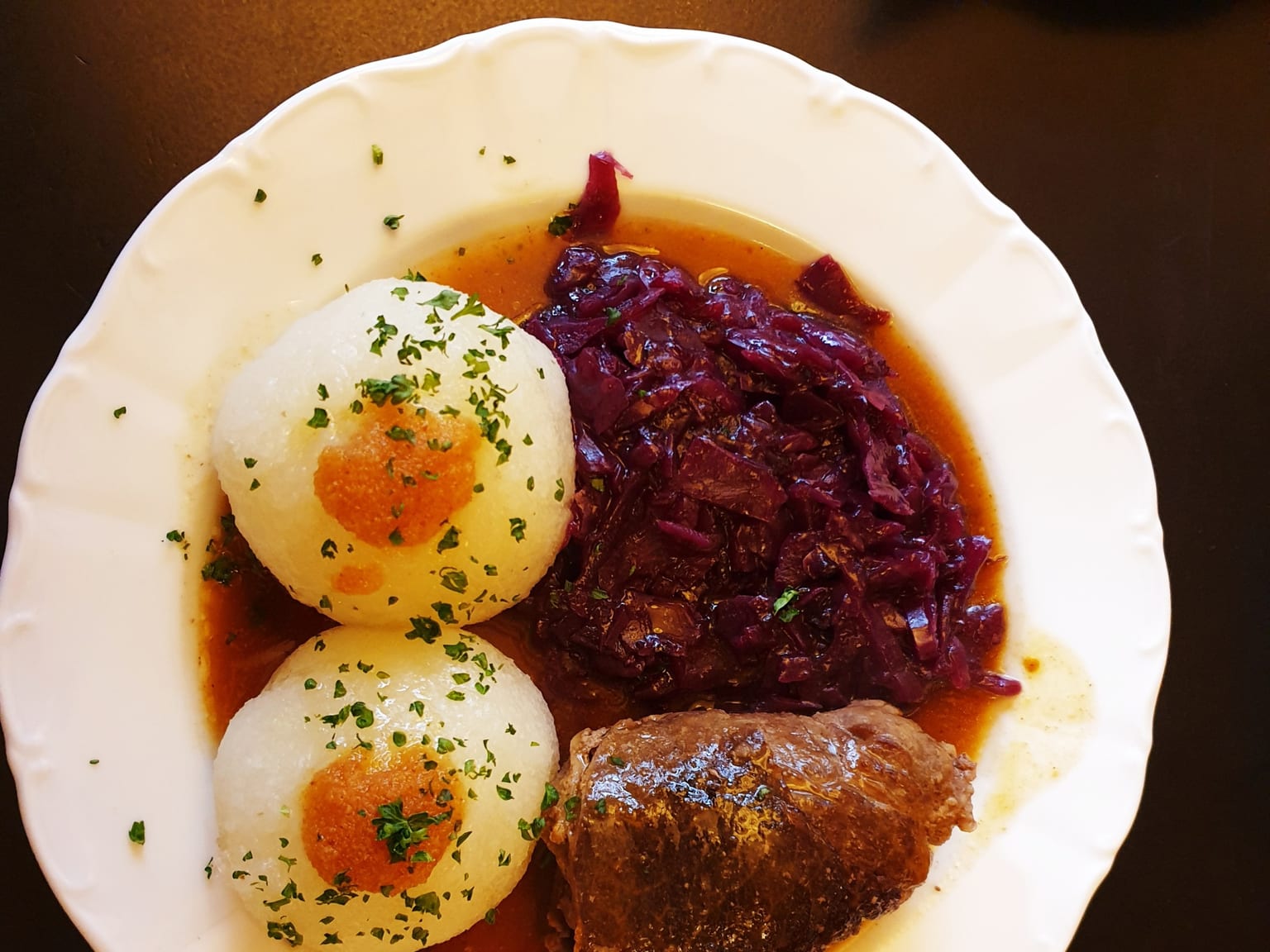
Rinderrouladen
Dünne Rindfleischscheiben mit Senf bestreut, mit Speck, Zwiebeln und Gurke geschichtet, gerollt, gebräunt und langsam in Rotwein und Rinderbrühe geschmort. Das Sonntagsgericht der deutschen Hausmannskost.
Christophs Version, die aus drei deutschen Hausmannskostquellen stammt: emmikochteinfach, Maltes Kitchen und Herdeflüster, mit dem Schnitt, der so benannt ist, wie ein Metzger ihn erkennt
Zutaten
Geschrieben für: 5 L Topf
Einheiten
Temperatur
Portionen
Rouladen
- 4 Rinderrouladen, je etwa 180 g, auf 5 mm geklopft gerundet
- 60 g mittelscharfer Senf gerundet
- 8 Scheiben durchwachsener Speck, zwei pro Roulade gerundet
- 4 Gewürzgurken, längs geviertelt gerundet
- 150 g Zwiebel, in feine Streifen geschnitten gerundet
- nach Geschmack feines Salz gerundet
- nach Geschmack schwarzer Pfeffer gerundet
Schmoren und Soße
- 30 g Butterschmalz gerundet
- 200 g Zwiebeln, grob gewürfelt gerundet
- 150 g Karotten, gewürfelt gerundet
- 100 g Knollensellerie, gewürfelt gerundet
- 100 g Lauch, nur weißer und hellgrüner Teil, in Ringen gerundet
- 20 g Tomatenmark gerundet
- 5 g Zucker gerundet
- 300 ml trockener Rotwein, zum Beispiel Spätburgunder oder Lemberger gerundet
- 500 ml kräftige Rinderbrühe gerundet
- 2 Lorbeerblätter gerundet
- 4 Wacholderbeeren (optional) gerundet
- 15 g Speisestärke, zum Abbinden (optional) gerundet
- 10 g glatte Petersilie, gehackt (optional) gerundet
Angaben zur Ernährung sind ein Anhaltspunkt, keine Garantie. Bei einer Allergie bitte die Zutaten selbst prüfen.
Zubereitung
- Legen Sie jede Scheibe Rindfleisch zwischen zwei Plastikfolien und zerdrücken Sie sie auf eine gerade 5 mm. Gerade Dicke ist wichtiger als die Dünnheit: Eine Scheibe, die an einem Ende dick ist, kocht ungleichmäßig und reißt, wenn man sie ausrollt.
- Die Scheiben auf der Innenseite mit Salz und Pfeffer würzen und dann mit Senf bis zu den Rändern verteilen.
- Legen Sie zwei Scheiben Speck auf die Länge jeder Scheibe, verteilen Sie sie über die Zwiebelstreifen und legen Sie eine geviertelte Gurke entlang des kurzen Endes, das Ihnen am nächsten liegt.
- Falten Sie die langen Seiten um ein paar Zentimeter ein und rollen Sie sie dann vom gefüllten Ende fest auf. Binden Sie mit Küchengarn an zwei Stellen oder stecken Sie sie mit Rouladennadeln fest. Die Außenseite mit Salz und Pfeffer würzen.
- Die geklärte Butter im Topf bei starker Hitze erhitzen und das Rouladen von allen Seiten hart anbraten, in zwei Chargen, wenn der Topf überfüllt ist. Aus gebräuntem Fleisch kommt die Farbe der Soße. Legen Sie sie beiseite.
- Die Hitze auf mittlere Stufe senken. Fügen Sie die gewürfelten Zwiebeln, Karotten, Sellerie und Lauch hinzu und kochen Sie etwa 8 Minuten lang, bis sie Farbe annehmen. Das Tomatenmark und den Zucker einrühren und 2 Minuten kochen lassen, bis die Paste dunkel wird und eher süß als roh riecht.
- Mit einem Drittel des Rotweins ablöschen und fast trocken reduzieren lassen, dabei den Boden abkratzen. Wiederholen Sie den Vorgang noch zweimal mit dem Rest des Weins. Die schrittweise Reduzierung schafft mehr Geschmack, als alles auf einmal einzumgießen.
- Den Ofen auf 160°C erhitzen. Das Rouladen und alle Säfte wieder in den Topf geben, die Brühe, die Lorbeere und den Wacholder hinzufügen und zum Köcheln bringen. Die Flüssigkeit sollte etwa zwei Drittel der Rollen hochgehen.
- Abdecken und etwa 2 Stunden im Ofen braten, dabei die Rouladen einmal wenden, bis eine Gabel ohne Widerstand hineinrutscht.
- Heben Sie die Rouladen heraus und halten Sie sie warm. Die Sauce abseihen, das Gemüse fest andrücken, um alles herauszubekommen, dann zurück in den Topf geben und reduzieren, bis es einen Löffel bedeckt. Wenn es noch dünn ist, die Maisstärke mit etwas kaltem Wasser verquirlen und unterrühren, dann 2 Minuten köcheln lassen.
- Die Sauce mit Salz und Pfeffer würzen. Schneiden Sie die Schnur ab, geben Sie die Rouladen wieder in die Sauce und lassen Sie sie 10 Minuten ruhen, bevor Sie sie servieren. Mit Petersilie abschließen.
Hinweise
- Bei einer deutschen Metzgerei fragen Sie nach Rouladen von der Oberschale und der Metzger wird sie für Sie schneiden und zerstoßen. Unterschale oder Schwanzstück funktionieren auch und kosten weniger. Fragen Sie in Kanada nach einem runden Innenschnitt für Rouladen; die meisten Metzger kennen den Begriff, und größere Lebensmittelhändler verkaufen ihn vorbeschriftet als Rouladen. Die obere Runde oder das Auge der Runde, die über das Korn in 5 mm Scheiben geschnitten wird, ist dasselbe.
- Wenn Ihre Scheiben dicker als 5 mm nach Hause kommen, zerdrücken Sie sie selbst. Dies ist der einzige Schritt, der entscheidet, ob das Rouladen zart wird.
- Fest rollen. Eine lose Rolle lässt die Füllung in die Sauce entweichen und kollabiert auf dem Teller. Zwei Stücke Schnur halten besser als eins.
- Halten Sie den Eintrein in barem Köcheln. Ein hartes Kochen zieht das Fleisch fest und es kommt nicht zurück.
- Rouladen sind am nächsten Tag besser. In der Sauce abkühlen lassen, in den Kühlschrank stellen und vorsichtig auf dem Herd aufwärmen. Das ist der Hauptgrund, warum sie ein Sonntagsgericht sind: Sie können sie am Samstag zubereiten.
- Mit Spätzle, Kartoffelklöße oder Salzkartoffeln und etwas Scharfem als Beilage servieren. Rotkohl ist der Standard.
- Speckersatz: Der deutsche Durchwachsener Speck ist eher einem leicht geräucherten Beilagenspeck als dem kanadischen Rückenspeck. Verwenden Sie in Kanada dick geschnittenen gestreiften Speck und machen Sie sich keine Sorgen über den zusätzlichen Rauch.
Verwendete Quellen
- emmikochteinfach: Klassische Rinderroulade
- Maltes Kitchen: Rinderrouladen Grundrezept
- Herdgeflüster: Rinderrouladen mit Rotweinsoße
Passt gut zu
Verwendete Quellen
Von Christoph Mayer