
Beilage Deutsch Europäisch Vegetarisch Glutenfrei
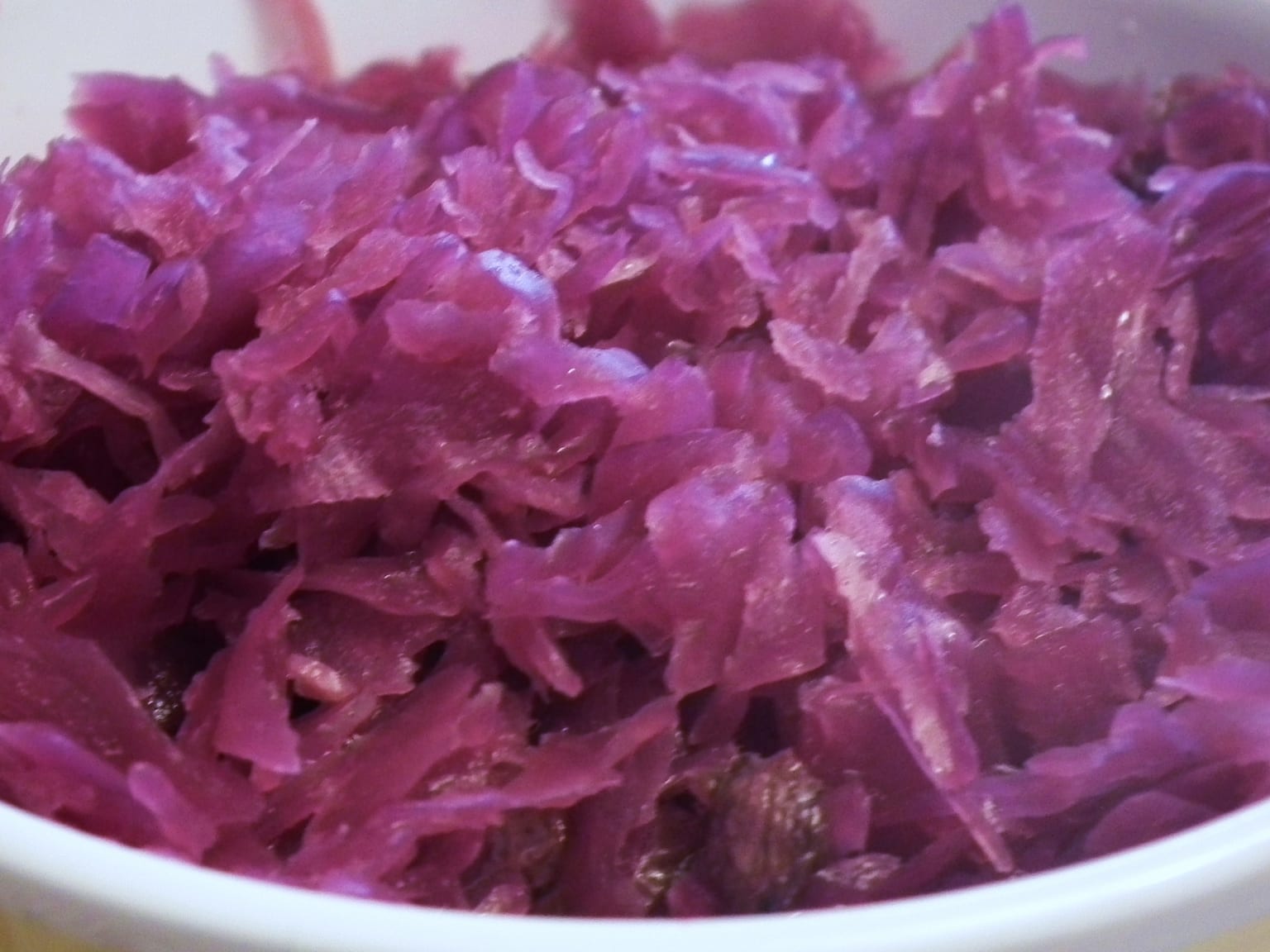
Blaukraut
Rotkohl langsam mit Apfel, Zwiebel, Essig, Nelken und Lorbeer geschmort, bis er dunkel, glänzend und süß-saur wird. Die stehende Seite für Braten und alles mit Soße.
Vorbereitung25 Min.
Garzeit65 Min.
Portionen4
Geschrieben nach Gegenprüfung der deutschen Heimversionen von Thomas Sixt, REWE, Emmi kochte einfach und dem Selbstgemachten Food-Blog sowie einem Quarks-Erklärer zur Farbchemie.
Zutaten
Geschrieben für: 5 L Topf
Einheiten
Temperatur
Portionen
- 1 kg Rotkohl, entstrunkt und 3 bis 5 mm fein gehobelt gerundet
- 180 g säuerlicher Apfel, Boskop oder ähnlich, geschält und grob gerieben gerundet
- 120 g Zwiebel, fein gewürfelt gerundet
- 1 Zwiebel, klein, geschält und ganz gelassen, für die Nelken gerundet
- 40 g Butterschmalz gerundet
- 25 g Zucker gerundet
- 45 ml Apfelessig, Rotweinessig geht auch gerundet
- 250 ml naturtrüber Apfelsaft gerundet
- 100 ml trockener Rotwein, roter Traubensaft für die alkoholfreie Variante gerundet
- 2 Lorbeerblätter gerundet
- 5 Gewürznelken gerundet
- 4 Wacholderbeeren (optional) gerundet
- 30 g Preiselbeeren, zum Schluss untergerührt (optional) gerundet
- nach Geschmack feines Salz gerundet
- nach Geschmack schwarzer Pfeffer gerundet
Angaben zur Ernährung sind ein Anhaltspunkt, keine Garantie. Bei einer Allergie bitte die Zutaten selbst prüfen.
Zubereitung
- Ziehen Sie die äußeren Blätter ab. Den Kohl vierteln, den Kern herausschneiden und in 3 bis 5 mm breite Streifen zerkleinern. Eine Mandoline ist hier schneller als ein Messer und liefert ein viel gleichmäßigeres Ergebnis, was wichtig ist, weil ungleichmäßige Streifen ungleichmäßig kochen.
- Die erste Zwiebel schälen und würfeln. Schälen Sie die kleine Zwiebel und drücken Sie die Nelken hinein, damit sie zusammenbleiben und später leicht herauskommen. Den Apfel schälen, entkernen und grob reiben.
- Die Butterschmalz in einem breiten Topf schmelzen. Die gewürfelte Zwiebel und den geriebenen Apfel mit dem Zucker bei mittlerer Hitze 2 bis 3 Minuten kochen, bis der Zucker gerade anfängt, sich am Boden zu verfangen.
- Fügen Sie den Kohl hinzu und gießen Sie den Essig direkt darüber. Sofort umrühren, bevor der Kohl Zeit hat, im heißen Fett zu sitzen. Die Säure, die früh eingeht, ist das, was die Farbe fixiert.
- Den Apfelsaft und den Rotwein einfüllen. Fügen Sie die mit Nelken besetzte Zwiebel, die Lorbeere, den Wacholder und eine gute Prise Salz hinzu. Zum Köcheln bringen, abdecken und bei schwacher Hitze 50 bis 60 Minuten kochen, dabei alle 15 Minuten umrühren und einen Spritzer Wasser hinzufügen, wenn der Topf austrocknet.
- Fischen Sie die Zwiebel, die Lorbeerblätter und den Wacholder heraus. Rühren Sie die Preiselbeerkonserve ein, wenn Sie sie verwenden.
- Nehmen Sie den Deckel ab und kochen Sie weitere 5 bis 10 Minuten, bis die Flüssigkeit zu einer glänzenden Schicht und nicht zu einer Pfütze reduziert ist.
- Am Ende würzen: Salz, Pfeffer, mehr Essig, mehr Zucker. Passen Sie sich weiter an, bis das Süße und das Saure auf der Ebene gegeneinander sitzen. Dieser letzte Schritt ist das Rezept.
Hinweise
- Blaukraut in Bayern, Österreich und einem Großteil des Südens. Rotkohl im Norden, Rotkraut dazwischen. Gleicher Kohl, gleiches Gericht, anderer Dialekt.
- Die Farbe ist echte Chemie, keine Folklore: Das Anthocyanin-Pigment im Rotkohl wirkt als pH-Indikator, so dass die Säure aus Essig, Apfel und Wein ihn rot hält, während alkalische Bedingungen ihn blau-lila drücken. Hartes Leitungswasser allein kann ihn abstrüben, weshalb der Essig mit dem Kohl und nicht am Ende hineingeht.
- Am zweiten Tag ist es besser. Kochen Sie es einen Tag im Voraus, kühlen Sie es ab und erhitzen Sie es vorsichtig. Es friert auch gut in Portionen ein.
- In Deutschland gibt es Butterschmalz und Boskop Äpfel in jedem Supermarkt. Verwenden Sie in Kanada Ghee oder geklärte Butter und einen Northern Spy, Granny Smith oder einen beliebigen Apfel, der herb bleibt. Gänse- oder Entenfett ist ausgezeichnet, wenn Sie es von einem Braten haben, und nimmt das Gericht von der vegetarischen Liste.
- Preiselbeeren sind der deutsche Standard. Vollbeer-Cranberry-Sauce ist der nächste kanadische Ersatz, aber reduzieren Sie den Zucker im Rezept, wenn Sie sie verwenden, weil sie süßer ist.
- Länger zu kochen schadet nicht. Wenn das Hauptgericht zu spät kommt, lassen Sie den Kohl bei niedrigster Hitze mit dem Deckel auf.
Verwendete Quellen
- Thomas Sixt: Blaukraut, Rotkraut, Rotkohl
- REWE: Rotkohl nach Omas Art
- Emmi kocht einfach: Klassischer Rotkohl ganz einfach
- Selbstgemacht: Rotkohl wie bei Oma
- Quarks: Der Unterschied zwischen Rotkohl und Blaukraut
Passt gut zu
Verwendete Quellen
Von Christoph Mayer