
Nachspeise Deutsch Europäisch Vegetarisch Glutenfrei
Zimtsterne
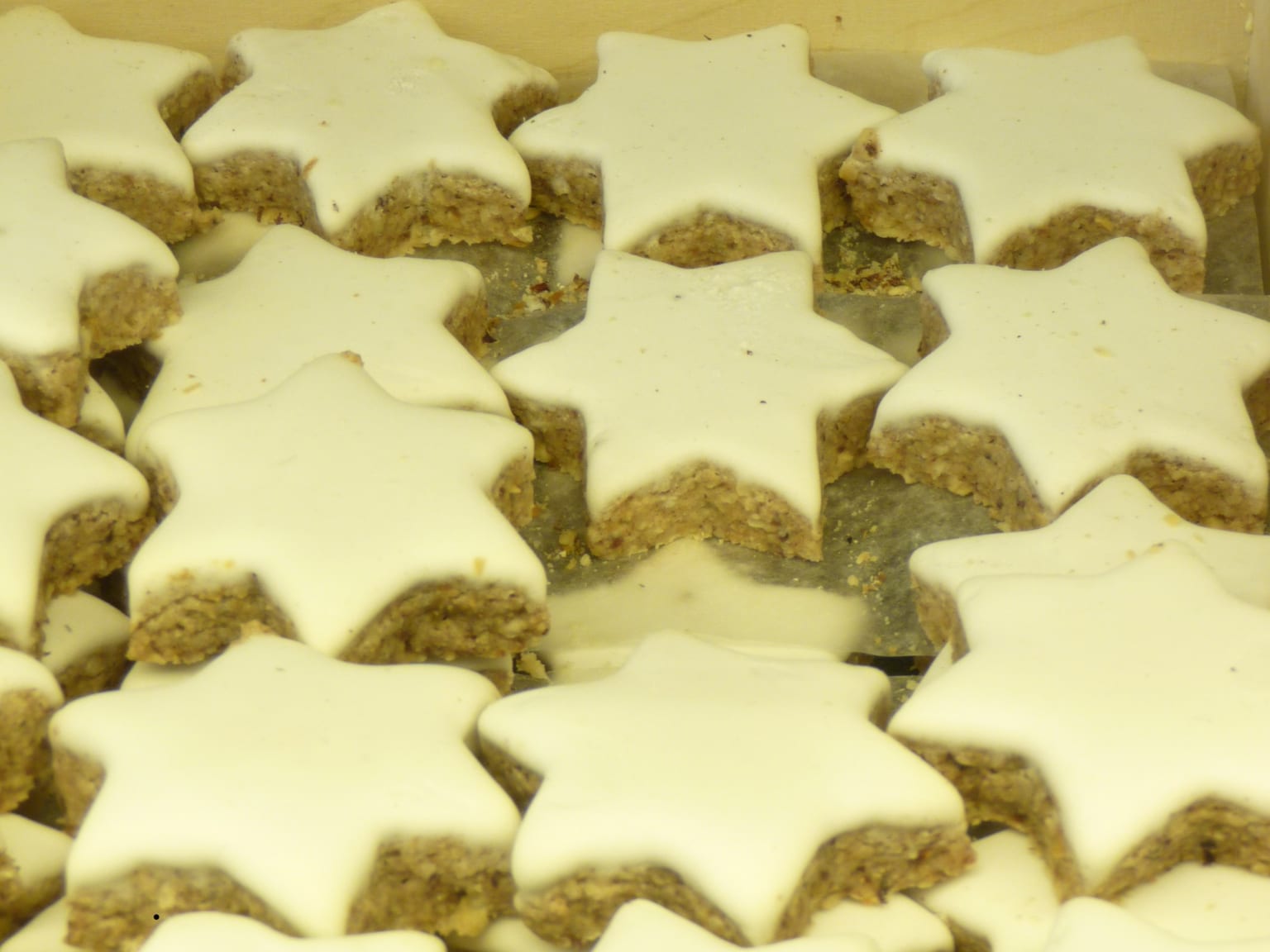
Mehlfreie Zimtsterne aus gemahlenen Mandeln, Eiweiß und Zimt unter einer weißen Baiserglasur. Bei niedriger Temperatur gebacken bleiben sie innen weich und saftig, verlangen aber genaues Arbeiten.
Vorbereitung45 Min.
Garzeit15 Min.
Ruhezeit60 Min.
Ofen140°C
Portionen45
Gebaut aus dem Dr. Oetker Zimtsterne-Basisrezept, der Lecker-Version nach Uroma mit der reservierten Baiser-Methode und dem Schlaraffenwelt-Fehlerbehebungsleitfaden, mit Backtemperatur und -dicke, die über alle drei abgestimmt sind
Zutaten
Geschrieben für: 40 × 35 cm Backblech
Einheiten
Temperatur
Portionen
Teig und Glasur
- 3 Eiweiß, Größe M, etwa 100 g, zimmerwarm gerundet
- 250 g Puderzucker, gesiebt gerundet
- 1 g feines Salz gerundet
- 350 g gemahlene Mandeln mit Haut, ungeschält, plus etwas mehr für die Arbeitsfläche gerundet
- 8 g gemahlener Zimt, möglichst Ceylon-Zimt, etwa 3 gestrichene TL gerundet
- 15 ml brauner Rum oder Kirschwasser (optional) gerundet
Zum Ausrollen und Fertigstellen
- 40 g Puderzucker, für die Arbeitsfläche und den Ausstecher gerundet
- 1 Eiweiß, nur falls die Glasur nicht reicht (optional) gerundet
- 90 g Puderzucker, nur falls die Glasur nicht reicht (optional) gerundet
Angaben zur Ernährung sind ein Anhaltspunkt, keine Garantie. Bei einer Allergie bitte die Zutaten selbst prüfen.
Zubereitung
- Eiweiß und Salz bis zu weichen Spitzen schlagen. Bei laufender Küchenmaschine den gesiebten Puderzucker löffelweise einrieseln lassen. Weitere 4 bis 5 Minuten schlagen, bis die Baisermasse dick, reinweiß und glänzend ist und eine angehobene Spitze sich nur langsam umlegt. Diese kalt geschlagene Glasur muss ausreichend aufgeschlagen sein, damit sie auf den Sternen trocknet.
- 90 g Baisermasse, etwa 5 gehäufte Esslöffel, in eine kleine Schüssel geben und Frischhaltefolie direkt auf die Oberfläche drücken. Das ist die Glasur. Diesen Schritt nicht vergessen, denn nach Zugabe der Mandeln lässt sich keine Glasur mehr abnehmen.
- Zimt und optional Rum unter die restliche Baisermasse rühren. Gemahlene Mandeln in drei Portionen unterheben. Die Masse wird dabei schwer, klebrig und marzipanartig. Nur so lange mischen, bis keine trockenen Mandeln mehr sichtbar sind.
- Den Teig auf Frischhaltefolie geben, zu einer etwa 2 cm dicken Platte drücken, einwickeln und 1 Stunde kühlen. Nur kalter Teig lässt sich sauber ausrollen.
- Die Arbeitsfläche großzügig mit Puderzucker bestäuben, nicht mit Mehl. Die Hälfte des Teigs darauf legen, die Oberseite abstauben, ein Blatt Frischhaltefolie darüber legen und auf 8 mm ausrollen. Arbeiten Sie in zwei Chargen und bewahren Sie die zweite Hälfte im Kühlschrank auf.
- Sterne ausstechen. Den Ausstecher vor jedem Schnitt in Puderzucker tauchen, damit die Spitzen nicht darin hängen bleiben und abreißen. Jeden Stern mit einer kleinen Winkelpalette auf ein mit Backpapier belegtes Blech heben und 2 cm Abstand lassen.
- Kneten Sie die Schnitte vorsichtig zusammen, kühlen Sie sie 10 Minuten lang und rollen Sie sie erneut auf. Das zweite Rollen ist in Ordnung. Beim dritten Mal hat der Teig zu viel Puderzucker aufgenommen und backt hart, also machen Sie die letzten von Hand.
- Vor dem Glasieren losen Puderzucker mit einem trockenen Backpinsel von den Sternen entfernen. Verbleibender Zucker löst sich unter der feuchten Glasur und kann sie im Ofen abrutschen lassen.
- Die Glasur mit einem kleinen Pinsel von der Mitte zu den Spitzen in einer dünnen, gleichmäßigen Schicht verteilen und etwa 1 mm Rand frei lassen. Nicht aufspritzen und keine dicken Wülste bilden. Der Pinsel entfernt Luftblasen; eine dick aufgespritzte Schicht reißt leichter beim Backen.
- Die glasierten Sterne 20 bis 30 Minuten bei Raumtemperatur stehen lassen, bis die Oberfläche matt und trocken ist. Den Backofen auf 140°C Ober- und Unterhitze oder 120°C Umluft vorheizen.
- Auf der mittleren Schiene 12 bis 15 Minuten bei 8 mm Dicke backen. Die Glasur muss weiß bleiben. Die Sterne sollten sich immer noch weich, fast roh, in der Mitte anfühlen, wenn Sie sie herausnehmen, und die Unterseiten sollten leicht unter einer Fingerspitze nachgeben.
- Das Backpapier mit den Sternen vom heißen Blech auf ein Kuchengitter ziehen und vollständig auskühlen lassen. Erst kalt vom Papier lösen, denn beim Abkühlen werden sie fest.
- Vor dem Verzehr mindestens 2 Tage luftdicht lagern, nach Wunsch mit einer Apfelscheibe in der Dose. Vom zweiten bis zum zehnten Tag sind sie am saftigsten.
Hinweise
- Die niedrige Backtemperatur von 140°C ist für Glasur und Teig entscheidend. Die Baiserglasur aus Eiweiß und Zucker beginnt sich oberhalb von etwa 150°C zu verfärben. Der mehlfreie Mandelteig besitzt außerdem kein Glutengerüst; seine Struktur entsteht durch Zucker und die in den Mandeln gebundene Feuchtigkeit. Bei hoher Hitze trocknet die Außenseite aus, bevor die Mitte fest wird. Bei 140°C verliert der ganze Stern gleichmäßig Feuchtigkeit und bleibt innen weich. Im Zweifel lieber etwas früher herausnehmen, denn auf dem Gitter werden die Sterne fester.
- Der häufigste Fehler ist, die Sterne zu backen, bis sie fertig aussehen. Beim Herausnehmen sollen sie noch leicht unterbacken wirken. Fühlt sich ein Zimtstern schon im Ofen fest an, ist er am nächsten Morgen hart.
- Klebriger Teig ist normal, denn Mehl fehlt vollständig. Drei Maßnahmen helfen: gründlich kühlen, unter Frischhaltefolie ausrollen und auf der Arbeitsfläche Puderzucker statt Mehl oder zusätzlicher Mandeln verwenden. Mehl würde die glutenfreie Eigenschaft zunichtemachen und als kreidige Schicht einbacken. Bleibt der Teig schwierig, die eingewickelte Platte 15 Minuten einfrieren und direkt danach ausrollen.
- Abrutschende, reißende und braune Glasur haben verschiedene Ursachen. Sie rutscht auf losem Puderzucker oder wenn die Baisermasse nicht steif genug geschlagen wurde. Sie reißt bei zu dicker Schicht, beim Aufspritzen oder auf mehr als 1 cm dicken Sternen. Sie bräunt bei zu hoher Temperatur oder zu hoher Schienenposition. Die Glasur vor dem Backen 20 Minuten antrocknen lassen.
- Auch die Teigdicke ist entscheidend. Unter 6 mm trocknen die Sterne knusprig durch. Über 1 cm bleibt die Mitte nass und die Glasur reißt beim Aufgehen. 8 mm sind ideal.
- Zimtsterne enthalten von Natur aus weder Mehl noch anderes Getreide. Bei Zöliakie dennoch Puderzucker und gemahlene Mandeln auf mögliche glutenhaltige Zusätze oder Kreuzkontakt prüfen und entsprechend gekennzeichnete Produkte kaufen.
- Ungeschälte gemahlene Mandeln verwenden. Die Schalen tragen viel Mandelaroma und ergeben den traditionellen dunkleren Teig unter der weißen Glasur. Haselnüsse oder eine Mischung aus beiden sind ebenfalls traditionell, schmecken aber deutlich kräftiger.
- Ceylon-Zimt ist milder, süßer und blumiger als Cassia-Zimt. Cassia, wie er häufig im Supermarkt verkauft wird, schmeckt schärfer und enthält wesentlich mehr Cumarin. Gerade bei größeren Mengen Weihnachtsgebäck ist Ceylon-Zimt daher die bessere Wahl.
- Rum oder Kirschwasser sind optional. Sie lockern den Teig leicht und runden den Zimt ab, ohne die Sterne deutlich alkoholisch schmecken zu lassen.
- Der Teig kann 1 Tag im Voraus zubereitet und gekühlt werden. Vor dem Ausrollen etwa 20 Minuten bei Raumtemperatur temperieren, damit die Ränder nicht brechen.
Verwendete Quellen
- Dr. Oetker: Zimtsterne
- Lecker: Zimtsterne nach Uromas Rezept
- Schlaraffenwelt: Zimtsterne in Perfektion, die ultimative Plätzchen-Anleitung
Passt gut zu
Verwendete Quellen
Von Christoph Mayer