
Nachspeise Deutsch Europäisch Vegetarisch
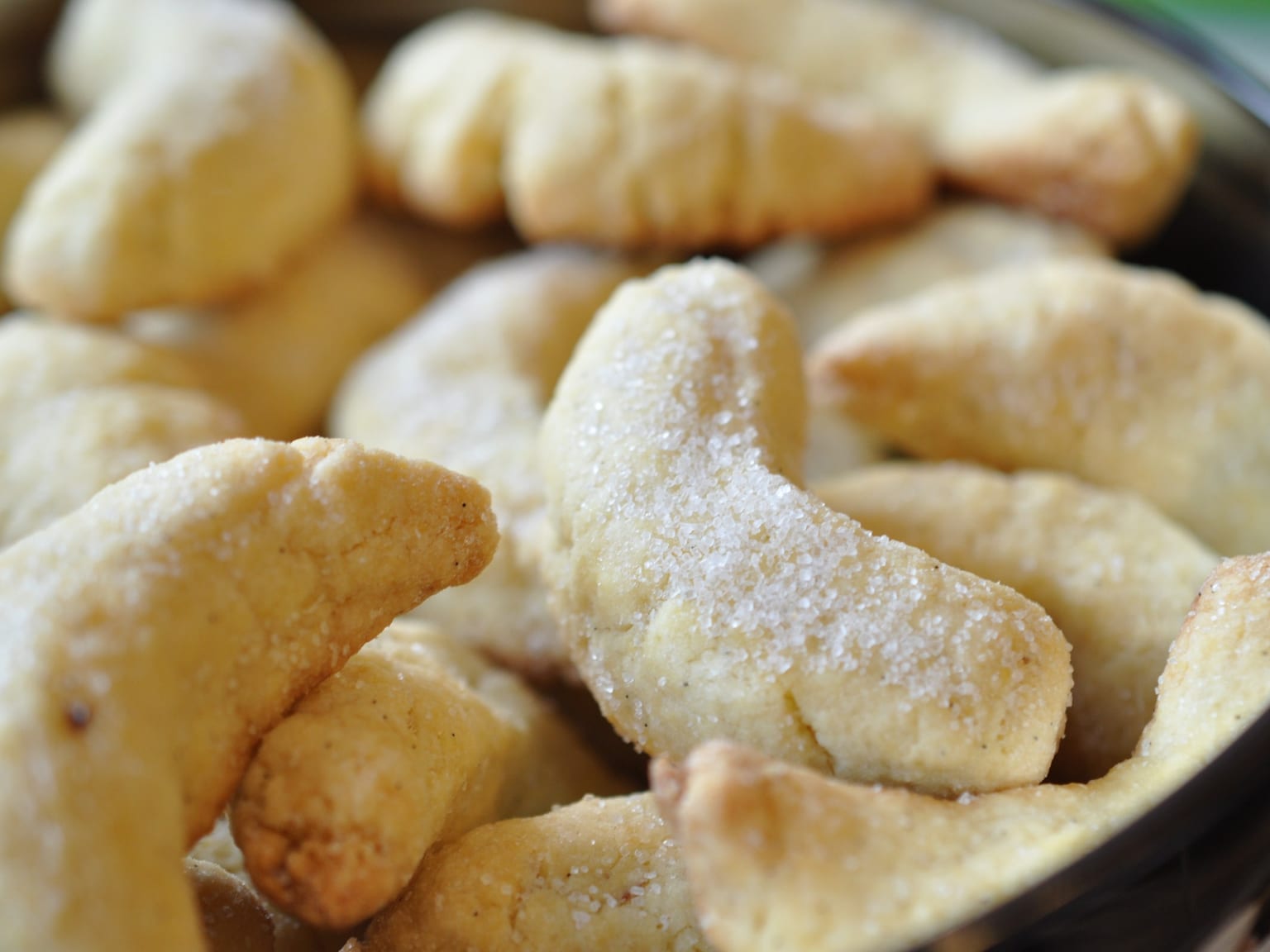
Vanillekipferl
Zarte Halbmonde mit gemahlenen Mandeln, hell gebacken und noch warm in Vanillezucker gewälzt. Der fettreiche, glutenarme Teig muss kalt bleiben, und der Zucker haftet nur im richtigen kurzen Zeitfenster.
Vorbereitung40 Min.
Garzeit15 Min.
Ruhezeit90 Min.
Ofen160°C
Portionen55
Abgestimmt nach dem Vanillekipferl-Leitfaden von Tastybits, Omas Originalrezept von Einfach Kochen und dem Rezept von Zucker, Zimt und Liebe; Teigführung, Kühlung und Zeitpunkt des Wälzens wurden über alle drei Quellen abgeglichen
Zutaten
Geschrieben für: 40 × 35 cm Backblech
Einheiten
Temperatur
Portionen
Teig
- 250 g Weizenmehl Type 405 gerundet
- 125 g gemahlene blanchierte Mandeln, fein gemahlen, oder gemahlene Haselnüsse gerundet
- 80 g Puderzucker gerundet
- 200 g Butter, direkt aus dem Kühlschrank, klein gewürfelt gerundet
- 2 Eigelb, Größe M, kalt gerundet
- 1 Vanilleschote, Mark ausgekratzt, Schote für den Zucker aufheben gerundet
- 2 g feines Salz gerundet
Vanillezucker zum Wälzen
- 100 g Puderzucker gerundet
- 16 g Vanillezucker, zwei Päckchen à 8 g, gerne Bourbon-Vanillezucker gerundet
- 1 Vanilleschote, die ausgekratzte Schote aus dem Teig, getrocknet und mit dem Zucker gemahlen (optional) gerundet
Angaben zur Ernährung sind ein Anhaltspunkt, keine Garantie. Bei einer Allergie bitte die Zutaten selbst prüfen.
Zubereitung
- Die Vanilleschote längs aufschneiden. Das Mark in den Puderzucker für den Teig kratzen und mit den Fingern verreiben, damit es sich gleichmäßig verteilt. Die leere Schote aufbewahren.
- Mehl, gemahlene Mandeln, den Vanille-Puderzucker und Salz in eine Schüssel geben. Die kalte Butter zufügen und mit den Fingerspitzen einreiben oder kurz in der Küchenmaschine pulsieren, bis die Mischung wie grober, feuchter Sand aussieht und kein Butterstück größer als eine Erbse ist.
- Eigelb zugeben und den Teig mit möglichst wenigen Bewegungen zusammenbringen. Drücken, nicht kneten. Sobald keine trockenen Stellen mehr sichtbar sind, aufhören. Der Teig darf noch etwas unfertig wirken.
- Zu zwei flachen Scheiben formen, einwickeln und mindestens 1 Stunde kühlen. Über Nacht ist noch besser.
- Den Backofen auf 160°C Ober- und Unterhitze oder 145°C Umluft vorheizen. Zwei Backbleche mit Backpapier auslegen.
- Immer nur mit einer Teigscheibe arbeiten und die andere im Kühlschrank lassen. Die Scheibe zu einer etwa 2 cm dicken Rolle formen und in 12 g schwere Stücke schneiden. Jedes Stück unter der Handfläche zu einer etwa 6 cm langen Rolle mit schmaleren Enden formen, zum Halbmond biegen und mit 2 cm Abstand aufs Blech legen. Die Kipferl laufen kaum auseinander.
- Fühlt sich der Teig fettig an oder reißen und schmieren die Rollen beim Formen, alles 15 Minuten in den Kühlschrank stellen. In einer warmen Küche kann das mehrmals nötig sein.
- Die geformten Kipferl vor dem Backen 30 Minuten kühlen. So behalten sie ihre Halbmondform.
- 12 bis 15 Minuten backen. Fertig sind sie, wenn die schmalen Spitzen gerade etwas Farbe bekommen, der übrige Keks aber noch hell bleibt. Die Mitte fühlt sich zunächst weich an. Nicht auf eine rundum goldbraune Farbe warten, sonst werden Mandelaroma und Vanille bitter.
- Währenddessen 100 g Puderzucker und Vanillezucker in eine breite, flache Schüssel sieben.
- Die Kipferl nach dem Backen 3 bis 5 Minuten auf dem Blech stehen lassen. Direkt aus dem Ofen brechen sie leicht, vollständig abgekühlt haftet der Zucker nicht mehr. Sobald sie warm, aber stabil genug zum Anheben sind, einzeln im Zucker wälzen und auf ein Kuchengitter legen.
- Vollständig ausgekühlte Kipferl für eine dickere Schicht ein zweites Mal im Zucker wälzen.
- Luftdicht in einer Dose aufbewahren. Am ersten Tag schmecken sie gut, ab dem dritten noch besser. Sie halten etwa 4 Wochen.
Hinweise
- Das Verhältnis von 200 g Butter zu 250 g Mehl und 125 g Mandeln macht den Teig sehr fettreich und glutenarm. Dadurch werden die Kipferl zart und mürbe, aber der Teig bleibt kaum elastisch und verträgt keine Wärme. Wird die Butter weich, verschmieren die Fettteilchen zu einem Film: Die Kipferl laufen zu flachen Ovalen auseinander und werden hart und fettig statt mürbe. Lässt sich der Teig beim Formen verschmieren, ihn 15 Minuten kühlen und erst dann weiterarbeiten.
- Das Wälzen in Zucker ist kein rein dekorativer Schritt. An warmen Kipferln haften Zucker und Vanille durch den dünnen Butterfilm und den austretenden Dampf. Kalte Kipferl sind trocken, der Zucker rutscht ab. Direkt aus dem Ofen sind sie dagegen noch zu zerbrechlich. Der richtige Zeitpunkt ist erreicht, wenn sie noch deutlich warm sind, sich aber vorsichtig anheben lassen.
- Mandeln und Haselnüsse sind beide traditionell. Blanchierte Mandeln ergeben einen helleren Keks mit klarerem Vanillearoma. Geröstete, vor dem Mahlen ausgekühlte Haselnüsse schmecken kräftiger und passen besonders gut zu Kaffee. Kein extrem fein gemahlenes Mandelmehl für Macarons verwenden; gewöhnliche gemahlene Mandeln geben die bessere Struktur.
- Weizenmehl Type 405 ist das übliche weiche deutsche Haushaltsmehl und etwas schwächer als kanadisches Allzweckmehl. Beim Backen in Kanada entweder Kuchenmehl verwenden oder vom Allzweckmehl zunächst 10 g zurückhalten.
- Deutscher Vanillezucker wird meist in 8-g-Päckchen verkauft und enthält häufig nur Aroma. Bourbon-Vanillezucker enthält echte Vanille und lohnt sich hier. Für selbst gemachten Vanillezucker zwei ausgekratzte Schoten 2 Wochen in 250 g Zucker ziehen lassen, dann fein mahlen und sieben.
- Begriffe aus der übrigen Weihnachtsbäckerei: Zitronat und Orangeat sind kandierte Zitrusfruchtschalen; Backoblaten sind dünne essbare Unterlagen aus Mehl, Stärke und Wasser; Hirschhornsalz und Pottasche sind traditionelle Triebmittel für dichte Honig- und Nussteige. Keine dieser Zutaten wird für Vanillekipferl benötigt, sie kommen jedoch bei Elisenlebkuchen vor.
- Bei Ober- und Unterhitze nicht auf zwei Ebenen gleichzeitig backen. Das untere Blech bräunt sonst von unten, bevor das obere Farbe bekommt. Mit Umluft können beide Bleche gemeinsam gebacken werden.
Verwendete Quellen
- Tastybits: Der ultimative Vanillekipferl-Ratgeber
- Einfach Kochen: Vanillekipferl nach Omas bestem Original-Rezept
- Zucker, Zimt und Liebe: Bestes Vanillekipferl Rezept
Passt gut zu
Verwendete Quellen
Von Christoph Mayer