Frühstück Französisch Europäisch Vegetarisch Glutenfrei
Französisches Omelett
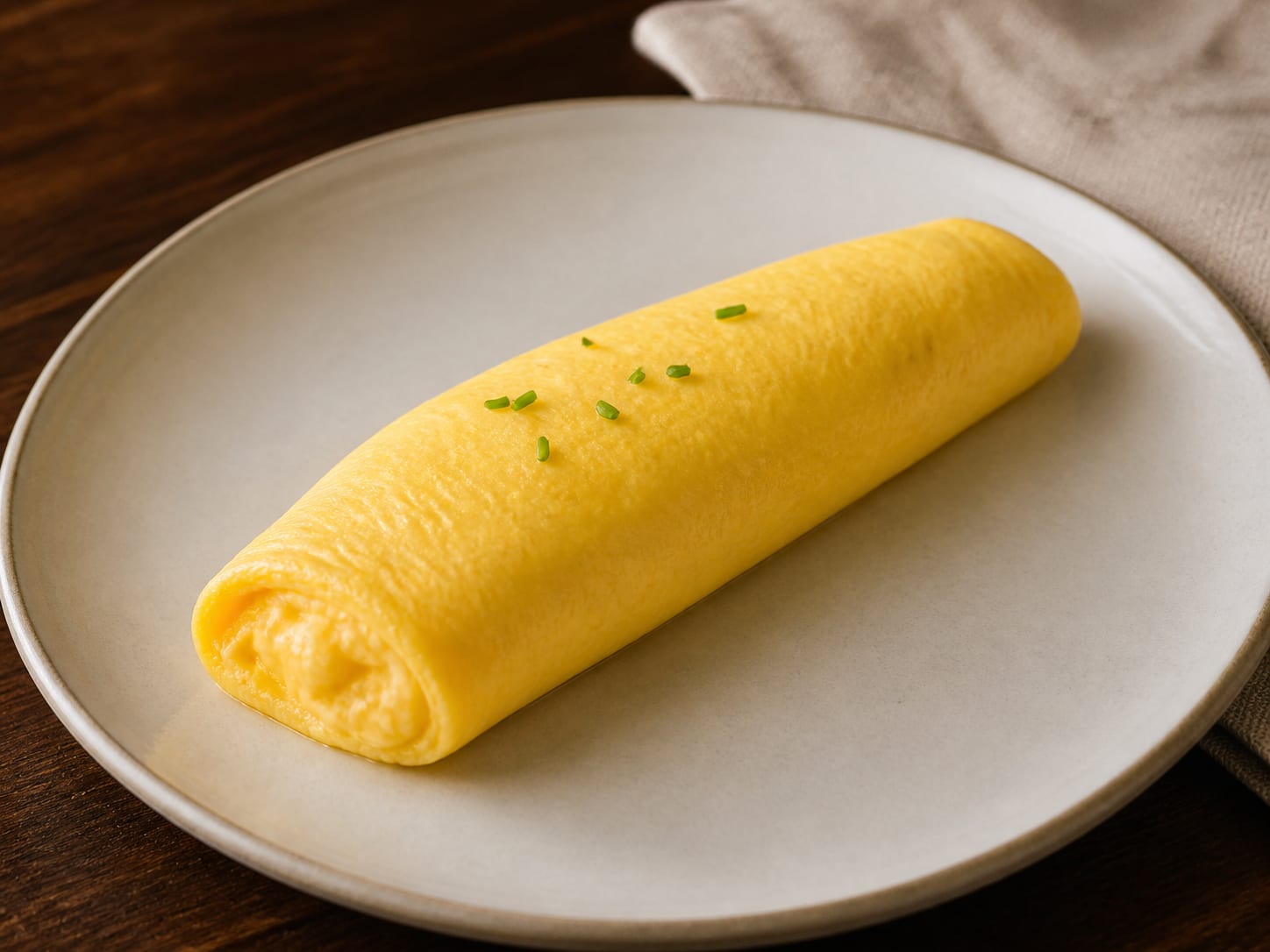
Drei Eier, Butter, Schnittlauch, Salz und Pfeffer ergeben ein blasses, nahtlos gerolltes Omelett mit feiner Struktur und zartem Kern.
Vorbereitung5 Min.
Garzeit5 Min.
Portionen1
Angepasst für die heimische Küche von Fallow's French Omelette Video
Zutaten
Geschrieben für: 20 cm Pfanne
Einheiten
Temperatur
Portionen
- 3 Mittelgroße Eier gerundet
- 30 g Ungesalzene Butter, Geteilt gerundet
- 5 g Schnittlauch, Fein geschnitten gerundet
- 1 g Feines Salz gerundet
- 0.5 g Weißer oder schwarzer Pfeffer gerundet
Angaben zur Ernährung sind ein Anhaltspunkt, keine Garantie. Bei einer Allergie bitte die Zutaten selbst prüfen.
Zubereitung
- Schlagen Sie die Eier gründlich mit dem Salz, bis kein separates Eiweiß mehr übrig ist; durch ein feines Sieb passieren, wenn Sie den glattesten Abgang wünschen.
- Erhitzen Sie eine 20 cm lange Antihaft-Pfanne bei mittlerer bis niedriger Stufe. 20 g Butter hinzufügen und schmelzen lassen, ohne zu bräunen.
- Fügen Sie die Eier hinzu. Rühren Sie schnell mit einem Silikonspatel um, während Sie die Pfanne schütteln, und kratzen Sie den Boden kontinuierlich ab, um sehr feinen Quark zu erhalten.
- Wenn die Eier größtenteils fest sind, aber immer noch glänzend sind, hören Sie auf zu rühren und glätten Sie sie zu einer gleichmäßigen Schicht. Pfeffer und den meisten Schnittlauch hinzufügen.
- Kippen Sie die Pfanne von sich weg. Falten Sie das fast dritte Drittel in die Mitte und rollen Sie das Omelett dann zur gegensten Lippe.
- Reiben Sie die restliche Butter über die Oberfläche, drehen Sie die Nahtseite nach unten auf einen warmen Teller, stecken Sie die Enden hinein und beenden Sie mit Schnittlauch.
Hinweise
- Die Pfanne muss warm genug sein, um Eier zu setzen, aber nicht heiß genug, um Butter zu färben. Ziehen Sie es kurz vom Herd, wenn sich Quark schneller bildet, als Sie es rühren können.
- Ein französisches Omelett wird sanft zubereitet, nicht roh. Menschen mit einem höheren Risiko für zu wenig gekochte Eier sollten pasteurisierte Eier verwenden oder kochen, bis sie vollständig fest sind.
- Skalieren Sie, indem Sie separate Omeletts kochen, anstatt eine größere Pfanne zu füllen.
Verwendete Quellen
Verwendete Quellen
Barrow legt drei mittelgroße Eier aus und demonstriert die Butter-geführte Technik; Butter- und Gewürzmengen werden für eine 20-cm-Pfanne normalisiert.
Von Christoph Mayer