.jpg)
Hauptgericht Japanisch Asiatisch
Chicken Katsu
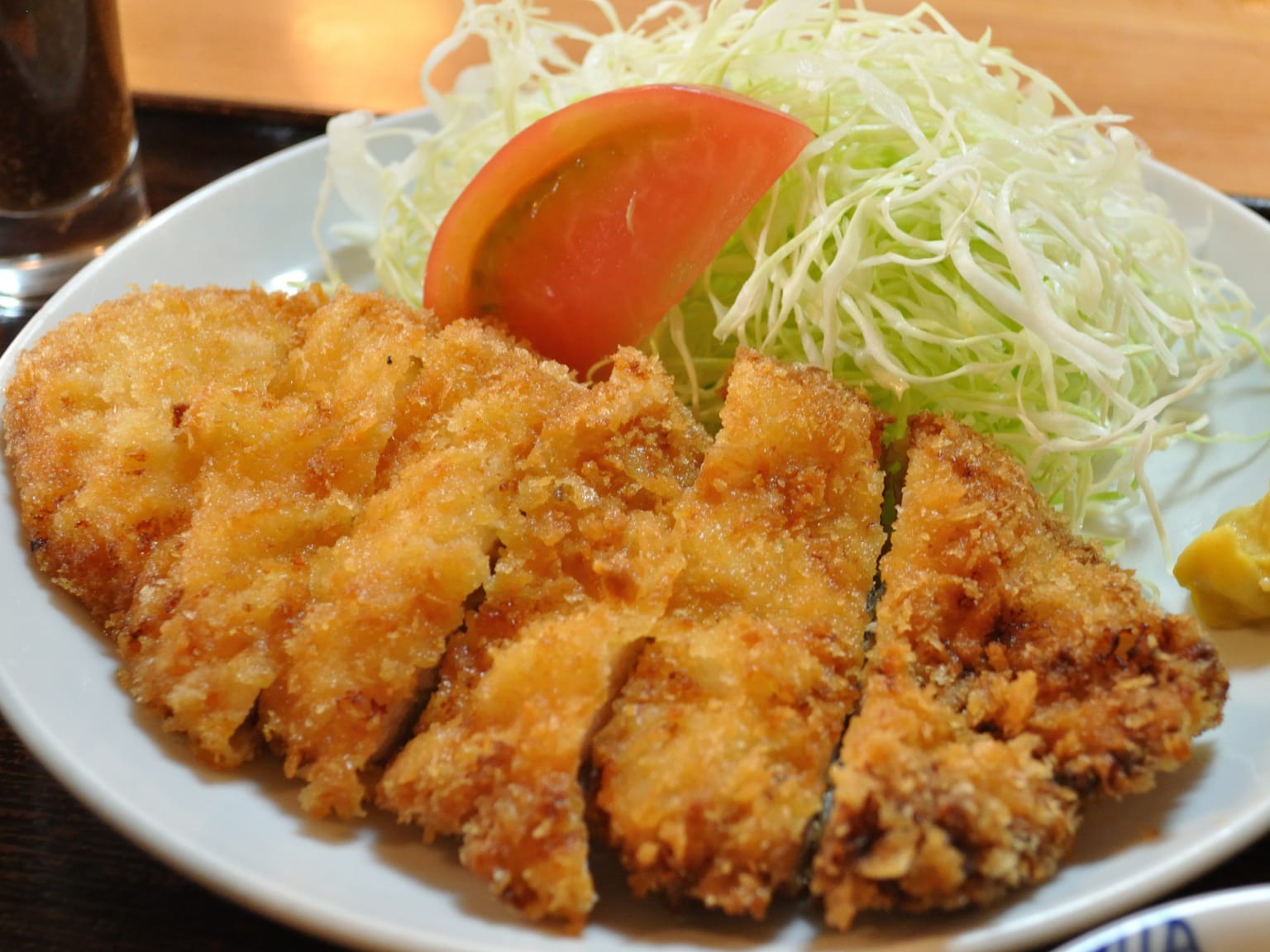
Chicken Katsu (チキンカツ) ist ein Hähnchenschnitzel mit Panko-Kruste, das gebraten wird, bis die Kruste zerbricht, serviert mit Tonkatsu-Sauce, einem Haufen geriebenem Kohl und Reis. Die Sauce hier ist hausgemacht, weil Bulldog-Sauce in Deutschland schwer zu finden ist.
Adaptiert von Just One Cookbook's Chicken Katsu und Tonkatsu Sauce, Japanese Cooking 101's Chicken Katsu und dem klassischen Saucenverhältnis bei Sudachi Recipes
Zutaten
Geschrieben für: 26 cm Pfanne
Einheiten
Temperatur
Portionen
Schnitzel
- 4 Hähnchenbrustfilets, je etwa 150 g, oder 2 große Filets aufgeschnitten zu 4 gerundet
- nach Geschmack feines Salz gerundet
- nach Geschmack schwarzer Pfeffer gerundet
- 45 g Mehl Type 405 gerundet
- 2 Eier, verquirlt gerundet
- 8 ml neutrales Öl, unter das verquirlte Ei gerührt gerundet
- 120 g Panko, japanisches Paniermehl, kein deutsches Paniermehl gerundet
- 1 L neutrales Öl zum Braten, Raps- oder Sonnenblumenöl, so viel dass es 2 bis 4 cm hoch steht gerundet
Tonkatsu-Sauce
- 60 ml Worcestershiresauce gerundet
- 60 ml Tomatenketchup gerundet
- 20 ml Sojasauce gerundet
- 15 g Zucker gerundet
- 1 Knoblauchzehe, fein gerieben (optional) gerundet
Zum Servieren
- 300 g Weißkohl, sehr fein gehobelt gerundet
- 4 Zitronenspalten gerundet
- 600 g gekochter Rundkornreis gerundet
Zubereitung
- Rühren Sie zuerst die Tonkatsu-Sauce zusammen, damit der Zucker Zeit hat, sich aufzulösen: Worcestershire, Ketchup, Sojasauce, Zucker und der Knoblauch, wenn Sie ihn verwenden. Probieren Sie es. Deutscher Ketchup ist süßer als amerikanischer, also möchten Sie vielleicht weniger Zucker und etwas mehr Worcestershire. Beiseite legen.
- Zerkleinern Sie den Kohl so fein wie möglich, idealerweise auf einer Mandoline. Lassen Sie es für 10 Minuten in kaltes Wasser fallen, dann abtropfen lassen und gut trocknen. Dadurch wird es knusprig und nimmt die rohe Kante ab.
- Schmetterling jede Brust, wenn Sie mit großen arbeiten: Schneiden Sie horizontal fast den ganzen Weg durch und öffnen Sie sie flach. Legen Sie jedes Stück zwischen zwei Blätter Frischhaltefolie und stampfen Sie es mit einem Hämmer oder der flachen Pfanne auf 1 cm. Gleiche Dicke ist das ganze Spiel. Ein Kotelett, das 2 cm an einem Ende und 5 mm am anderen Ende ist, ist in der Mitte roh oder an den Rändern trocken, und keine Sorgfalt mit dem Öl wird es reparieren.
- Beide Seiten mit Salz und Pfeffer würzen und die Schnitzel 10 Minuten ruhen lassen, damit sie nicht mehr im Kühlschrank abkühlen können.
- Stellen Sie drei flache Gerichte auf: Mehl, geschlagenes Ei mit den 8 ml Öl und Panko. Die Reihenfolge ist wichtig. Mehl trocknet die Oberfläche aus, so dass das Ei etwas zum Greifen hat, das Ei der Kleber und der Panko die Rüstung ist. Überspringen Sie das Mehl und die Kruste rutscht in der Pfanne ab.
- Ein Kotelett in Mehl baggern und alles locker abklopfen. Tauchen Sie es in Ei und lassen Sie den Überschuss zurücklaufen. Legen Sie es in den Panko und drücken Sie die Krümel fest mit der Handfläche auf beiden Seiten. Stellen Sie es auf ein Rack und wiederholen Sie es. Lassen Sie die panierten Schnitzel 10 Minuten ruhen, damit sich die Beschichtung festsetzt.
- Gießen Sie 2 bis 4 cm Öl in eine breite, schwere Pfanne und bringen Sie es auf 170°C. Ohne Thermometer ein paar Panko-Krümel hineinwerfen: Sie sollten stetig brutzeln und direkt nach oben schweben, nicht sinken und nicht sofort braun werden.
- Braten Sie ein oder zwei Schnitzel auf einmal, drängen Sie die Pfanne nie zusammen. Geben Sie ihnen insgesamt 3 bis 4 Minuten, drehen Sie sie einmal, bis sie tief goldbraun sind. Dickere Schnitzel brauchen eine Minute mehr. Das Huhn ist in der Mitte bei 74°C fertig. Schaufeln Sie lose Krümel zwischen den Chargen heraus, sonst verbrennen sie und verdunkeln Sie das nächste Kotelett.
- Halten Sie jedes Schnitzel einige Sekunden lang senkrecht über die Pfanne, um das Öl ablaufen zu lassen, und legen Sie es dann auf ein Gitter, niemals auf ein Papiertuch. Papier fängt Dampf unter dem Kotelett ein und macht die Kruste weicher, die Sie gerade aufgebaut haben. Lassen Sie das Öl vor der nächsten Charge wieder auf Temperatur kommen.
- 2 Minuten ruhen lassen, dann in 2 cm Streifen schneiden. Mit dem Kohl, einer Zitronenscheibe, Reis und der Sauce servieren, die darüber gegossen oder daneben serviert wird.
Hinweise
- Vegetarischer Tofu Katsu. Drücken Sie 600 g extra festen Tofu 20 Minuten lang, oder köcheln Sie ihn stattdessen 3 Minuten im Ganzen in Salzwasser (siehe die Tofu-Grundformel), und schneiden Sie ihn der Länge nach in vier 1,5 cm große Platten. Würzen, bemehlen, das Ei eintauchen, mit Panko bestreichen und genau wie oben anbraten. Für eine vollständig vegane Kruste ersetzen Sie die Eier durch einen glatten Teig aus 60 g Mehl und 90 ml Wasser und verwenden Sie eine sardellenfreie Worcestershire-Sauce. Katsu ist eine absichtliche Ausnahme von der handzerrissenen Tofu-Regel: Breite Platten sind es, die dem Kotelett seine Struktur verleihen.
- Warum Panko und nicht Paniermehl. Panko wird aus krustenlosem Brot hergestellt, das mit elektrischem Strom gebacken wird, so dass es keine Kruste hat und zu großen gezackten Flocken trocknet. Diese Flocken nehmen weniger Öl auf und bleiben offen und knusprig. Deutsches Paniermehl oder Semmelbrösel ist ein feiner Staub, der sich fest packt, Fett aufsaugt und Ihnen eine dichte Schnitzelkruste verleiht. Es ist eine gute Kruste, aber es ist kein Katsu. Panko wird in jedem Asia-Markt als “Panko” verkauft und steht jetzt im asiatischen Gang der größeren Rewe- und Edeka-Läden.
- Sauce einkaufen. Bulldog und Kagome-Tonkatsu-Sauce sind außerhalb eines Asia-Marktes in einer Großstadt schwer zu finden. Die vier oben genannten Zutaten bringen Sie so weit wie möglich dorthin. Worcestershire-Sauce steht im Regal jedes deutschen Supermarkts neben dem Essig. Wenn Sie es dicker und runder haben möchten, fügen Sie einen Teelöffel Austernsauce hinzu, und wenn Sie die Nagoya-Art wünschen, schlagen Sie stattdessen 2 Esslöffel rotes Miso in ein wenig Dashi mit Zucker.
- Öl. Rapsöl oder Sonnenblumenöl. Verwenden Sie kein Olivenöl und keine Butter. Die Sauce hält sich zwei Wochen im Kühlschrank in einem Glas, also machen Sie eine doppelte Charge.
- Der Kohl ist keine Beilage. Gebratenes Essen will etwas Rohes und Kaltes daneben. Weißkohl ist Standard; Spitzkohl ist zarter und zerkleinert leichter. Schneiden Sie es dünner, als Sie für angemessen halten.
- Fehlhartmodi. Öl unter 160°C verleiht Ihnen eine fettige blasse Kruste. Oberhalb von 185°C ist der Panko dunkel, bevor das Huhn gekocht wird. Das Überfüllung der Pfanne senkt die Temperatur stark, was die häufigste Ursache für beides ist. Ein einziges Thermometer löst alle drei.
- Überreste. Kaltes Katsu ist der Sinn eines Katsu Sando am nächsten Tag. Es ist auch das, was auf japanisches Curry kommt. Nicht in der Mikrowelle erhitzen; wenn Sie es wieder heiß haben möchten, 8 Minuten in einem 180°C-Ofen auf einem Rost.
- Stattdessen Schweinefleisch. Schweinelende, 1,5 cm dick, ist Tonkatsu-richtig. Schneiden Sie das Band aus Fett und Bindegewebe an einigen Stellen am Rand ab oder kräuselt sich das Schnitzel in der Pfanne. Braten Sie es etwas länger, 5 bis 6 Minuten.
Verwendete Quellen
- Just One Cookbook: Chicken Katsu
- Japanese Cooking 101: Chicken Katsu
- Just One Cookbook: Tonkatsu Sauce
- Sudachi Recipes: Tonkatsu Sauce 3 Ways
Passt gut zu
- Katsu Curry
- Katsu Sando
- Misosuppe mit Gemüse und Tofu
- Schneller Sesam-Gurkensalat
- Spinat-Gomae
- Tofu, für mehr Geschmack vorbereitet
Von Christoph Mayer