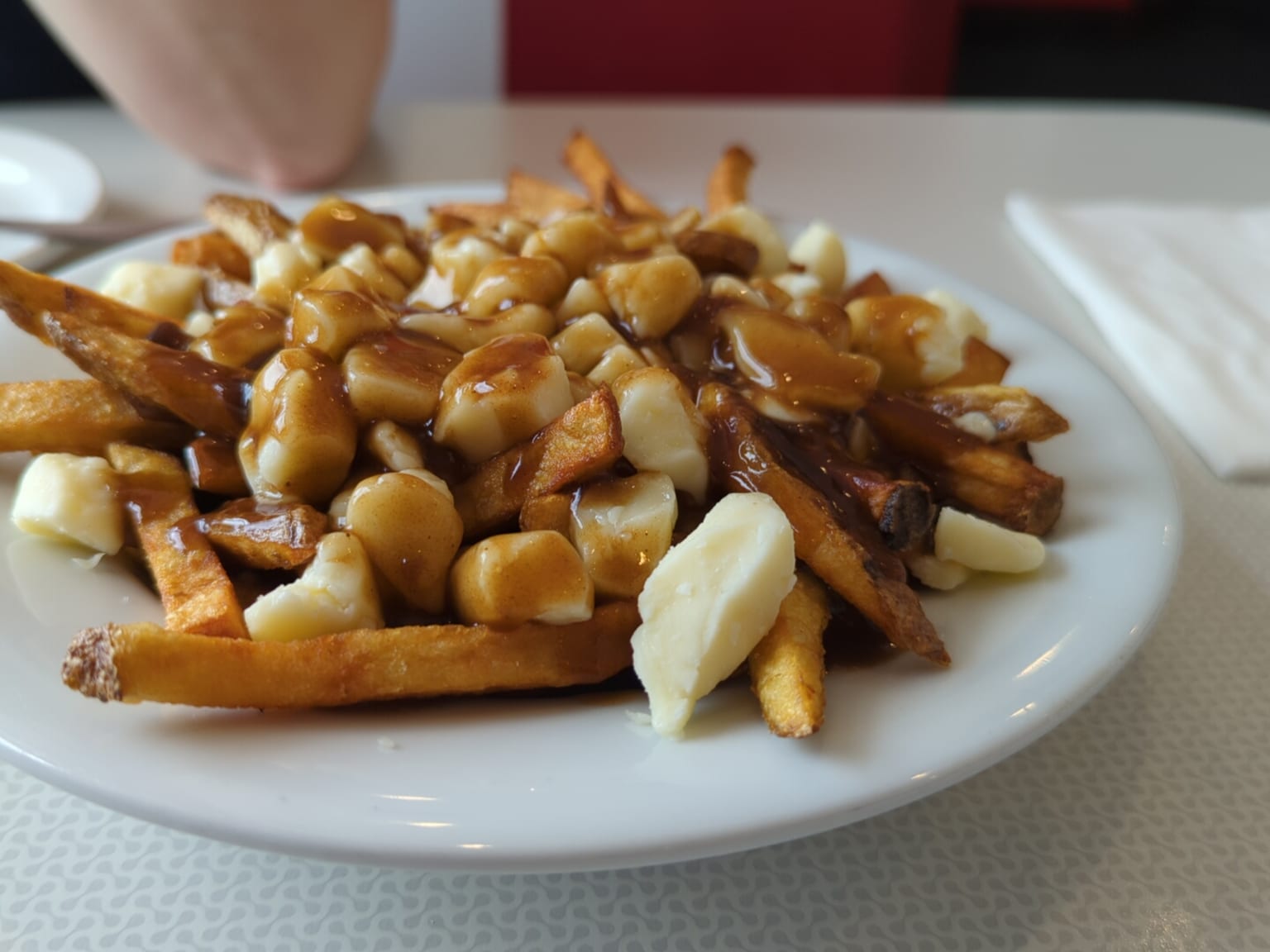

Hauptgericht Kanadisch Québecerisch
Poutine
Doppelt frittierte Pommes, frische Cheese Curds und heiße Hähnchen-Rindfleisch-Sauce. Weil Cheese Curds in Deutschland schwer erhältlich sind, enthält das Rezept eine vollständige Methode, um sie an einem Nachmittag aus vier Litern frischer Milch und Lab selbst herzustellen.
Sauce brune, die aus der Ricardo Brown-Soße für Poutine und heißes Huhn, den Seasons and Suppers und Endless Meal-Versionen, der Chef Cuisto-Sauce à Poutine mit Ketchup und Tabasco und der Papilles et Pupilles-Version mit Apfelessig und Ahorn in Einklang gebracht wird. Brattemperaturen aus kanadischen Quellen. Käsequark-Chemie aus dem Cheese Science Toolkit und die Home-Quark-Methode aus dem Kulturmagazin und Fermenting for Foodies-Rezepten mit deutschen Mengen, die gegen Käse-selber-machen verglichen wurden. Die Verfügbarkeit von deutschem Quark wurde bei Q-Regio und The Poutine Kitchen bestätigt. Ursprünge und Varianten aus Wikipedia.
Zutaten
Geschrieben für: 5 L Topf
Pommes
- 1 kg mehligkochende Kartoffeln, Agria, Adretta, Melody oder Bintje, geschältes Gewicht gerundet
- 2 L Frittieröl, Raps-, Sonnenblumen- oder Erdnussöl, genug für 8 cm im Topf gerundet
- nach Geschmack feines Salz, für die Pommes direkt aus dem Fett gerundet
Käse
- 350 g frischer Käsebruch, zimmerwarm, in 2 bis 3 cm großen Brocken, niemals gerieben gerundet
Sauce brune
- 45 g Butter gerundet
- 40 g Weizenmehl Type 405 gerundet
- 1 Knoblauchzehe, fein gehackt gerundet
- 400 ml Rinderbrühe, kräftig und nicht zu salzig gerundet
- 300 ml Hühnerbrühe gerundet
- 10 g Speisestärke, in 20 ml kaltem Wasser glatt gerührt gerundet
- 15 ml Apfelessig gerundet
- 15 g Tomatenketchup gerundet
- 3 g schwarzer Pfeffer, grob gemahlen, mehr als man denkt gerundet
- nach Geschmack feines Salz gerundet
Käsebruch selbst gemacht, falls du ihn selbst herstellst
- 4 L frische Vollmilch, 3,5% Fett, frische pasteurisierte Milch, keine H-Milch und keine ESL-Milch, die gerinnt nicht gerundet
- 60 ml Buttermilch, mit lebenden Kulturen, oder ein Achtel Teelöffel mesophile Starterkultur gerundet
- 1 ml flüssiges Naturlab, etwa 20 Tropfen Lab 1:10000, Stärke auf der Flasche prüfen, in 50 ml kaltem, chlorfreiem Wasser verdünnt gerundet
- 2 ml Calciumchloridlösung, 33%, in 50 ml Wasser verdünnt, nur bei pasteurisierter Milch nötig (optional) gerundet
- 10 g Salz ohne Jod, jodiertes Salz tötet die Kulturen ab gerundet
Zubereitung
Die Schritte 1 bis 8 sind nur für die Herstellung Ihres eigenen Käsequarks. Wenn Sie Quark gekauft haben, beginnen Sie mit Schritt 9 und nehmen Sie den Quark eine Stunde vor dem Essen aus dem Kühlschrank.
- Erhitzen Sie die Milch auf 32°C in Ihrem größten Topf und rühren Sie, damit der Boden nicht versennt. Verwenden Sie ein Thermometer; Raten funktioniert hier nicht.
- Die Buttermilch einrühren. Abdecken und eine Stunde bei 30 bis 32°C halten. Ein ausgeschalteter Ofen mit eingeschaltetem Licht oder der in ein Handtuch gewickelte Topf hält dies leicht.
- Das verdünnte Calciumchlorid einrühren. Fügen Sie dann den verdünnten Lab hinzu und rühren Sie ihn mit etwa zwanzig langsamen Auf- und Abschlägen über eine Minute um, so dass er jeden Teil der Milch erreicht. Stoppen Sie die Milch mit der Rückseite des Löffels und decken Sie den Topf ab.
- 45 bis 60 Minuten bei 30 bis 32°C ungestört stehen lassen. Testen Sie für eine saubere Pause: Schieben Sie ein Messer in einem Winkel hinein und heben Sie es an. Es ist fertig, wenn sich der Quark entlang einer geraden, sauberen Linie spaltet und die klare gelbgrüne Molke in den Riss stößt. Wenn es zerlumpt reißt oder wie Joghurt aussieht, warten Sie weitere 15 Minuten und testen Sie es erneut.
- Den Quark in 1 cm große Würfel schneiden: gerade nach unten in eine Richtung, gerade nach unten, dann lange abgewinkelte Schnitte durch die Tiefe. 5 Minuten ruhen.
- Erhöhen Sie die Temperatur über 30 Minuten auf 39°C, nicht schneller als einen halben Grad pro Minute, und rühren Sie alle paar Minuten vorsichtig um, damit die Würfel nicht miteinander vermatten. Bei 39°C weitere 30 Minuten halten, dabei alle 5 Minuten umrühren. Die Würfel schrumpfen auf etwa die Hälfte ihrer Größe und werden federnd, wie eine feste Erbse. Es geht schneller als diese Fallen Molke im Inneren und der Quark wird am Abend sauer.
- Durch ein mit Stoff ausgekleidetes Sieb abgießen und die Molke aufbewahren, wenn Sie sie für Brot haben möchten. Sammeln Sie das Tuch, drücken Sie den Quark zu einer einzigen Platte und lassen Sie ihn 30 Minuten lang bei etwa 35°C abtropfen. Schneiden Sie dann die Platte in drei Teile, stapeln Sie die Teile und drehen Sie den Stapel alle 15 Minuten eine Stunde lang um. Das ist Cheddaring, und es ist es, was Quark ihren geschichteten Kauen anstelle einer krümeligen Textur verleiht.
- Reißen Sie die Platte von Hand in 2 bis 3 cm Klumpen. Die Hälfte des Salzes darüber streuen, umrühren, 10 Minuten warten, dann den Rest hinzufügen und erneut umrühren. Lassen Sie sie bei Raumtemperatur und verwenden Sie sie innerhalb von drei Stunden. Sie quietschen am lautesten in der ersten Stunde und werden bis morgen aufgehört haben zu quietschen.
- Die Kartoffeln schälen und in etwa 1 cm quadratische Staben schneiden. Halten Sie sie gleich; dünne brennen, während dicke drinnen noch roh sind. 30 Minuten in kaltem Wasser einweichen, um die Oberflächenstärke abzuwaschen.
- Abtropfen lassen und richtig trocknen, in einem Salatspießer und dann auf einem Geschirrtuch. Feuchte Kartoffeln spucken heftig in heißes Öl und dämpfen sich selbst, anstatt sie zu braten.
- Zuerst bei 150°C braten, in drei oder vier Chargen, damit die Öltemperatur nicht abstürzt. Sechs bis acht Minuten pro Charge: Die Chips sollten schlaff und blass werden, ohne Farbe. Heben Sie sie auf ein Gestell und lassen Sie sie mindestens 30 Minuten abkühlen. Dieser erste Braten gart das Innere; das Abkühlen setzt die Oberfläche so ein, dass der zweite Braten sie knusprig machen kann. Überspringen Sie die Kühlung und Sie erhalten Chips, die außen braun und in der Mitte hart sind.
- Machen Sie die Sauce, während die Chips abkühlen. Die Butter in einem Topf bei mittlerer Hitze schmelzen, das Mehl einrühren und unter Rühren 4 bis 5 Minuten kochen, bis sie nussig riecht und die Farbe von nassem Sand angenommen hat. Das ist eine blonde Mehlschwitze, die auf Haselnuss geht. Stoppen Sie, bevor es dunkel wird; eine dunkle Mehlschwitze verdickt stark und schmeckt bitter unter dem Käse.
- Fügen Sie den Knoblauch hinzu, rühren Sie 20 Sekunden lang um, gießen Sie dann beide Brühen in drei Zusätzen ein und schlagen Sie jede vor der nächsten glatt. Zum Kochen bringen, dann 5 Minuten köcheln lassen.
- Die Maisstärkeaufschlammi einrühren und weitere 2 bis 3 Minuten köcheln lassen. Den Essig und den Ketchup einrühren, dann den Pfeffer und dann nach Salz abschmecken. Die Sauce sollte einen Löffel bedecken, aber trotzdem in einem Strom ablaufen, nicht in einem Klecks darauf sitzen. Es verdickt sich weiter von der Hitze ab, also lassen Sie es etwas locker. Halten Sie es bei einem nackten Köcheln, abgedeckt.
- Bringen Sie das Öl auf 190°C. Zweitens braten Sie die Chips, wieder in Chargen, für 2 bis 4 Minuten, bis sie tiefgolden und steif genug sind, um ihre Form zu behalten, wenn Sie einen aufheben. Lassen Sie sie kurz abtropfen und salzen Sie sie sofort, während sie noch mit Öl glänzend sind, damit das Salz klebt.
- Stellen Sie eine Schüssel nach der anderen zusammen und erledigen Sie es schnell. Warme Chips in eine warme, tiefe Schüssel geben, bei Bedarf wieder salzen, Quark darüber streuen, dann die scharfe Soße direkt darüber gießen. In dieser Reihenfolge.
- Servieren Sie es jetzt. Poutine hat eine Arbeitsdauer von etwa fünf Minuten.
Hinweise
- Der Käse ist das Rezept, also hier ist die Rangliste, in der Reihenfolge, mit einer Verpflichtung. Frischer Quark ist Käse, der geschnitten, gekocht, cheddariert und gesalzen, aber nie gepresst oder gereift wurde. Sie quietschen, weil das Proteinnetzwerk noch intakt ist und das Kalzium noch daran gebunden ist, was nur hält, solange der Käse jung und wenig Säure enthält. Während die Starterkultur weiterhin Laktose frisst und Milchsäure macht, löst sich das Kalzium auf und die Proteine zerbrechen, und das Quietschen verschwindet. Das ist der Grund, warum ein Quark innerhalb von Stunden und nicht innerhalb von Tagen am besten ist, und deshalb kann kein gereifter Käse irgendwo einen nachahmen.
- Erste Wahl: Machen Sie sie. Schritte 1 bis 8. Vier Liter gewöhnliche Frischmilch ergibt etwa 400 g Quark, was eine Poutine für vier ist, bei der noch eine Handvoll übrig ist, um an der Theke zu essen. Es kostet etwa fünf Euro Milch, braucht ein Thermometer und einen Nachmittag und produziert Quark, der drei Stunden alt ist, der frischer ist als alles, was man irgendwo in Europa kaufen kann. Liquid Naturlab ist der einzige ungewöhnliche Kauf: Bestellen Sie es in einem deutschen Käsegeschäft oder fragen Sie in einer Apotheke, und es ist monatelang im Kühlschrank haltbar. Calciumchlorid ist es wert, gleichzeitig gekauft zu werden, da deutsche pasteurisierte Milch ohne es weich ausgeht.
- Zweite Wahl: Deutsch hergestellter Quark per Post kaufen. Sie existieren, was die meisten Menschen überrascht. Bauernkäserei Wolters in Uckerland im Uckermark stellt für den deutschen Markt geeigneten Käsequark her, der über Q-Regio für rund 31 Euro pro Kilo verkauft wird, und The Poutine Kitchen verkauft auch Quark. DHL dauert zwei bis sechs Werktage, also bestellen Sie, um am Morgen zu landen, an dem Sie kochen, und schicken Sie sie nicht im Juli an eine Packstation. Sie kommen mehrere Tage alt an und das meiste Quietschen ist verschwunden, weshalb sie eher unter selbstgemacht als darüber sitzen.
- Dritte Wahl, und diejenige, die tatsächlich an einem Dienstag funktioniert: Mozzarella mit geringer Feuchtigkeit. Nicht der Ball in Salzlake. Sie möchten den festen rechteckigen Block, der als Pizzamozzarella oder Mozzarella am Stück verkauft wird, die Art, die zum Reiben gedacht ist. Es ist jung, säurearm und feuchtigkeitsarm, was genau das Profil ist, das richtig quietscht und schmilzt.Zerreißen Sie es mit den Händen in 2 bis 3 cm Klumpen und reiben Sie es niemals. Geriebener Käse hat zu viel Oberfläche und löst sich in der Sauce auf; zerrissene Klumpen behalten ihre Form, werden an den Rändern weich und dehnbar und bleiben in der Mitte leicht fest, was ein Quark tut. Verwenden Sie es kalt aus dem Kühlschrank.
- Was ist mit den deutschen Käsesorten, die alle vorschlagen. Ehrliche Urteile.Junger Gouda, vier Wochen alt, ist die nächstbeste Supermarktoption nach Blockmozzarella: Er hat ein schwaches Quietschen und einen guten Geschmack, aber er schmilzt vollständig und schnell und setzt Fett frei, so dass man einen Ölslick auf der Sauce bekommt. Akzeptabel.Butterkäse ist eine schlechte Idee; er wird gezüchtet, um zu schmelzen, und er bricht in dem Moment, in dem die Sauce darauf trifft, zu Fett zusammen.Frischer Mozzarella in Salzlake, einschließlich Büffel, ist aus dem gegenteiligen Grund eine schlechte Idee: Er besteht zu 60 % aus Wasser, er kühlt die Chips und verdünnt die Sauce zu einer rosa Suppe.Halloumi quietscht lauter als ein echter Quark und ist immer noch die falsche Antwort, weil er so konzipiert ist, dass er nie schmilzt und sehr salzig ist, so dass man am Ende heißes Gummi in Soße kaut.Quark hat überhaupt keine Struktur und verschwindet einfach.Emmentaler wird schnurartig und gummiartig und schmeckt zu süß.
- Bergkäse und die Käsespätzle-Frage, da sie in Baden-Württemberg immer wieder auftaucht. Nein. Alpenkäse reift monatelang und der ganze Sinn dieser Reifung ist die Proteolyse, der Abbau genau des Proteinnetzwerks, das einen Quark quietschen lässt. Allgäuer Bergkäse, Emmentaler, Comté und die übliche Käsespätzle-Mischung schmelzen alle zu langen Strängen und dann zu Fett. Chips mit Bergkäse und Soße sind ein perfekt gutes Gericht. Es ist Käsepommes, und es ist keine Poutine, und es Poutine zu nennen, bringt Sie Ärger mit jedem Quebécois am Tisch. Die einzige alpine Traditionsroute, die funktioniert, ist, eine lokale Hofkäserei zu fragen, ob man Bruch am Herstellungstag kaufen kann. Kleine Molkereien in der Gegend von Schwäbisch Hall schneiden jede Woche Quark und die meisten werden Ihnen eine Tüte verkaufen, wenn Sie zur richtigen Zeit kommen und nett fragen.
- Die Soße ist keine reine Rindfleischsoße, und genau das wird außerhalb von Québec oft missverstanden. Eine richtige Sauce Brune kombiniert Hühnerbrühe für Leichtigkeit mit Rinderbrühe für Tiefe, ungefähr im Verhältnis dieses Rezepts. Ricardos klassische Version verwendet zwei Teile Rinderbrühe auf einen Teil Hühnerbrühe sowie eine Buttermehlschwitze und zum Abschluss Maisstärke. Diese doppelte Bindung ist beabsichtigt: Die Mehlschwitze gibt Körper, die Maisstärke sorgt für die glänzende, leicht fließende Konsistenz, die zwischen die Pommes läuft, statt nur daraufzuliegen. Essig und Ketchup geben der Soße ihren typischen Geschmack aus Québec und nur eine dezente Säure. Viele Haushalte in Québec verwenden aus demselben Grund einfach eine Packung St.-Hubert-Mischung. Lassen Sie den Pfeffer nicht weg, er soll deutlich zu schmecken sein.
- Ein Hinweis auf Lagerbestände in Deutschland. Fond in einem Glas von Rewe oder Edeka, Rinderfond und Geflügelfond, funktioniert gut und ist das, was ich an einem Wochentag verwende. Würfel sind zu salzig und zu flach; wenn Sie nur Würfel haben, machen Sie sie mit einer Stärke von drei Vierteln und fügen Sie einen Teelöffel Sojasauce für Tiefe hinzu. Für eine vegetarische Sauce 400 ml starke getrocknete Pilzbrühe und 300 ml Gemüsebrühe verwenden, einen Teelöffel Sojasauce und einen halben Teelöffel Hefeextrakt hinzufügen und den Essig und den Ketchup genau wie beschrieben aufbewahren.
- Kartoffeln. Deutsche Supermärkte verkaufen keine Russets. Was Sie wollen, ist mehligkochend, mehlig, und die guten hier sind Agria, Adretta, Melody und Bintje. Festkochende Kartoffeln, die Salatkartoffeln, haben zu viel Feuchtigkeit und nicht genug Stärke, und sie braten zu schlaffen, glasigen Chips. Die Haut anzulassen ist in vielen Orten in Québec in Ordnung und traditionell. Das Doppelbraten ist nicht optional: 150°C dann 190°C, mit einem richtigen Kühlabstand dazwischen. Sie können die ersten Bratstunden Stunden im Voraus oder am Vortag machen und die Chips im Kühlschrank aufbewahren, genau so geht ein Casse-Croûte mit einem Mittagsrausch um.
- Warum die Reihenfolge der Versammlung wichtig ist. Der Quark geht auf heiße Chips, so dass die Hitze, die von den Kartoffeln aufsteigt, sie von unten weich macht, dann geht die scharfe Soße darüber und beendet die Arbeit von oben. Beide Richtungen sind wichtig. Gießen Sie zuerst die Sauce ein und die Chips werden in Sekundenschnelle matschig, während der Quark oben sitzt und kalt und quietscht. Schmelzen Sie den Quark separat und Sie haben Käsechips. Der Quark soll zur Hälfte geschmolzen sein: außen dehnbar und warm, wobei er immer noch seine Form und seinen Biss in der Mitte beibehält. Dieser halb geschmolzene Zustand dauert etwa fünf Minuten, was der wahre Grund ist, warum Poutine im Stehen an einer Theke gegessen wird.
- Räucherfleisch-Poutine ist eine echte Sache, keine Neuheit. In Montréal ist das Hinzufügen von gehacktem Montrealer Räucherfleisch zu einer Poutine bei La Banquise und überall sonst Standard. Wenn Sie Montreal Smoked Meat zubereitet haben, hacken Sie 200 g in grobe Stücke, erhitzen Sie es einige Minuten lang im Dampfgarer oder in einer abgedeckten Pfanne und stapeln Sie es vor der Sauce mit dem Quark. Wurst, Speck, Rinderhackfleisch und die Poutine Galvaude mit Huhn und Erbsen sind auch alle normale Bestellungen. Als erster Gang vor tourtière ist es schwer, also servieren Sie das eine oder das andere und beenden Sie mit Nanaimo-Riegel so oder so.
- Der Ursprung ist umstritten und wird so bleiben. Poutine tauchte in den späten 1950er Jahren im Centre-du-Québec auf und mehrere Restaurants in Warwick und Drummondville beanspruchen ihn. Niemand hat es geregelt. Die Menschen aus dieser Region sind sich einig, dass eine Poutine, die nicht quietscht, keine Poutine ist, weshalb der Käse die Hälfte dieser Noten einnimmt.
Verwendete Quellen
- Ricardo: Brown gravy sauce for poutine and hot chicken
- Seasons and Suppers: Authentic Canadian poutine
- The Endless Meal: Authentic Canadian poutine
- Chef Cuisto: Sauce à poutine maison
- Papilles et Pupilles: Poutine, comment faire la sauce à poutine maison
- Wikipedia: Poutine
- Cheese Science Toolkit: Squeak
- Culture, the word on cheese: How to make squeaky cheese curds at home
- Fermenting for Foodies: Homemade squeaky cheese curds
- Q-Regio: Cheese Curds from Bauernkäserei Wolters, Uckerland
- The Poutine Kitchen: Poutine cheese alternatives
- Käse selber machen: Der Grundkäse mit Lab
Passt gut zu
Von Christoph Mayer