
Beilage Japanisch Asiatisch Milchfrei
Einfaches Onigiri auf drei Arten
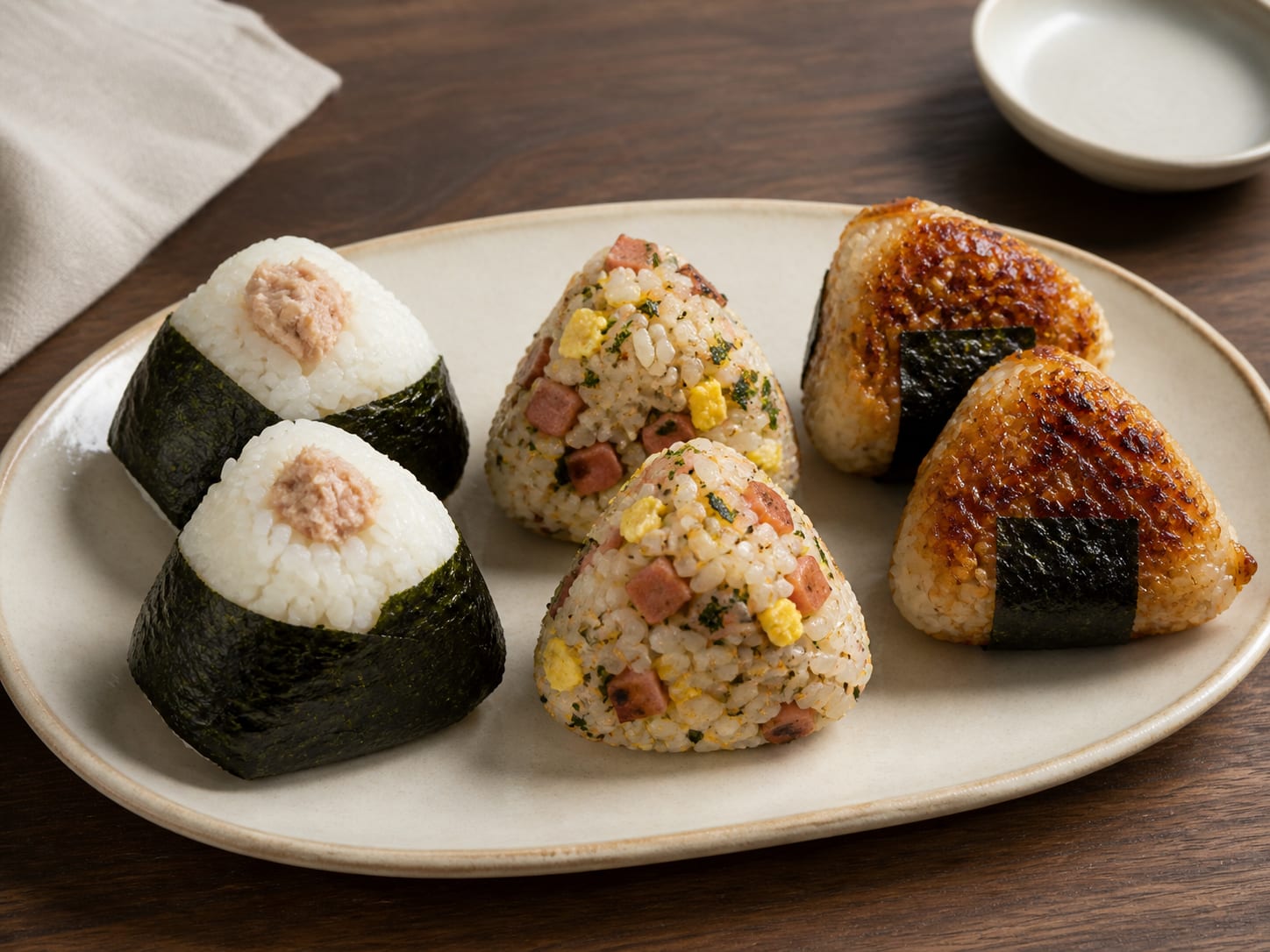
Eine Charge japanischer Kurzkornreis wird zu würzigem, mit Thunfisch gefülltem Onigiri, Spam-und-Ei-Mazekomi und knusprigem Soja-Mirin-Yaki-Onigiri.
Vorbereitung30 Min.
Garzeit45 Min.
Ruhezeit15 Min.
Portionen7
Angepasst für die Hausküche aus Ian Fujimotos Onigiri-Video und schriftlichem Leitfaden
Zutaten
Geschrieben für: 28 cm Pfanne
Einheiten
Temperatur
Portionen
Reis und Verpackung
- 450 g Japanischer Kurz- oder Mittelkornreis, 3 Reiskochbecher oder etwa 2 1/4 US-Tassen gerundet
- 600 ml Wasser, Oder füllen Sie einen Reiskocher bis zur 3-Tassen-Linie gerundet
- 4 g Feines Salz, Zum Würzen und Formen gerundet
- 4 Geröstete Nori, Volle Blätter, weniger für schmale Streifen verwenden gerundet
Mit würzigem Thunfisch gefüllt
- 140 g Thunfisch aus der Dose, Eine Standarddose, extrem gut abgetropft; Lachskonserven funktioniert auch gerundet
- 22 ml Kewpie Mayonnaise, Beginnen Sie mit der kleineren Menge gerundet
- 5 ml Sriracha gerundet
- 1.5 ml Geröstetes Sesamöl gerundet
- nach Geschmack Feines Salz gerundet
Spam-und-Ei-Mazekomi
- 110 g Spammail, Etwa ein Drittel einer 340-g-Dose, fein gewürfelt gerundet
- 1 Großes Ei gerundet
- 1 g Feines Salz gerundet
- 2 g Zucker (optional) gerundet
- 10 g Furikake, Plus mehr zum Probieren gerundet
Soja-mirin-Yaki
- 30 ml Japanische Sojasauce oder Shoyu gerundet
- 15 ml Mirin gerundet
- 12 g Hellbrauner Zucker gerundet
- 5 ml Neutrales Öl gerundet
Angaben zur Ernährung sind ein Anhaltspunkt, keine Garantie. Bei einer Allergie bitte die Zutaten selbst prüfen.
Zubereitung
- Spülen Sie den Reis wiederholt in kaltem Wasser ab, bis das Wasser größtenteils klar ist. Gut abgießen, mit den 600 ml Wasser in einen Reiskocher geben und auf der Standardeinstellung für weißen Reis kochen. Wenn Ihr Herd Tassenmarkierungen hat, verwenden Sie seine eigene 3-Tassen-Linie, anstatt das Wasser zu messen.
- Wenn der Reis gekocht ist, rühren Sie ihn vorsichtig mit einem Reispaddel auf. Schließen Sie den Deckel und lassen Sie ihn 10 bis 15 Minuten abkühlen: Er sollte warm und klebrig bleiben, aber nicht mehr schmerzhaft heiß oder zu weich sein.
- Für den würzigen Thunfisch den Fisch sehr gründlich abtropfen lassen. Mit 22 ml Kewpie, Sriracha, Sesamöl und einer kleinen Prise Salz pürieren. Fügen Sie nur genug zusätzliche Mayonnaise hinzu, um ihn zu binden; eine feuchte Füllung lässt den Reis auseinanderfallen.
- Für den Mazekomi den gewürfelten Spam in einer trockenen, beschichteten Pfanne bei mittlerer bis hoher Hitze anbraten, bis er gebräunt ist, und dann entfernen. Schlagen Sie das Ei mit dem Salz und optionalem Zucker, gießen Sie es in das gerenderte Spam-Fett und kochen Sie es als dünnes Omelett. Kurz umdrehen, um die zweite Seite zu setzen, dann fein hacken.
- Für die Yaki-Glasur die Sojasauce, den Mirin und den braunen Zucker umrühren, bis sich der größte Teil des Zuckers aufgelöst hat.
- Teilen Sie den warmen Reis nach den gewünschten Arten und lassen Sie etwa 150 g gekochten Reis pro Onigiri ein. Halten Sie den Reis während der Arbeit bedeckt, damit die Oberfläche nicht austrocknet.
- Für würzige mit Thunfisch gefüllte Onigiri legen Sie eine dünne Schicht Reis in eine gedämpfte Form oder gesalzene feuchte Hände. Machen Sie einen flachen Brunnen, fügen Sie nicht mehr als 15 ml Füllung hinzu, bedecken Sie mit mehr Reis und drücken Sie nur fest genug, um zu halten. Mit einem halben Blatt oder Streifen Nori umwickeln.
- Für Spam-und-Ei-Mazekomi den gebräunten Spam, das gehackte Ei und das Furikake vorsichtig in seinen Anteil an Reis falten. Legen Sie etwa 150 g auf Plastikfolie, ziehen Sie die Folie fest, drücken Sie sie dann und drehen Sie sie zwischen den Händen, um ein Dreieck zu bilden. Zerkleinern Sie die Körner nicht.
- Für Soja-Mirin-Yaki, befeuchten Sie die Hände in leicht gesalzenem Wasser und formen Sie sanft einfachen warmen Reis zu kompakten Dreiecken. Erhitzen Sie die antihaftbeschichtete Pfanne auf mittlerer bis hoher Stufe und wischen Sie sie mit dem neutralen Öl ab.
- Eine breite Seite jedes Yaki-Onegiri sparsam mit Glasur bestreichen und mit der Glasurseite nach unten legen. Etwa 2 Minuten anbraten, die Oberseite leicht bürsten und mit einem Spatel wenden. Wiederholen Sie das leichte Bürsten und Drehen, bis beide Seiten knusprig und karamellisiert sind. Überschüssige Glasur tränkt den Reis und lässt ihn zusammenbrechen.
- Fügen Sie sofort Nori hinzu, wenn Sie jetzt servieren. Für verpackte Onigiri kühlen Sie sie vor dem Einwickeln ab, lassen Sie das Nori getrennt, damit es knusprig bleibt, und fügen Sie es kurz vor dem Essen hinzu.
Hinweise
- Vegane Tofu-Füllung. Für die beste Textur 200 g festen Tofu zuerst 3 Minuten im Ganzen in Salzwasser köcheln (siehe die Tofu-Grundformel), dann von Hand in unregelmäßige kleine Stücke zerbröckeln und braten, bis sie trocken und gebräunt sind; mit 15 ml Sojasauce, 10 g weißem Miso, 5 ml Sesamöl und etwas Chili-Crisp würzen. Vollständig abkühlen, bevor Sie es als Mittelfüllung verwenden oder durch den Reis mischen. Der raue Streusel hält die Würze viel besser als mit dem Messer geschnittene Würfel und ersetzt den Thunfisch oder Lachs sauber.
- Japanischer Kurz- oder Mittelkornreis ist unerlässlich. Langkorn- und Jasminreis haften nicht ausreichend für eine zuverlässige Formgebung.
- Ein Plastikschneidebrett, Plastikfolie oder eine Onigiri-Form verhindert ein Anhaften. Salzwasser ist die traditionelle Option zum Formen von Hand.
- Ians würzige Füllung funktioniert mit Thunfisch oder Lachs; das Video verwendet versehentlich Lachs, während das geschriebene Rezept Thunfisch angibt.
- Den Reis nicht zu einer dichten Paste zusammendrücken. Verwenden Sie genügend Druck, um Struktur zu erzeugen, während einzelne Körner sichtbar sind.
- Gekochter Reis ist verderblich. Essen Sie frisch zubereitete Onigiri sofort oder kühlen Sie sie innerhalb von 2 Stunden; verpackte Nori sollten bis zum Servieren getrennt bleiben.
Verwendete Quellen
Passt gut zu
- Knoblauch-Ingwer-Bok-Choy
- Misosuppe mit Gemüse und Tofu
- Spinat-Gomae
- Tofu, für mehr Geschmack vorbereitet
Verwendete Quellen
Von Christoph Mayer