
Hauptgericht Thailändisch Südostasiatisch Milchfrei Glutenfrei
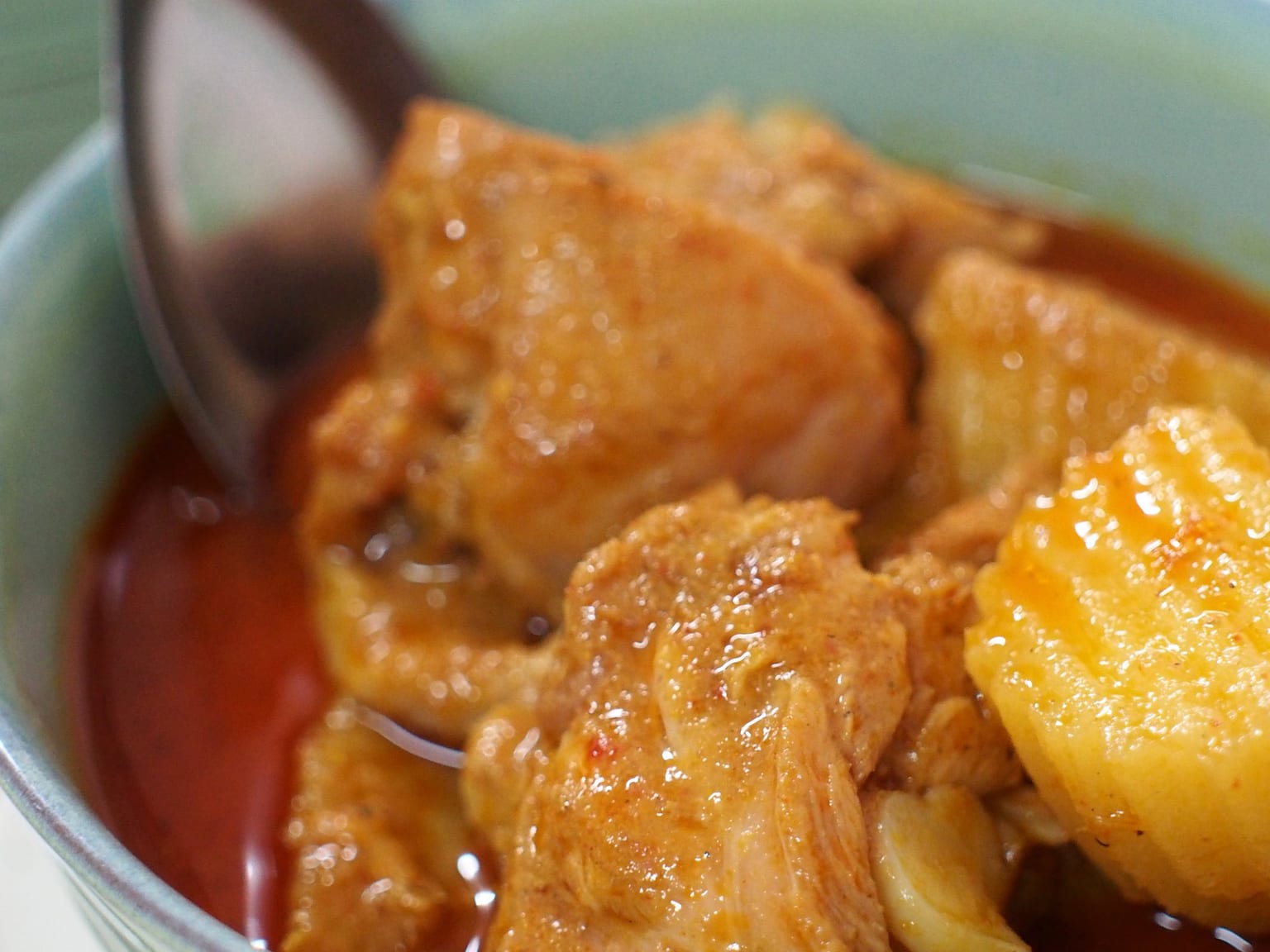
Massaman Curry
Thai แกงมัสมั่น, das Curry, das auf den Gewürzrouten kam. Kokosmilch, Huhn, Kartoffeln und Erdnüsse unter einer Paste aus geröstetem Zimt, Muskatnuss, Kardamom, Nelken und Sternanis. Mild, süß, sauer und tief aromatisch.
Vorbereitung45 Min.
Garzeit70 Min.
Portionen4
Adaptiert von Pailin Chongchitnants Hot Thai Kitchen Massaman, Simply Suwanee's und Thai-Foodie's Pastenrezepten und RecipeTin Eats, wobei die Gewürzgeschichte mit Wikipedia verglichen wurde
Zutaten
Geschrieben für: 5 L Topf
Einheiten
Temperatur
Portionen
Currypaste
- 6 getrocknete milde rote Chilischoten, entstielt, entkernt und 20 Minuten in warmem Wasser eingeweicht gerundet
- 15 g Koriandersamen gerundet
- 8 g Kreuzkümmelsamen gerundet
- 6 grüne Kardamomkapseln, leicht angedrückt gerundet
- 6 ganze Gewürznelken gerundet
- 1 Zimtstange, etwa 5 cm, zerbrochen gerundet
- 1 Sternanis gerundet
- 1 g geriebene Muskatnuss, etwa ein Viertel einer ganzen Muskatnuss gerundet
- 3 g weiße Pfefferkörner gerundet
- 70 g Schalotten, geschält und halbiert gerundet
- 25 g Knoblauch, geschälte Zehen gerundet
- 20 g Galgant, geschält und dünn geschnitten gerundet
- 25 g Zitronengras, nur der zarte untere Teil, dünn geschnitten gerundet
- 10 g thailändische Garnelenpaste, Kapi gerundet
- 5 g feines Salz gerundet
- 30 ml Wasser, zum Mixen gerundet
Curry
- 800 g Hähnchenoberkeulen ohne Knochen, ohne Haut, in 4 cm große Stücke geschnitten gerundet
- 800 ml Kokosmilch mit vollem Fettgehalt, zwei Dosen à 400 ml, nicht geschüttelt gerundet
- 30 ml neutrales Öl gerundet
- 1 Zimtstange, für den Topf gerundet
- 1 Sternanis, für den Topf gerundet
- 3 Lorbeerblätter gerundet
- 450 g festkochende Kartoffeln, geschält, in 3 cm große Stücke geschnitten gerundet
- 180 g Zwiebel, in dicke Spalten geschnitten gerundet
- 60 g geröstete ungesalzene Erdnüsse, grob gehackt gerundet
- 40 g Palmzucker, gehackt, oder brauner Zucker gerundet
- 40 ml Tamarindenpaste, das flüssige Konzentrat gerundet
- 30 ml Fischsauce gerundet
- 300 g Jasminreis, zum Servieren gerundet
Angaben zur Ernährung sind ein Anhaltspunkt, keine Garantie. Bei einer Allergie bitte die Zutaten selbst prüfen.
Zubereitung
- Die getrockneten Chilis 20 Minuten in warmem Wasser einweichen, dann abtropfen lassen und auspressen. Behalten Sie 30 ml des Einweichwassers, wenn Sie eine lockerere Paste wünschen.
- Rösten Sie die Koriandersamen, Kreuzkümmel, Kardamomschoten, Nelken, gebrochene Zimtstange, Sternanis und weiße Pfefferkörner in einer trockenen Pfanne bei mittlerer Hitze 2 bis 3 Minuten lang, bis Sie sie deutlich riechen können. Lassen Sie sie nicht verdunkeln. Geben Sie sie zum Abkühlen auf einen Teller, mahlen Sie sie zu einem Pulver und rühren Sie die geriebene Muskatnuss unter.
- In derselben trockenen Pfanne die Schalotten, den Knoblauch und die Galangal bei mittlerer bis hoher Hitze einkohlen, bis sie schwarze Flecken haben, etwa 6 Minuten. Hier kommt das rauchige Rückgrat des Curry her, also lassen Sie sie stellenweise schwärzen.
- Die Chilis zuerst mit dem Salz pürieren oder mischen, dann die verkohlten Aromen, das Zitronengras, die Garnelenpaste und schließlich die gemahlenen Gewürze einarbeiten. Fügen Sie das Wasser nach und nach hinzu, bis Sie eine dicke, glatte Paste haben. Eine kleine Küchenmaschine ist in Ordnung. Ein Mörtel gibt eine bessere Textur, wenn Sie den Arm dafür haben.
- Öffnen Sie die Kokosmilchdosen, ohne sie zu schütteln, und löffeln Sie die dicke Sahne von oben in einen schweren Topf. Fügen Sie das Öl hinzu und erhitzen Sie es bei mittlerer Hitze, bis die Creme sprudelt und sich zu trennen beginnt.
- Fügen Sie die Paste hinzu und braten Sie sie unter Rühren 5 bis 8 Minuten lang, bis sie dunkel wird und das Öl an den Rändern wieder herauskommt. Gebratene Paste schmeckt völlig anders als rohe Paste. Dieser Schritt ist das ganze Rezept.
- Fügen Sie das Huhn hinzu und wenden Sie es für 2 Minuten in die Paste. Gießen Sie den Rest der Kokosmilch hinein, lassen Sie die Zimtstange, den Sternanis und die Lorbeerblätter hinein und bringen Sie sie zum Köcheln. 30 Minuten unbedeckt kochen lassen.
- Fügen Sie die Kartoffeln und Zwiebelspalten hinzu. Mit einem Spritzer Wasser aufbedecken, wenn sie nicht gerade bedeckt sind. 20 bis 25 Minuten köcheln lassen, bis die Kartoffeln weich genug sind, um sie unter einen Löffel zu geben.
- Palmzucker, Tamarinde und Fischsauce unterrühren. Jetzt schmecken und anpassen. Massaman sollte zuerst süß landen, dann sauer, dann salzig, mit dem Gewürz darunter. Fügen Sie Tamarinde hinzu, wenn sie flach ist, Fischsauce, wenn sie stumm ist, Zucker, wenn sie scharf ist.
- Fügen Sie die Erdnüsse hinzu, nehmen Sie den Topf vom Herd und lassen Sie ihn 10 Minuten ruhen. Fischen Sie die Zimtstange, den Sternanis und die Lorbeerblätter. Mit Jasminreis servieren.
Hinweise
- **Vegane raue Tofu-Version. ** Ersetzen Sie das Huhn durch 600 g extra festen Tofu, verwenden Sie Gemüsebrühe, ersetzen Sie Garnelenpaste durch 15 g weißes Miso und ersetzen Sie die Fischsauce durch leichte Sojasauce. Drücken Sie den Tofu, oder köcheln Sie ihn stattdessen 3 Minuten im Ganzen in Salzwasser (siehe die Tofu-Grundformel), reißen Sie ihn von Hand in grobe 3 cm große Stücke, bestreuen Sie ihn mit Stärke, bräunen Sie ihn separat und falten Sie ihn nur für die letzten 5 Minuten in das Curry. Die zerklüftete Oberfläche fängt die dicke Sauce ein, während die separate Bräunung die Kruste schützt.
- **Warum dieses Rezept existiert. ** Christoph hat ein Curry gejagt, das er einmal gegessen hat und nicht benennen konnte: aromatisch, Geschmack von Zimt und Muskatnuss, irgendwo zwischen Japanisch und Koreanisch in seiner Erinnerung, mit Aromen, die er als Südostasiatisch gelesen hat. Massaman ist das Gericht, das alles beantwortet. Es ist das einzige Curry in großer Zirkulation, dessen Gewürzpaste buchstäblich sowohl Zimt als auch Muskatnuss enthält, und es enthält auch Kardamom, Nelken und Sternanis, das gleiche warme Register, das japanische Curry-Roux in Spuren verwendet. Auf dem Teller sieht es genau wie japanisches Curry aus: dicke braune Sauce, Kartoffel- und Zwiebelstücke, mild, etwas süß, über Reis. Diese Ähnlichkeit ist der Grund, warum der Speicher sich selbst unter “Japanisch oder vielleicht Koreanisch” einreicht. Das Werbegeschenk ist das Paar Zimt und Muskatnuss zusammen. Japanische Mehlschwitze haben sie bei ein oder zwei Prozent, wo man sie als Hintergrundwärme bezeunen würde, nicht als einen Geschmack, an den man sich Jahre später erinnert. Massaman hat sie vorne. Wenn Sie dies kochen und die Antwort immer noch nicht ganz so ist, ist das nächstwahrscheinlichste, dass Sie ein japanisches Curry gegessen haben, das von Grund auf neu gemacht wurde, anstatt aus einem Block, also kochen Sie das andere Rezept in diesem Paar und vergleichen Sie. Wenn es näher, aber zu sauer war, schneiden Sie die Tamarinde auf 25 ml. Wenn es näher, aber zu kokoshaft war, verwenden Sie 600 ml Kokosmilch und 200 ml Hühnerbrühe.
- **Einkaufen in Deutschland. ** Galangal (Galgant) wird fast immer gefroren oder in Salzlake auf dem Asia-Markt, und eingefroren ist besser als getrocknet. Zitronengras hält sich monatelang im Gefrierschrank. Thailändische Garnelenpaste wird als Kapi in kleinen Wannen verkauft; wenn Sie es nicht bekommen können, verwenden Sie 15 g einer guten Sardellenpaste und fügen Sie ein wenig zusätzliche Fischsauce hinzu. Tamarindenkonzentrat gibt es als dunkle, gießbare Paste in einem Glas, manchmal mit Tamarinden-Konzentrat bezeichnet. Palmzucker kommt in Festplatten, die Sie hacken oder reiben; brauner Zucker ist ein akzeptabler Stand-in. Für die Chilis passt getrocknete Guajillo aus dem mexikanischen Regal sehr gut zu thailändischen getrockneten langen Chilis: mild, fruchtig und gibt die richtige Farbe.
- **Wenn Sie stattdessen Paste kaufen. ** Maesri und Mae Ploy Massaman Pasten werden beide in Deutschland Asien-Märkte verkauft und sind ehrliche Produkte, aber sie sind bei den warmen Gewürzen leichter als eine frische Paste. Wenn Sie eine Form verwenden, fügen Sie beim Braten einen halben Teelöffel gemahlenen Zimt, einen viertel Teelöffel geriebene Muskatnuss und eine zerkleinerte Kardamomkapsel hinzu. Das schließt den größten Teil der Lücke.
- Vorbereiten. Mit einer dünnen Ölschicht bedeckt hält sich die Paste zwei Wochen im Kühlschrank und sechs Monate im Gefrierschrank. Am besten esslöffelweise einfrieren. Das fertige Curry schmeckt am zweiten Tag noch runder, wenn sich die Gewürze mit der Kokosmilch verbunden haben.
- Fehlerquellen. Bei starkem Kochen trennt sich die Kokosmilch in Fett und feste Bestandteile, deshalb das Curry nur sanft köcheln lassen. Zu früh zugegebene Kartoffeln zerfallen und dicken die Sauce zu stark an. Wird die Paste nicht angebraten, schmeckt das Curry roh und eindimensional, unabhängig von der späteren Garzeit.
- Reste. Vorsichtig mit einem Spritzer Wasser erwärmen. Übrige Sauce ohne Fleisch schmeckt hervorragend über gerösteter Süßkartoffel oder zu Reis mit Spiegelei.
- **Beef-Version. ** Verwenden Sie 800 g Rinderfutter in 4 cm großen Würfeln, köcheln Sie es 2 Stunden lang, bevor die Kartoffeln hineingehen, und fügen Sie dabei 200 ml Wasser hinzu. Lammschulter funktioniert auf die gleiche Weise.
Verwendete Quellen
- Hot Thai Kitchen: Authentic Thai Massaman Curry with Chicken
- Simply Suwanee: The Best Authentic Thai Massaman Curry Paste
- Thai-Foodie: Massaman Curry Paste
- RecipeTin Eats: Massaman Curry
- Wikipedia: Massaman curry
Passt gut zu
Verwendete Quellen
Von Christoph Mayer