
Suppe Deutsch Europäisch Nussfrei
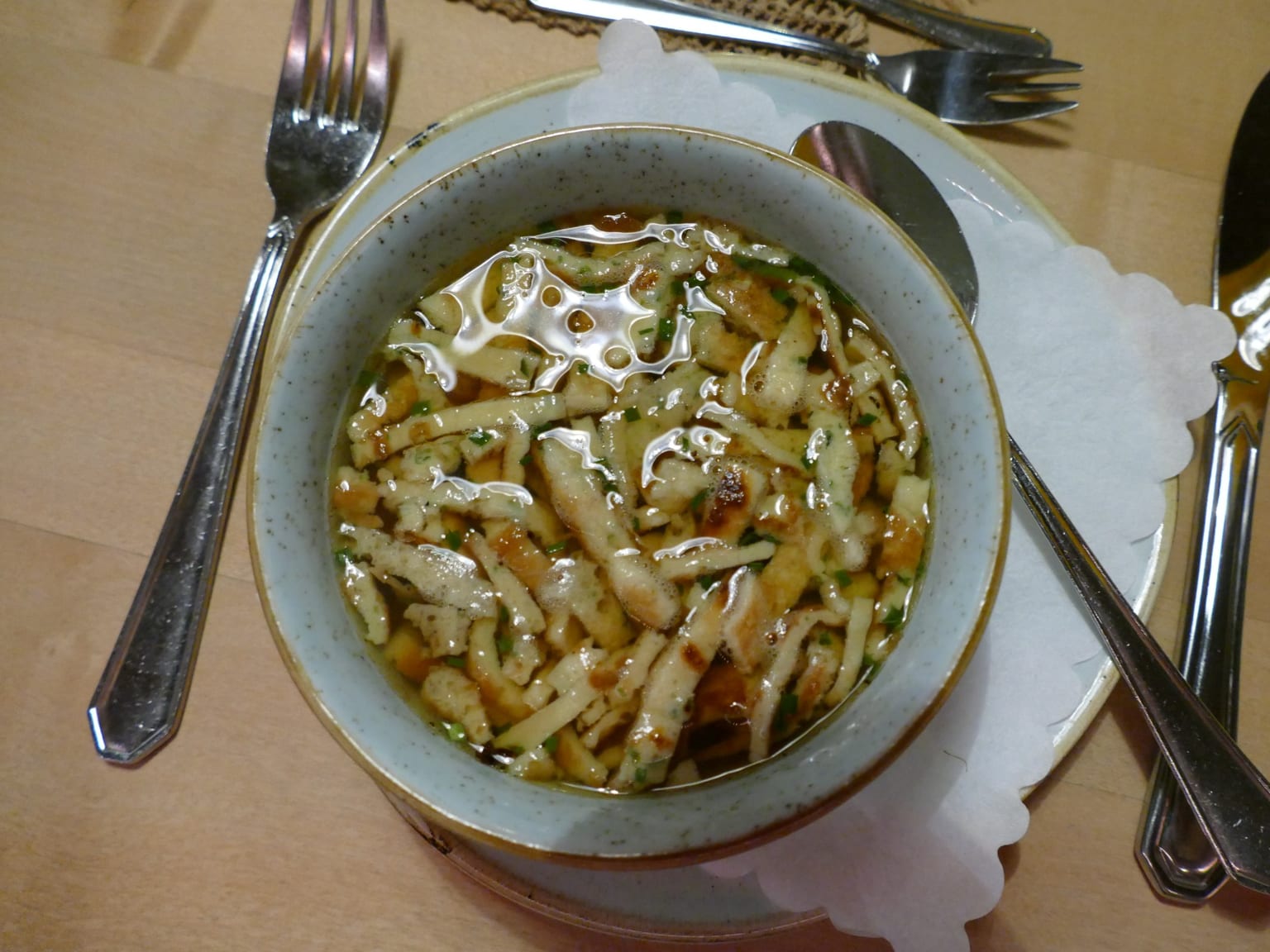
Flädlesuppe
Die schwäbische Pfannkuchensuppe. Dünne, crêpeartige Flädle werden gerollt, in Streifen geschnitten und in klarer Rinderbrühe mit Schnittlauch serviert. Leicht, herzhaft und schnell, wenn die Brühe bereits fertig ist.
Vorbereitung20 Min.
Garzeit20 Min.
Ruhezeit30 Min.
Portionen4
Christophs eigene Version, die aus drei deutschen Flädlesuppe-Rezepten (Einfach Kochen, Küche gemacht und Emmi kochte einfach) plus dem Wikipedia-Eintrag auf Flädle ausgearbeitet wurde, dann zu einem Teigverhältnis und einer Brühemenge in Einklang gebracht.
Zutaten
Geschrieben für: 4 L Topf
Einheiten
Temperatur
Portionen
Flädleteig
- 125 g Weizenmehl Type 405 gerundet
- 3 Eier, Größe M, zimmerwarm gerundet
- 250 ml Vollmilch gerundet
- 30 ml Mineralwasser mit Kohlensäure, macht die Flädle zarter gerundet
- 2 g feines Salz gerundet
- 20 g Butter, geschmolzen und abgekühlt gerundet
- 20 g Butter für die Pfanne, oder neutrales Öl gerundet
Suppe
- 1 1/2 L klare Rinderbrühe, kräftig und gut abgeschmeckt gerundet
- 10 g Schnittlauch, fein geschnitten gerundet
- nach Geschmack feines Salz gerundet
- nach Geschmack frisch geriebene Muskatnuss (optional) gerundet
Angaben zur Ernährung sind ein Anhaltspunkt, keine Garantie. Bei einer Allergie bitte die Zutaten selbst prüfen.
Zubereitung
- Mehl und Salz in einer Schüssel verquirlen. Gießen Sie etwa ein Drittel der Milch hinein und schlagen Sie zu einer glatten Paste, bevor Sie den Rest hinzufügen. Wenn Sie dick anfangen, werden die Klumpen los.
- Die Eier nach und nach unterrühren, dann die geschmolzene Butter und das Mineralwasser. Der Teig sollte in einem dünnen Band vom Schneebesen ablaufen.
- Den Teig 30 Minuten bei Raumtemperatur ruhen lassen. Das Mehl hydratisiert und die Flädle werden zart statt gummiartig. Es wird eindicken, wenn es sitzt, also lösen Sie es mit einem Spritzer Milch, bevor Sie es kochen.
- Erhitzen Sie eine 24 cm lange Antihaft- oder gut gewürzte Pfanne bei mittlerer Hitze. Wischen Sie es mit Butter ab. Lödeln Sie gerade genug Teig hinein, um den Boden zu beschichten, und wirbeln Sie die Pfanne, während Sie sie einschenken.
- Etwa 1 Minute kochen, bis die Oberfläche fest ist und die Unterseite hellgolden ist, dann wenden und weitere 30 Sekunden geben. Flädle sollte flexibel bleiben, nicht knackig. Stapeln Sie sie auf einem Teller, während Sie gehen. Sie sollten 5 oder 6 bekommen.
- Lassen Sie den Stapel einige Minuten abkühlen. Rollen Sie jeden Flädle fest nach oben und schneiden Sie ihn quer in etwa 5 mm breite Bänder. Schütteln Sie sie locker.
- Die Brühe zum Köchen bringen und abschmecken. Mit Salz und etwas Muskatnuss würzen, wenn es angehoben werden muss.
- Teilen Sie die Bänder auf warme Schüsseln, gießen Sie die heiße Brühe am Tisch darüber und streuen Sie Schnittlauch darüber.
Hinweise
- Gießen Sie die Brühe in letzter Sekunde über den Flädle. Bänder, die in heißer Brühe sitzen, schwellen an und schlaffen innerhalb weniger Minuten, und das ist der Unterschied zwischen einer guten Schüssel und einer traurigen.
- Die Flädle kann einen Tag im Voraus gemacht werden. Kochen Sie sie, kühlen Sie sie ab, stapeln Sie sie mit einem Blatt Backpapier zwischen zwei, wickeln Sie den Stapel ein und kühlen Sie sie ab. Rollen und schneiden Sie sie direkt aus dem Kühlschrank; kalte Flädle schneiden viel sauberer als warme.
- Das ist auch das, was Schwaben eigentlich mit übrig gebliebenen Pfannkuchen machen. Alle einfachen ungesüßten Crêpes vom Vortag werden gerollt, in Scheiben geschnitten und in Suppe verwandelt. Das Rezept unten ist die bewusste Version, aber die Gewohnheit kam zuerst.
- Die Brühe ist das Gericht. Eine schwache Brühe kann durch nichts gerettet werden, was man mit den Pfannkuchen macht. Verwenden Sie hausgemachte Rinderbrühe, wenn Sie sie haben, oder eine gute Pastenbrühe und würzen Sie sie richtig.
- Den Teig nicht süßen und keine Vanille hinzufügen. Das sind herzhafte Pfannkuchen.
- Verwenden Sie in Deutschland Mehl vom Typ 405. In Kanada ist einfacher Allzweck der richtige Ersatz.
- Einige Köche falten die Hälfte des Schnittlauchs in den Teig für grüne Flecken durch die Bänder. Es sieht gut aus und kostet nichts.
- Für eine vegetarische Schüssel verwenden Sie eine starke klare Gemüsebrühe. Es ist nicht traditionell, aber es funktioniert.
Verwendete Quellen
- Einfach Kochen: Flädlesuppe nach Omas Original-Rezept
- Küche Gemacht: Original Flädlesuppe
- Emmi kocht einfach: Klassische Flädlesuppe
- Wikipedia: Flädle
Passt gut zu
Verwendete Quellen
Von Christoph Mayer